


19th Century Blue Transferware
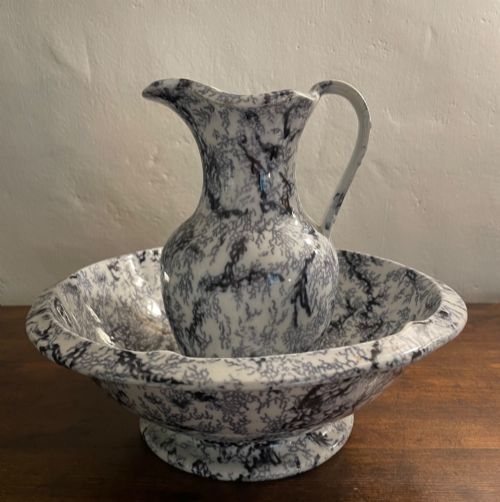
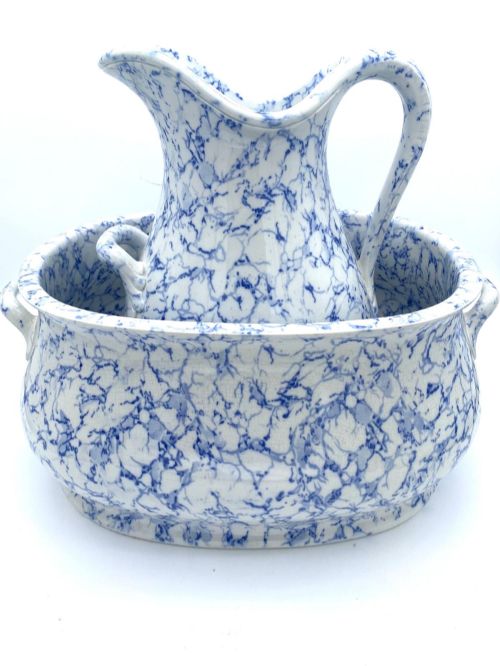
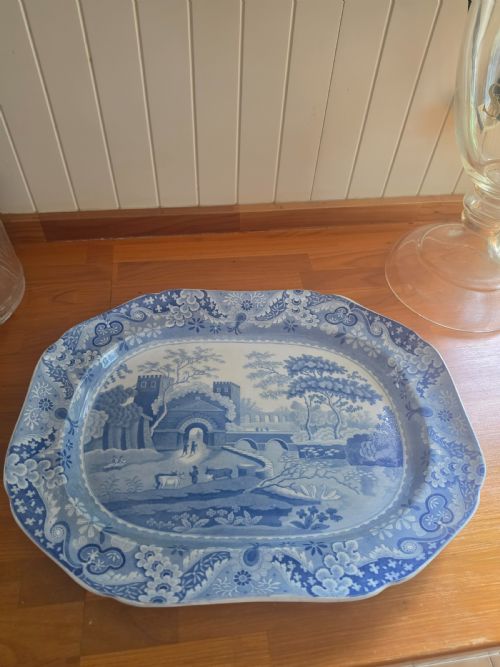
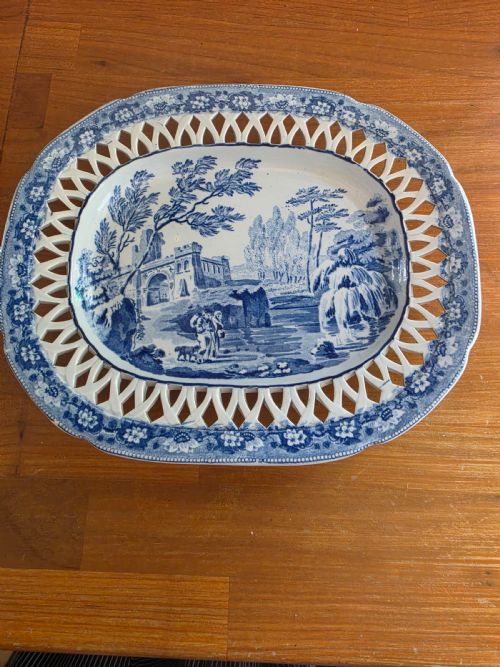
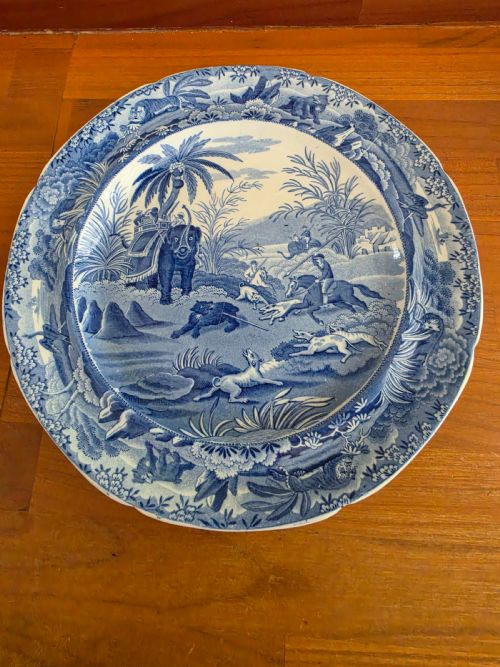
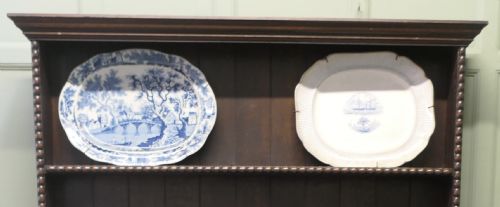
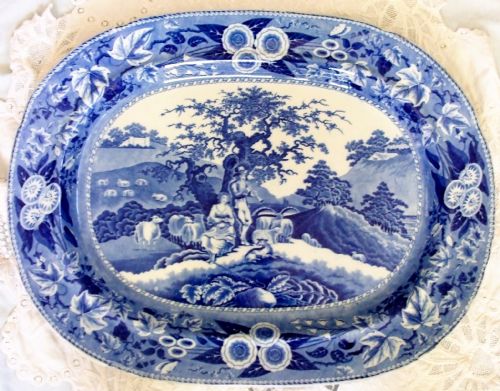
19th century blue transferware brings rich printed pictorial scenes to earthenware plates, platters, and footbaths for the collector.
19th Century Blue Transferware
19th century blue transferware comprises earthenware, pearlware, and glazed ceramic vessels decorated with cobalt pigment applied via a printed paper tissue. When exploring this selection, buyers encounter serving platters, decorative plates, jugs, footbaths, and meat drainers originating from Georgian, Regency, and Victorian periods. These domestic objects display intricate topographical views, literary scenes, and botanical patterns transferred directly onto the ceramic body.
The objects span utilitarian kitchen and dining items alongside decorative display pieces such as chargers and footbaths. Pieces frequently emerge from well-documented English potteries, carrying patterns ranging from classical landscape series to chinoiserie motifs and traditional willow designs. Most items date from the early decades of the century through to the late Victorian era, reflecting shifts in ceramic bodies from pearlware to refined earthenware.
How they were made
Potters produced these wares by engraving copper plates with detailed designs, applying cobalt pigment, and transferring the inked image onto tissue paper. Workers then pressed the damp paper onto the biscuit-fired ceramic body to leave the impression before glazing and firing the piece in a kiln.
The primary material foundation relies on earthenware and pearlware bodies, coated in a transparent lead or salt glaze that protects the cobalt pigment underneath. Pigment depth and line clarity depend heavily on the precise heat of the kiln and the skill applied during the tissue transfer process.
Certain early jugs proudly record institutional ownership, including a pint tankard marked with a Christ's Hospital School ward number.
What varies in quality
Quality rests upon the crispness of the transferred impression and the depth of the cobalt blue against the ceramic background. Finer examples show sharp, unbroken lines without smudging, blurring, or overlapping transfer paper creases.
The artistic ambition of the pattern and the prestige of the pottery dictate the upper tier of the range. Exceptional forms involve complex hollowware like footbaths, large meat platters with drainers, or scarce pictorial series rather than standard utilitarian plates.
Minton·Spode·Davenport·Ridgway·Copeland and Garrett·Wedgwood·Elkin and Newbon
The 19th Century Blue Transferware Glossary
- Transfer printing
- A method of decorating ceramics by engraving a copper plate, inking it with cobalt pigment, and transferring the design onto unglazed clay via tissue paper.
- Pearlware
- A refined type of earthenware developed in the late 18th century featuring a bluish-tinted glaze that masked the natural yellowish hue of the clay body.
- Flow blue
- A style where cobalt pigment deliberately bled into the surrounding white glaze during firing, creating a soft, hazy outline popular during the Victorian era.
- Meat drainer
- A curved ceramic insert placed inside large serving platters to lift joints of meat above accumulated juices during dining.
- Biscuit
- The initial state of fired pottery before it receives a glaze and a subsequent high-temperature sealing fire.
19th Century Blue Transferware: Frequently Asked Questions
What is flow blue transferware?
Flow blue transferware is a specific variety where the cobalt pigment was allowed to blur into the white glaze during the kiln firing process. This technique created a soft, atmospheric effect across the printed design.
Potters achieved this by introducing volatile elements into the kiln atmosphere to intentionally vaporize the cobalt. The resulting hazy finish became highly fashionable across Victorian dining rooms and children's services.
How do I use a meat drainer?
A meat drainer sits snugly inside a large ceramic platter to elevate roasted joints above accumulated carving juices. The pierced surface allows liquids to pool safely underneath.
These ceramic inserts were essential elements of 19th-century dining service before metal alternatives became common. Today, they function as standalone display items or complement matching platters.
Are these pieces safe for food?
Many of these 19th-century ceramics feature lead-glazed earthen bodies and historical surface wear that makes modern culinary use impractical. Acidic foods can interact with antique glazes over time.
Collectors generally treat these items as decorative display pieces or historical table settings rather than daily kitchenware. Gentle hand washing preserves the delicate glaze and cobalt decoration.
How do I date a transferware pattern?
Dating relies on identifying the specific pottery mark stamped on the base, stylistic clues within the pictorial border, and the underlying ceramic body type. Pearlware bodies typically point to earlier Regency and Georgian dates.
Makers often registered their patterns with patent offices during the 19th century, leaving clues in the printed text on the reverse. Comparing scenic views against known production years clarifies the timeline.