




Georgian Earthenware Serving Tray
A georgian earthenware serving tray brings blue and white transfer printed charm to the table.
Georgian Earthenware Serving Tray
A georgian earthenware serving tray encompasses large platters, meat dishes, and smaller tureen stands designed for formal dining. These pieces emerge primarily from the Georgian, Regency, and early Victorian periods, capturing the height of British pottery production.
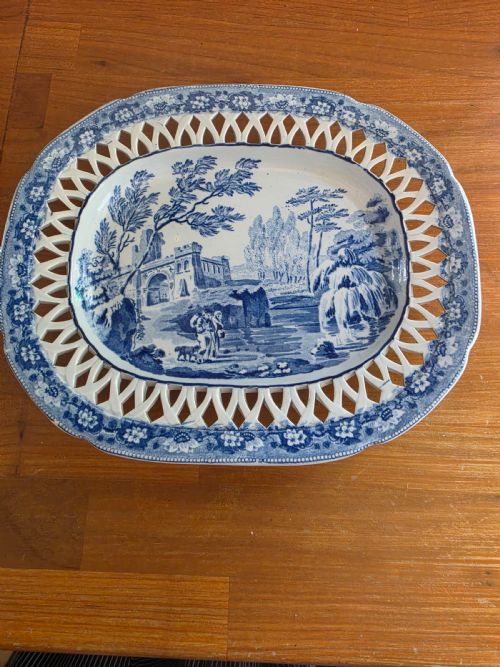
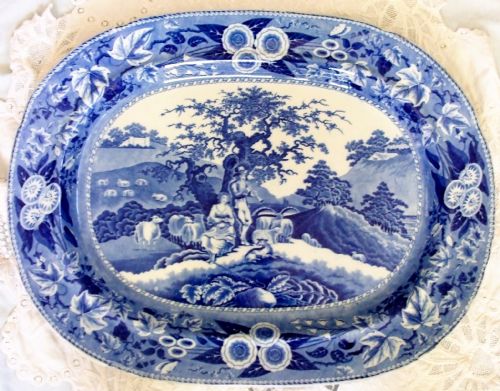
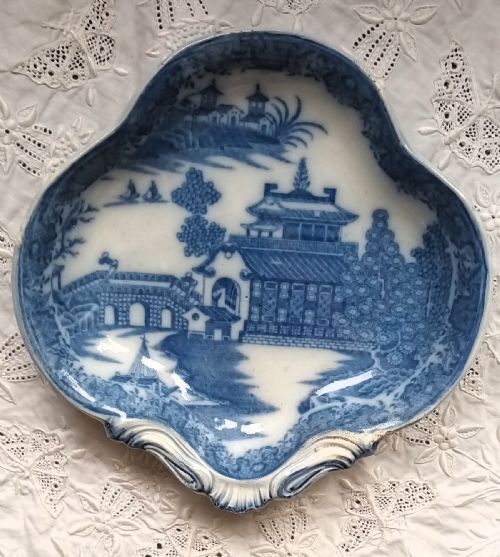
The items found here lean heavily towards serving platters and dishes shaped to hold joints of meat or courses. Collectors encounter forms decorated with blue and white transfer prints, depicting classical ruins, pastoral scenes, and Chinoiserie patterns.
How they were made
Potters shaped earthenware bodies on the wheel or pressed them into moulds to create trays, platters, and stands. They applied lead glazes over the clay to produce a smooth, protective surface suitable for food service.
Makers decorated these pieces using cobalt pigment applied via transfer printing. This technique allowed intricate designs such as the Bridge of Lucano or classical ruins to appear consistently across plates and platters.
Materials recorded across these serving trays include pearlware, lead glaze, and cobalt pigment applied to standard ceramic bodies.
What varies in quality
The clarity and depth of the transfer print dictate much of the visual standard on these pieces. A crisp application of cobalt pigment ensures the landscape or architectural details remain sharp and distinct against the white ground.
Form and edge treatment also distinguish the better examples in this category. Pierced fretted borders and moulded handles demand greater skill from the potter than simple round or oval plates.
Davenport·Spode·Thomas Lakin·John Rogers and Son·Elkin Knight and Bridgwood
The Georgian Earthenware Serving Tray Glossary
- Earthenware
- A porous ceramic body fired at lower temperatures than porcelain. It requires a glaze to become impervious to liquids.
- Transfer printing
- A method of applying intricate designs to pottery using a paper tissue transferred from an engraved copper plate. This technique revolutionised British ceramic decoration during the Georgian era.
- Pearlware
- A refined form of earthenware developed by Josiah Wedgwood that featured a bluish-tinted lead glaze. It sat between creamware and later white ironstone.
- Tureen stand
- A dedicated underplate or platter designed to support a soup or sauce tureen. These stands caught drips and matched the decorative scheme of the service.
- Chinoiserie
- A European interpretation of East Asian artistic traditions and motifs. It appears frequently on blue and white pottery depicting imaginary bridges and figures.
Georgian Earthenware Serving Tray: Frequently Asked Questions
How were these trays used?
These pieces served as large platters for meat, bread stands, or underplates for tureens during formal dining. They held heavy joints and dishes for the table.
Servants brought food to the dining room on these decorated platters. Their durable earthenware bodies handled daily use in busy households.
How to spot a transfer print?
Look closely at the pattern under a magnifying glass for tiny stippled dots or broken lines. These indicate the copperplate transfer process rather than hand painting.
Transfer prints often show slight overlapping at the edges of the paper application. This confirms the mechanical printing method used by Georgian potteries.
How to date a piece accurately?
Examine the backstamp, glaze colour, and pottery body to narrow down the decade. Early pieces often lack maker marks but show distinct pearlware tints.
Compare the blue pigment tone and border patterns with documented examples. Stylistic clues like classical ruins point directly to the Regency period.