


19th Century Biedermeier Table
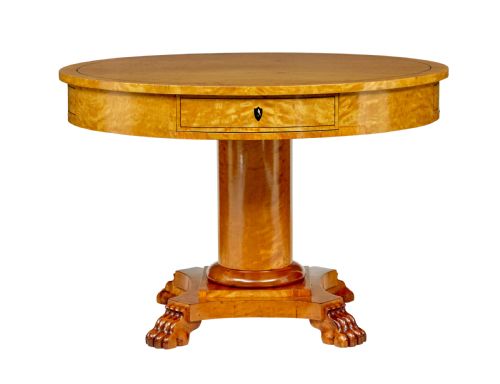
A 19th century biedermeier table brings calm geometry and striking wood figures to a room, offering both quiet utility and strong decorative presence.
19th Century Biedermeier Table
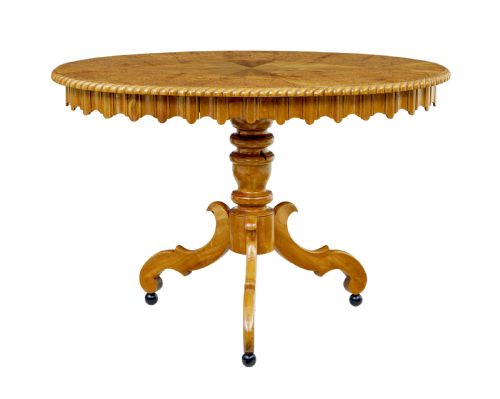
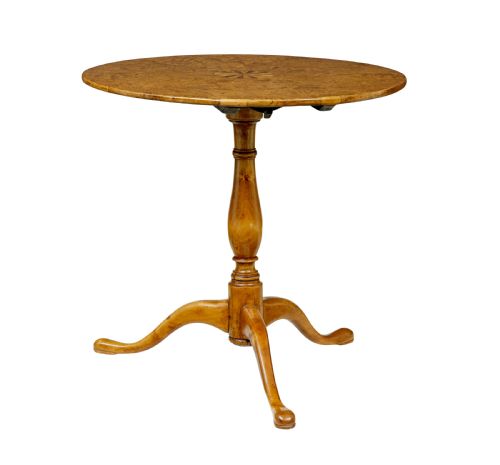
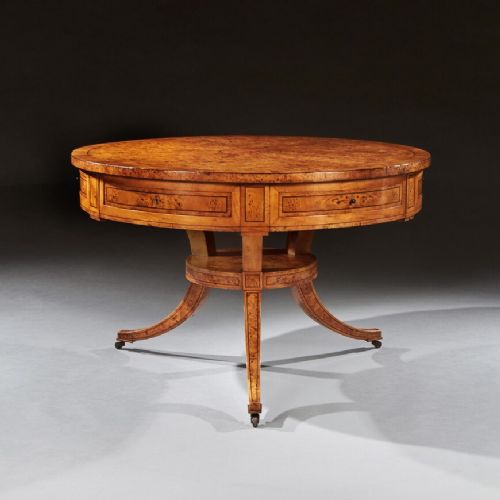
A 19th century biedermeier table encompasses a range of domestic forms, from circular centre tables to drop-leaf tea tables and console tables. Buyers are most likely to encounter Swedish and German examples configured as occasional, card, or sofa tables.
Makers of the period favoured clean architectural lines over excessive ornamentation, letting the natural grain of the timber define the piece. These tables served the practical needs of middle-class European drawing rooms and salons with understated elegance.
Originating within the broader Germanic lands and finding a distinct expression in Scandinavia, the design shifted away from French imperial pomp toward functional domestic harmony. Many pieces incorporate subtle neoclassical proportions adapted for everyday family life.
Materials and construction
Cabinetmakers relied heavily upon native European timbers, utilising birch, walnut, and alder alongside figured veneers such as burr birch and birdseye maple. These woods were sliced thinly to cover structural softwood carcases, creating dramatic patterned surfaces across table tops.
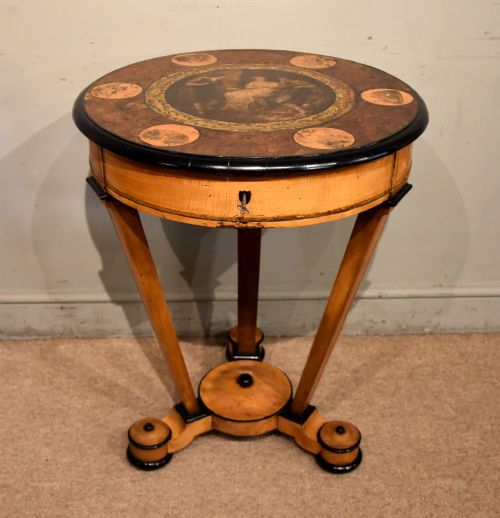
Construction techniques prioritized stability through solid block framing and veneering applied over stable core panels. Surface contrast was often achieved by pairing pale golden birch with ebonised wood details or subtle brass mounts.
Some sewing tables arrive complete with their original internal compartments, still waiting quietly for long-lost threads.
Distinctions in craftsmanship
Quality in a 19th century biedermeier table rests upon the selection and bookmatching of veneer figures. Superior examples display symmetrical grain patterns that flow seamlessly across the entire table top.
The execution of underlying joinery and the integrity of the timber movement dictate the long-term stability of the piece. Refined proportions and restrained brass or ebonised accents separate standard workshop production from finer cabinet work.
Conrad Eduard Mappe
The 19th Century Biedermeier Table Glossary
- Burr birch
- A growth deformity in the birch tree that produces highly twisted, knotty patterns when sliced into veneer. It was prized by makers for its rich decorative movement.
- Ebonised wood
- Timber treated with chemical stains or black paint to imitate ebony. It provided stark, dark contrast against pale birch surfaces.
- Gueridon
- A small round table supported by a single central pillar and tripod base. The form gained popularity across European neoclassical interiors.
- Ormolu
- Gilded bronze mounts applied as decorative highlights to furniture edges and bases. The technique added metallic contrast to polished timber.
- Bookmatching
- A veneer technique where adjacent slices of wood are opened like a page to mirror each other. This created symmetrical patterns across table tops.
19th Century Biedermeier Table: Frequently Asked Questions
How do I identify a true biedermeier table?
Look for clean architectural lines combined with dramatic figured wood veneers like birch or maple, avoiding excessive carved ornamentation. The focus remains on geometric purity and the natural pattern of the grain.
Most pieces from this tradition date from the first half of the nineteenth century and originate from Germanic or Scandinavian workshops. Their construction emphasises domestic utility paired with refined classical proportions.
Where should I place a centre table?
A round centre table works best freestanding in the middle of a room or anchoring a large hallway. This allows the circular grain patterns on the top to be viewed from all angles.
Ensure you leave sufficient walking space around the perimeter so the piece functions properly as a standalone focal point. Placing a lamp or decorative ceramic upon the surface completes the arrangement.
What is the difference between an occasional and a sofa table?
An occasional table is generally a smaller, freestanding piece designed for flexible placement around a living space. A sofa table is traditionally longer and narrower, originally intended to sit directly behind a sofa.
Many sofa tables feature drop leaves or built-in drawers, reflecting their specific functional role in the nineteenth-century parlour. Both types showcase the characteristic figured wood veneers of the era.