




Blonde Wood Occasional Table
A blonde wood occasional table brings bright, pale grain into a room, offering a versatile surface shaped from birch, maple, and satinwood.
Blonde Wood Occasional Table
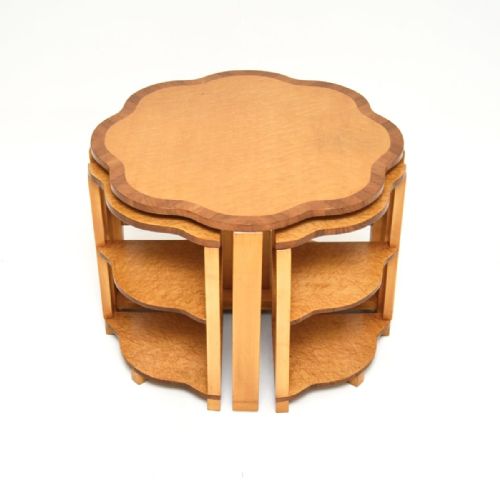
The selection on this page relies heavily on birch, birds eye maple, and burr birch, often shaped into lamp tables, sofa tables, and nests. Biedermeier and Art Deco styles dominate the selection, bringing pale wood figures into compact, functional occasional formats.
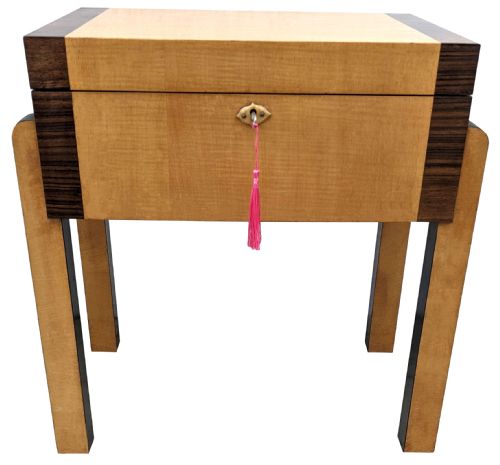
Nineteenth-century examples lean towards Swedish birch side tables and inlaid oval occasional tables, whilst twentieth-century pieces introduce Art Deco birds eye maple and satinwood work box tables. These lighter woods brighten interior spaces whilst retaining traditional cabinetmaking forms.
Materials and construction
Makers utilised pale timbers such as birch, birds eye maple, burr maple, Karelian birch, and satinwood, frequently paired with walnut veneer or ebonised details for contrast. These woods were selected for their striking natural grain patterns, which were polished to a smooth finish.
Construction techniques include finely turned supports, lyre forms, and inlaid veneers, as seen in nineteenth-century birch occasional tables and Art Deco nesting coffee tables. Cabinetmakers capitalised on the natural figuring of burr elm and birch root to create decorative tabletops without relying on heavy applied ornament.
Listings feature pieces spanning the nineteenth century through the 1930s, showcasing birch, maple, satinwood, and walnut veneer.
Evaluating quality and craftsmanship
Quality rests primarily on the choice and matching of timber veneers, particularly how symmetrically the birds eye maple, burr birch, or satinwood grain is laid across the surface. Superior examples display thoughtful grain alignment and careful inlay work that enhances the natural pale tones.
Structural integrity and the refinement of joinery distinguish finer tables, whether in the delicate turning of a nineteenth-century Swedish birch lamp table or the geometric precision of an Art Deco nesting set. The treatment of secondary woods and the crispness of edge profiles reveal the maker's hand.
The Hille Furniture Company
The Blonde Wood Occasional Table Glossary
- Birds Eye Maple
- A figure in maple wood where the wood fibres are twisted in small spots, resembling tiny eyes. This creates a distinctive, highly decorative speckled pattern prized in furniture making.
- Biedermeier
- A style of Central European furniture design dating from the nineteenth century that prioritised clean lines and utility over excessive ornamentation. It frequently showcased the natural beauty of blonde woods like birch.
- Karelian Birch
- A heavily figured variety of birch native to the Karelian region, known for its deep swirling patterns and golden tones. It was widely used in high-end Scandinavian cabinetmaking.
- Satinwood
- A durable, yellowish timber with a lustrous sheen that resembles satin, often used for fine inlays and decorative veneers in nineteenth-century and Art Deco pieces.
- Nest of Tables
- A set of graduated tables designed to fit neatly one beneath the other when not in use. They became popular in various forms throughout the nineteenth and twentieth centuries.
Blonde Wood Occasional Table: Frequently Asked Questions
How do I clean a blonde wood table?
Dust regularly with a soft, dry cloth to prevent dirt accumulation on the delicate pale surfaces. Avoid harsh chemical cleaners that can strip the traditional polish from birch or maple.
Keep these tables away from direct sunlight and excessive heat sources to prevent the light wood from darkening or the veneers from drying out.
Are these tables suitable for daily use?
Occasional tables are designed for light placement needs, such as holding a lamp, a book, or a cup, rather than heavy daily wear. Using coasters and placemats protects the polished wood and delicate veneers from moisture rings and scratches.
Placing them in moderate humidity environments ensures the timber and any veneered sections remain stable over time.
How do I identify a Biedermeier table?
Biedermeier tables typically feature restrained, architectural forms that let the natural grain of blonde woods like birch take centre stage. They avoid heavy carvings in favour of smooth surfaces and clean structural lines.
Nineteenth-century examples often display warm golden tones and subtle geometric proportions characteristic of the period.
What distinguishes Art Deco blonde wood?
Art Deco pieces in pale woods often incorporate geometric symmetry, contrasting ebonised details, and striking veneers like birds eye maple or satinwood. These tables embrace streamlined silhouettes typical of the 1920s and 1930s.
The focus shifts toward bold shapes and dramatic wood figuring rather than historical revival motifs.