





19th Century Altar Candlesticks
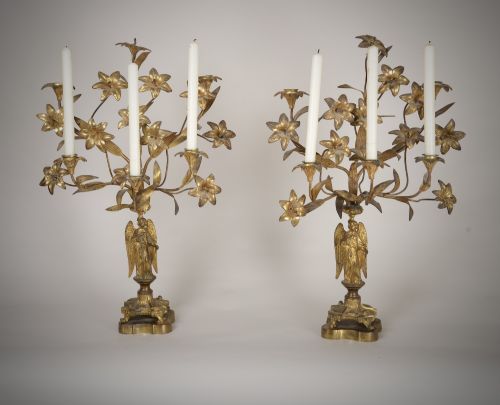
These 19th century altar candlesticks bring solemn ecclesiastical height and sculptural weight to a room, offering brass and gilt surfaces shaped by the Gothic Revival and continental workshops.
19th Century Altar Candlesticks
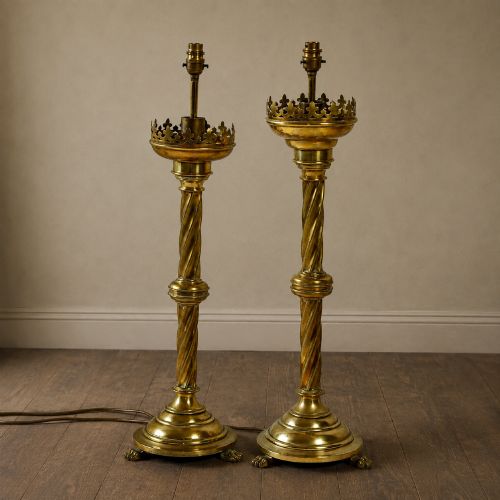
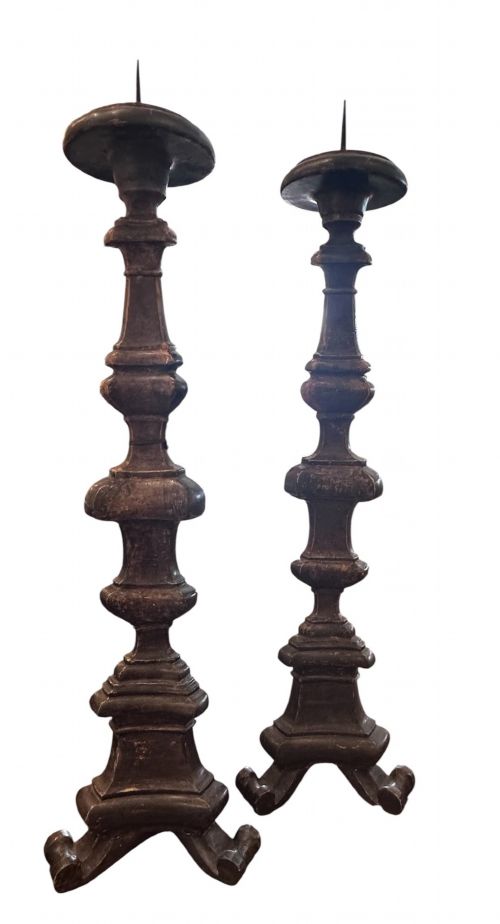
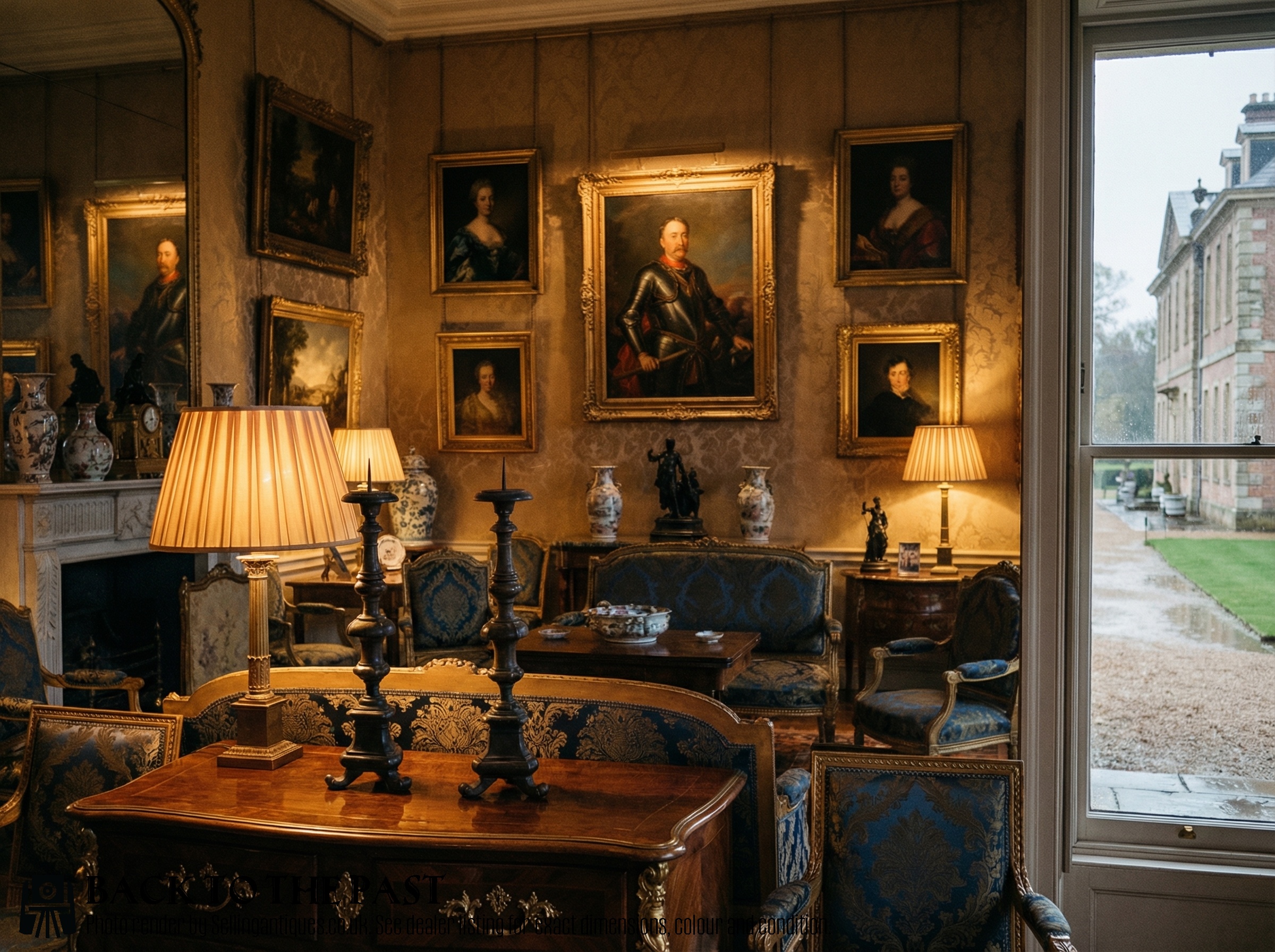
When you search for 19th century altar candlesticks, you look at items designed for religious ceremony, most frequently encountered in heavy brass or carved and gilded wood. These objects range from standard altar sticks to tall pricket forms and converted lamps.
The pieces emerge from various origins across the century, including Victorian Gothic Revival designs in England and ornate continental or French ecclesiastical pieces. Many pairs survive alongside single tall examples and graduated sets.
Makers and workshops produced these to stand upon altars or tables, utilising architectural columns, Corinthian capitals, and triangular or stepped bases. Later conversions to table lamps appear alongside the original candle-holding formats.
How they were made
Foundry cast brass forms the backbone of these pieces, often finished with detailed chasing or cast in heavy sections to support tall heights. Gilt bronze, ormolu, and silver plating provide metallic lustre on French and continental examples.
Carved wood, gesso, and giltwood construction appears in Italian and French items, frequently paired with polychrome paintwork or silver leaf. Treen and oak introduce structural timber to domestic and ecclesiastical candle holders.
Listings feature brass, giltwood, gesso, iron, wood, ormolu, fabric, and gilt bronze across the 19th century.
What varies in quality
The distinction rests in the crispness of the casting and the depth of the hand-carving on wooden or gilt surfaces. Heavy gauge brass and well-defined Gothic tracery separate substantial altarware from lighter domestic items.
Proportion and scale dictate the visual presence of a pair, particularly in graduated sets or tall column standards. The integrity of original gilding, whether on bronze, wood, or gesso, defines the finish of the piece.
The 19th Century Altar Candlesticks Glossary
- Pricket
- A candlestick featuring an upward-pointing metal spike designed to impale a large wax candle rather than sit inside a socket. This form dominates traditional church altars.
- Gothic Revival
- An architectural and decorative style drawing inspiration from medieval forms, characterised by pointed arches, trefoils, and heavy vertical lines. It shapes much of the Victorian brassware.
- Ormolu
- Finely ground high-carat gold applied to a bronze base, creating a rich golden surface found on French ecclesiastical pieces. The technique requires meticulous mercury gilding or modern electroplating.
- Treen
- Small handmade wooden household objects and utilitarian items, representing the domestic branch of timber crafting. It appears in turned candlesticks alongside gilded ecclesiastical forms.
- Corinthian column
- A classical architectural column type featuring ornate acanthus leaves on the capital, frequently adapted for tall brass Masonic and altar candlesticks.
19th Century Altar Candlesticks: Frequently Asked Questions
What is an altar candlestick?
An altar candlestick is a tall lighting piece originally built for use on church altars during religious services. They are typically heavier and taller than domestic candlesticks to provide adequate illumination.
Many examples feature prickets to hold large wax candles or heavy bases designed to prevent tipping. Their design often follows ecclesiastical styles like the Gothic Revival.
Were these converted to lamps?
Yes, many pieces from this period receive later conversions into table lamps or standard lamps. This allows them to function in modern interiors while retaining their antique form.
Wiring is typically added through the centre without altering the primary historic structure of the brass or carved wood body.
How do I identify French pieces?
French items from the nineteenth century often utilise gilt bronze, ormolu, or silver plating alongside Rococo Revival or ecclesiastical designs. They tend to display fluid chased ornamentation and rich surface gilding.
Wooden French examples frequently incorporate carved oak or silver leaf prickets reflecting continental church interiors.
What materials were used?
The primary materials include cast brass, giltwood, gesso, iron, and various woods like oak. Finer continental examples utilise gilt bronze and ormolu.
Surfaces are frequently enhanced with silver leaf, polychrome paint, or fabric elements depending on the origin and intended ecclesiastical setting.