






19th Century Allegorical Art
19th century allegorical art delivers classical symbolism and figurative beauty through bronze, oil, and marble.
19th Century Allegorical Art
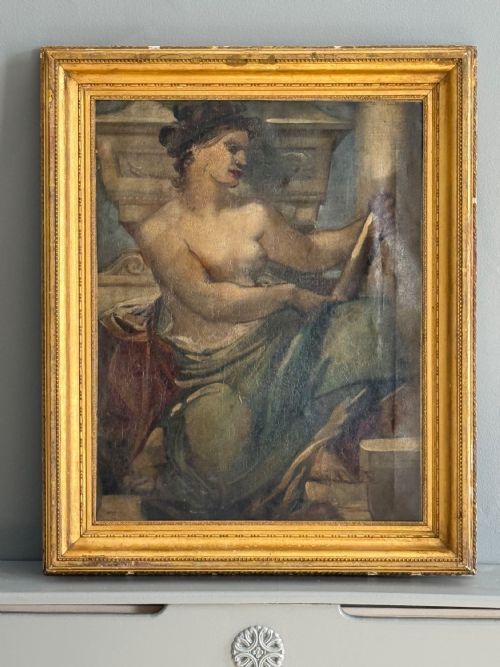
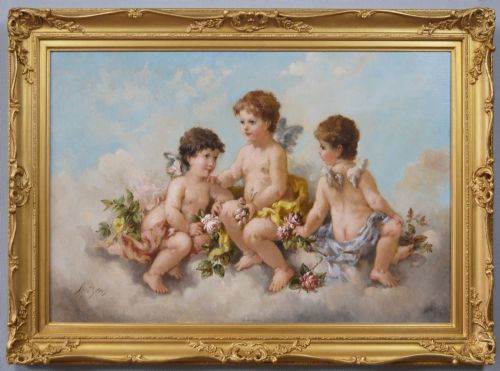
19th century allegorical art encompasses oil paintings, bronze sculptures, and framed prints that personify abstract ideas like the seasons, night, and nature. These works draw heavily on classical mythology and historical themes, translating philosophical concepts into tangible visual forms.
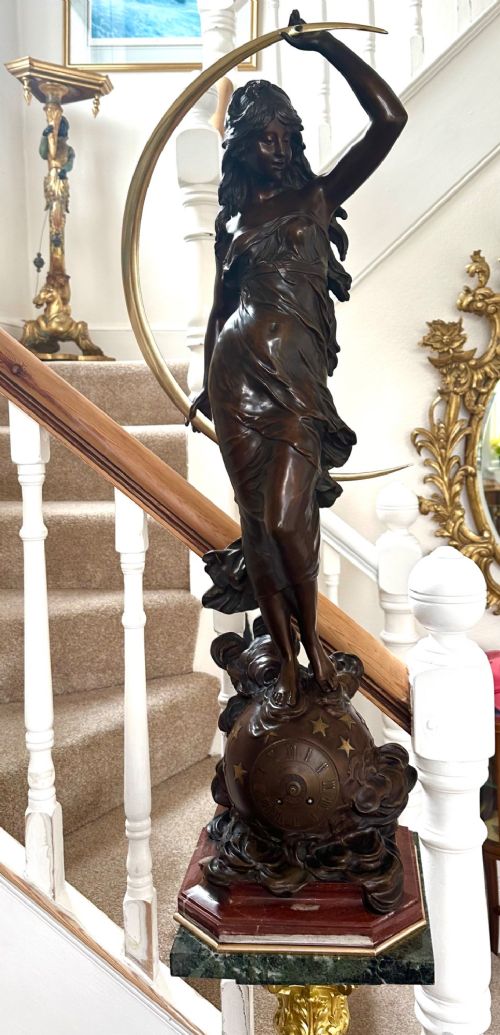
The pieces on this page span the Regency, Victorian, and Edwardian eras, displaying stylistic shifts from Late Georgian political prints to ornate Art Nouveau bronzes. Common subjects include mythological figures such as Selene and Aurora alongside personifications of spring, summer, and the natural world.
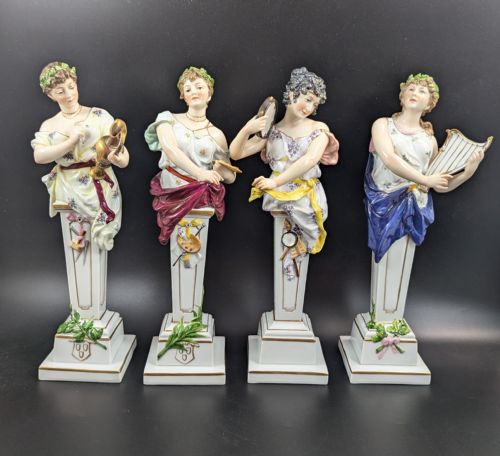
Sculptures in bronze, marble, and alabaster sit alongside canvas paintings, reverse glass prints, and graphite drawings. Buyers encounter both monumental European school canvases and delicate porcelain figurines, each carrying distinct symbolic narratives.
Materials and methods
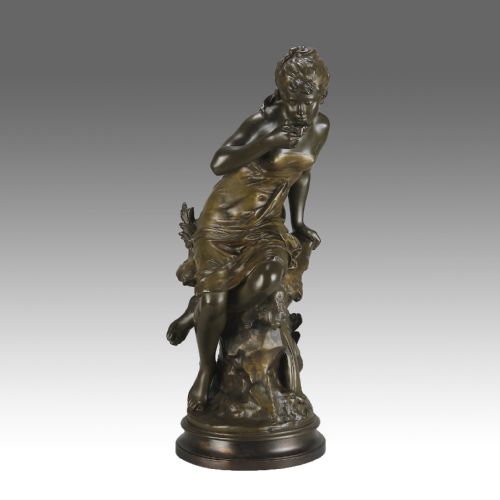
Foundry-cast bronze forms a major pillar of this category, often utilising the lost-wax method to capture intricate details in figures like those by the Moreau brothers. Sculptors also carved directly into white marble and alabaster, shaping smooth surfaces that reflect classical antiquity.
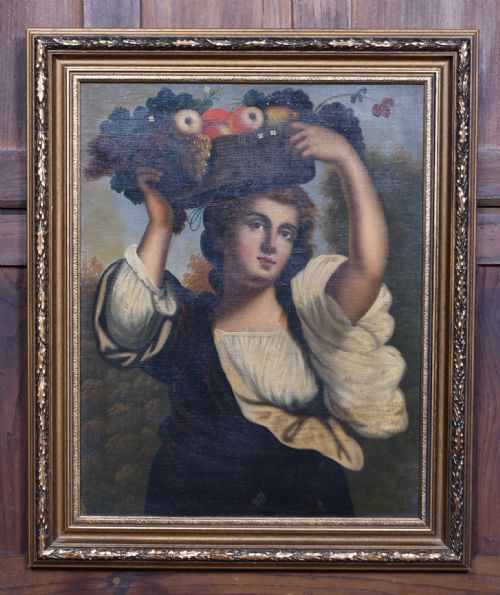
Painters utilised oil on canvas and wood panels, applying layered pigments to achieve rich tones in genre scenes and historical allegories. Printmakers employed engraving, lithography, and reverse glass printing techniques to reproduce detailed narrative compositions for domestic interiors.
Even a political dispute over George III could be dressed up as an allegory if the printer wanted to stay out of trouble.
Judging quality in allegorical works
The refinement of the casting in metal or the precision of the carving in stone dictates the visual success of a sculpture. Master founders achieved sharp definition in drapery, hair, and facial expressions, whereas lesser examples lose such crispness in the finishing stages.
In painting and printmaking, the handling of light, shadow, and anatomical proportion separates ambitious academic compositions from basic decorative workshop output. The depth of the symbolic narrative and the harmony of the overall design further distinguish finer pieces.
August Moreau·Mathurin Moreau·Ernst Barrias·Guiseppe Mazzolini·Achille Mollica
The 19th Century Allegorical Art Glossary
- Allegory
- Representation of abstract ideas or moral principles through human figures, narrative scenes, or symbolic attributes. This visual language was central to academic art across the nineteenth century.
- Patina
- The surface sheen or colour developed on bronze sculpture through age and chemical treatment. A well-preserved patina enhances the depth and contours of figurative works.
- Engraving
- A printmaking technique where an image is incised onto a metal plate using a sharp tool. This method yields fine, precise lines suited to detailed classical compositions.
- Terracotta
- Fired unglazed clay used widely for sculptural reliefs and preparatory models. It allows artists to capture immediate gestural movement before final casting or hardening.
- Reverse glass painting
- An artwork painted directly onto the back of a glass panel and viewed from the front. This technique produces vibrant colours and a glossy, reflective surface.
19th Century Allegorical Art: Frequently Asked Questions
What is 19th century allegorical art?
It is visual art that uses human figures and symbolic imagery to represent abstract concepts, historical events, or seasonal changes. Artists drew on classical mythology to convey moral or philosophical messages.
These pieces include bronze statues, oil paintings, engravings, and terracotta reliefs created during the Georgian, Victorian, and Art Nouveau periods.
How were these artworks displayed?
Paintings and framed prints were hung in formal reception rooms and libraries as focal points for intellectual conversation. Bronze and marble sculptures stood on pedestals, mantelpieces, or dedicated display tables.
Smaller porcelain figurines and glass prints were typically placed on sideboards or within specialised cabinets alongside other decorative objects.
How do I identify Art Nouveau allegorical pieces?
Art Nouveau works from the late nineteenth and early twentieth centuries feature flowing, organic lines inspired by natural forms. Figures often incorporate elements like trailing hair, flowers, or drapery that mimic plant stems and waves.
Subjects such as spring, nature, and the breeze predominate, executed in bronze, terracotta, or specialised prints from this transitional era.
What subjects are most common?
Mythological figures and personifications of the four seasons appear frequently across paintings and sculptures. Classical deities like Aurora, Selene, and symbolic representations of nature are central to the genre.
Political satire and historical events also emerge in prints and drawings, reflecting the public concerns of the Georgian and Victorian eras.