




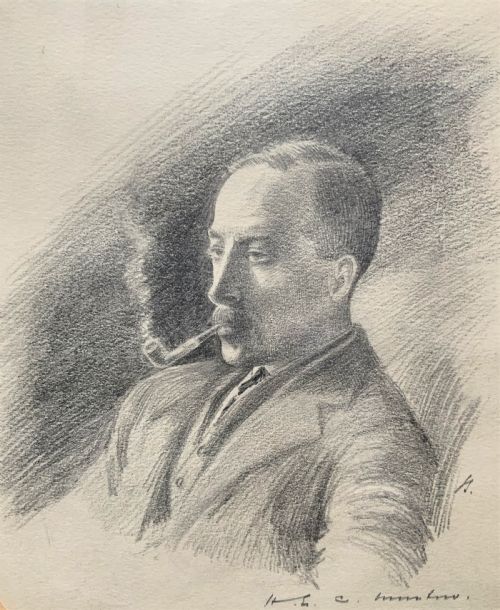
Academic Graphite Drawing
An academic graphite drawing brings disciplined draughtsmanship and classical study directly to your wall.
Academic Graphite Drawing
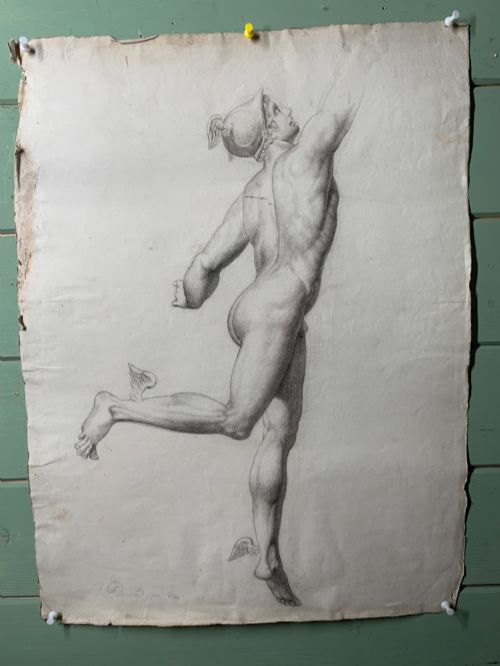
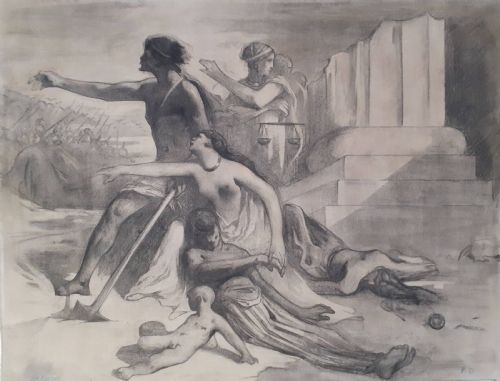
An academic graphite drawing represents rigorous training in line, tone, and form, typically executed within formal institutional traditions. These works capture figures, portraits, and allegorical scenes with meticulous observation.
The selections available span from the Georgian and eighteenth-century sketches to nineteenth-century academic realisms and later works into the early twentieth century. Common subjects include life studies of male and female nudes, detailed portraits, and historical or allegorical compositions.
Originating largely from British and French academic traditions, these drawings often serve as foundational studies by artists honing their anatomical precision and mastery of shadow.
Materials and construction
The primary medium relies upon graphite and pencil applied to various surfaces, including traditional paper and toned paper. Artists frequently integrated chalk to build highlights and add depth to tonal gradations.
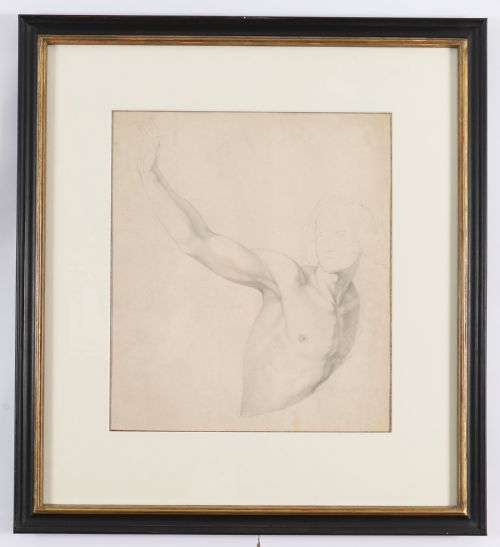
Surviving examples are frequently housed behind glass within wooden frames, occasionally accented with gold leaf to complement the monochromatic palette of the artwork beneath.
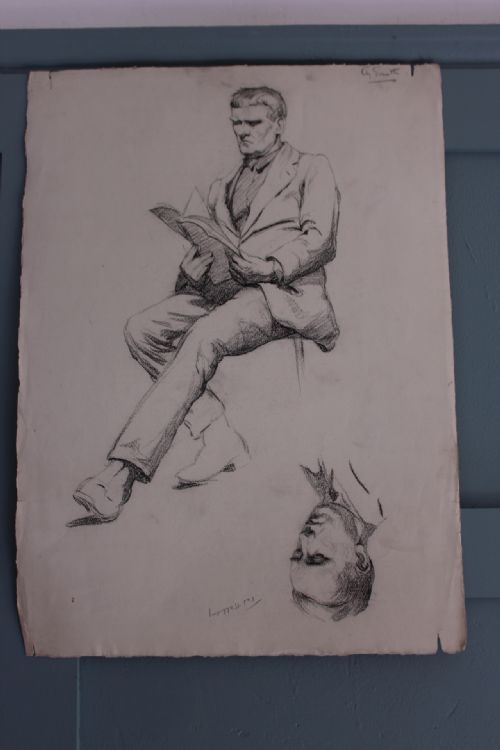
Old men, young boys, and attentive women stare across the decades, caught mid-thought by watchful draughtsmen.
Judging quality and execution
The distinction in quality rests upon the sureness of the line, the accuracy of anatomical proportion, and the subtlety of the tonal transitions. Superior sheets demonstrate a confident understanding of light and shadow without relying on heavy smudging.
The preservation of the paper support and the clarity of the graphite lines significantly influence the visual impact of the piece. Stronger examples maintain crisp detail and tonal depth across the entire composition.
Augustus John
The Academic Graphite Drawing Glossary
- Academic realism
- A style of painting and drawing produced under the influence of European academies of art, emphasising precise anatomical accuracy and classical subjects. It values finished detail and adherence to traditional rules.
- Life study
- A drawing made directly from a live model, usually nude or semi-nude, focusing on human anatomy and proportion. These formed a core part of traditional art education.
- Grisaille
- A painting or drawing executed entirely in shades of grey or neutral greyish-brown. It often serves as a monochrome study for tonal balance or as a finished piece in its own right.
- Toned paper
- Paper that possesses a light colour, such as grey or tan, rather than pure white. It allows the artist to build up dark graphite tones while using chalk or white pigment for highlights.
Academic Graphite Drawing: Frequently Asked Questions
What is an academic graphite drawing?
An academic graphite drawing is a detailed study created by an artist within a structured training environment, focusing on mastering human anatomy, proportion, and tonal value.
These pieces range from quick compositional sketches to highly finished life studies and portraits intended for instructional or exhibition purposes.
How should I frame and hang these drawings?
Because graphite and paper are sensitive to environmental conditions, these works require framing behind glass with acid-free mounts to protect the surface from dust and direct sunlight.
Positioning them away from strong, direct light sources preserves the delicate grey tones and prevents the paper from degrading over time.
How can I tell the period of a drawing?
Dating relies upon stylistic markers such as the specific academic conventions of the clothing, the rendering of the human form, and the paper characteristics. Inscriptions, signatures, or dated watermarks also provide reliable chronological anchors.
Earlier eighteenth-century works often display looser narrative groupings, whereas nineteenth-century pieces lean heavily into rigorous academic realism and precise tonal modeling.
Where were these drawings originally created?
Many originate from formal art schools and academies across Britain and France, where students underwent rigorous daily practice in drawing from plaster casts and live models.
These educational institutions established standardised methods of observation that shaped the techniques visible in surviving works from the period.