



Grey Graphite Paper Drawing
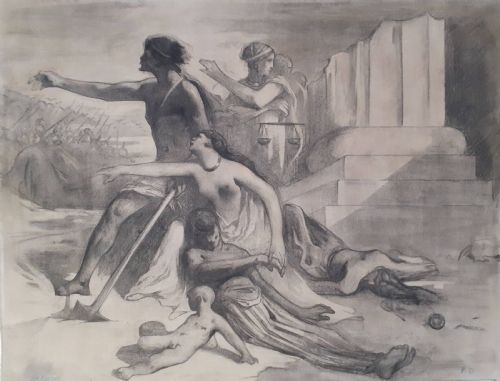
These grey graphite paper drawing works offer a direct window into the hand of the artist, prized for their intimacy and immediacy.
Grey Graphite Paper Drawing
A grey graphite paper drawing brings together works executed in pencil, graphite, and chalk upon toned or plain paper sheets. These pieces span from the mid-nineteenth century through the Edwardian era and into mid-century modernism.
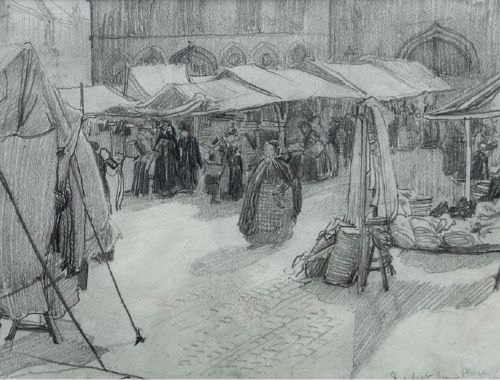
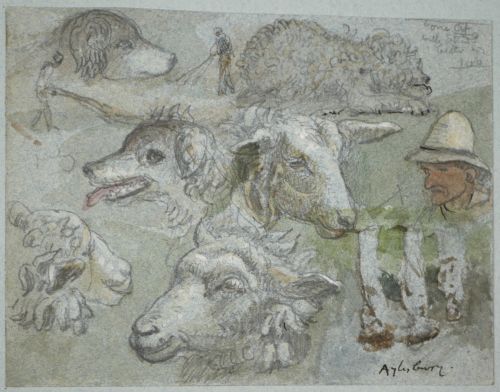
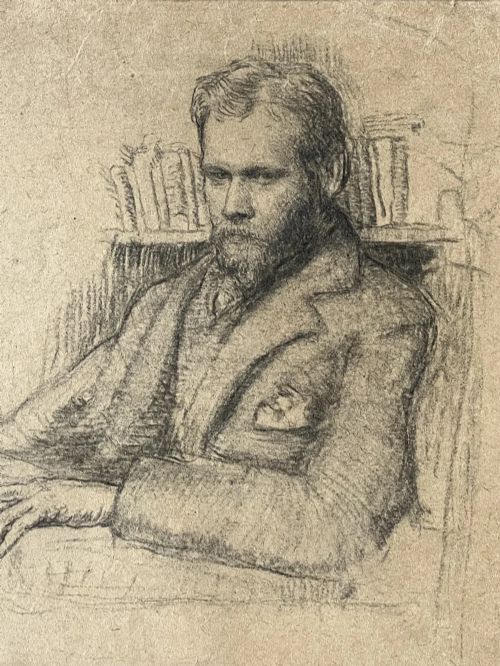
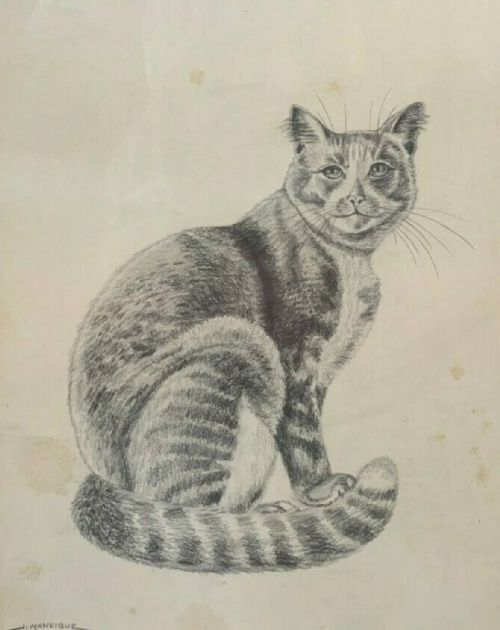
Buyers will encounter various subjects in these listings, including maritime shipping rigging, domestic animal studies, architectural views, and figurative character portraits. Portrait studies and narrative scenes also appear frequently across the selection.
The origins of these works bridge British and French schools, encompassing Victorian academics, Surrealist compositions, and Modern British art. Such variety allows collectors to trace shifting draughtsmanship traditions across successive decades.
How they were made
Artists executed these works primarily using graphite and pencil upon paper, sometimes incorporating chalk highlights to accent form and light. Certain examples utilise toned paper backgrounds to enhance tonal depth and contrast.
Framed artwork and original drawings often include supplementary watercolours applied over the initial graphite foundation. Wood and glass typically enclose these pieces to protect the delicate paper surfaces from environmental damage.
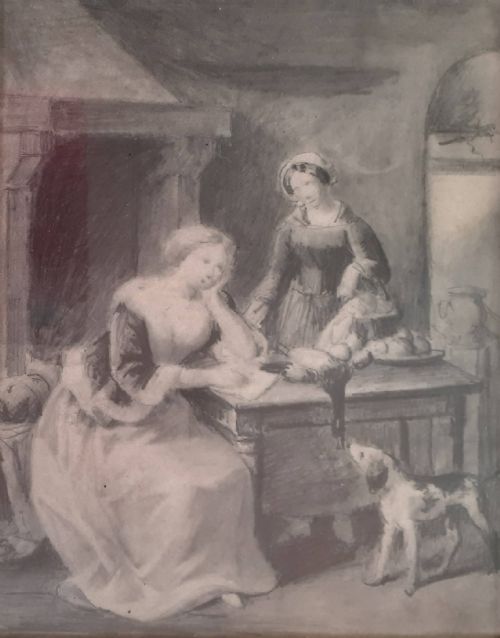
Several drawings preserve the private daydreams of Victorian figures and the intense gaze of cheeky kitchen dogs.
What varies in quality
Quality in a grey graphite paper drawing rests upon the decisiveness of the line and the sureness of the draughtsmanship. Works demonstrating confident handling of shadow and volume stand apart from hesitant sketches.
The condition of the paper surface and the preservation of the delicate graphite or chalk medium dictate the visual impact of the piece. Strong provenance or attribution to documented artists further elevates the standing of an individual work.
Henry Percy Huggill·James Smetham·Augustus John·J Manrique·Dame Laura Knight·Alexandre Decamps
The Grey Graphite Paper Drawing Glossary
- Graphite
- A crystalline form of carbon used as a drawing medium. It produces marks ranging from light grey to deep black depending on the grade utilised.
- Toned paper
- Paper manufactured or prepared with a neutral tint such as grey or brown. This provides a mid-tone ground that allows the artist to build up highlights and shadows effectively.
- Chalk
- A soft, opaque drawing material derived from mineral deposits. It is frequently employed alongside graphite to create sharp highlights on toned paper.
- Draughtsmanship
- The skill and technique of making drawings. It measures an artist's ability to render proportion, perspective, and form accurately on a two-dimensional surface.
- Academic
- Art created in accordance with the formal standards of European art academies. These works often display rigorous attention to anatomical precision and narrative composition.
Grey Graphite Paper Drawing: Frequently Asked Questions
How should I frame an antique drawing?
Antique drawings require conservation-grade materials to prevent the delicate graphite and paper from degrading over time. Acid-free mounts ensure the paper does not touch the glass directly.
Keeping the framed work away from direct sunlight protects both the paper support and the graphite medium from fading. Proper sealing at the back prevents dust and moisture ingress.
What is the difference between a sketch and a study?
A sketch is typically a quick, spontaneous recording of an idea or scene. It captures the immediate impression of a subject without refined detail.
By contrast, a study is a more deliberate and detailed exploration of a specific element, such as a figure or composition. Studies often serve as preparatory work for a larger finished painting.
How do I date an unsigned paper drawing?
Dating relies heavily on the watermark within the paper, the style of the mounting, and the nature of the subject matter. Costume details and architectural elements also provide reliable chronological clues.
Comparing the handling of the graphite to dated works by the same or contemporary hands helps narrow the period of execution.
Why use toned paper instead of white?
Toned paper provides a middle grey or brown ground that eliminates the stark contrast of pure white sheets. This allows artists to work simultaneously toward dark shadows and light highlights.
Such a method speeds up the drawing process and creates a more unified tonal atmosphere across the entire composition.