
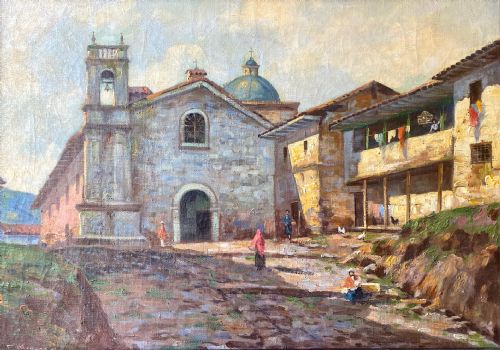


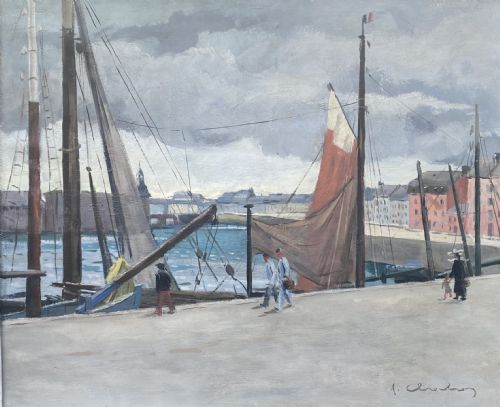


1940s Original Oil Painting
A 1940s original oil painting delivers the direct touch of mid-century expression and realism straight to your wall.
1940s Original Oil Painting
A 1940s original oil painting captures the distinct artistic output of the 1940 and 1950 period, spanning styles from Mid-Century Modernism and Impressionism to German Expressionism and 1940s Realism. These works reflect the historical events and cultural shifts of their era, including wartime resistance and post-war reconstruction.
The subjects found within these selections range widely across genres, encompassing vibrant street scenes, intimate still lifes, animal portraits, and striking figurative compositions. Buyers encounter European and Latin American visions alike, often framed in period wood or gilt moulding.
Materials and construction
Artists of this decade primarily applied oil paint to stretched canvas, though metal and wood board also served as grounds for composition. The physical substance of the oil paint allows for thick impasto textures and layered colour application.
Many surviving works retain their original wood frames or gilt mouldings, which complete the presentation of the canvas. These protective housings range from simple mouldings to ornate frames suited to the mid-century aesthetic.
Canvases capture everything from wartime resistance to quiet portraits of Cairn Terriers.
Evaluating quality and execution
Quality rests in the handling of the medium and the strength of the composition, distinguishing hurried decorative works from purposeful modernist or realist statements. The confidence of the brushwork and the harmony of the palette reveal the artist's command over the canvas.
The integrity of the physical support and paint layer determines the preservation state. Works that maintain their original canvas tension and stable oil surfaces without extensive restoration represent the upper tier of survivals from the decade.
Denis Mitchell·Barbara Hepworth·Mercedes Legrand·E A Minardo·William McCance·M E Hankinson·John Gilroy·Arthur Bateman
The 1940s Original Oil Painting Glossary
- Canvas
- A heavy woven fabric used as a surface for oil painting. It is typically stretched tightly over a wooden frame before application.
- Impasto
- A technique where oil paint is laid thickly on a surface, standing out from the canvas so that brush or palette knife marks remain visible.
- Gilt Moulding
- A decorative wooden framing strip coated with gold leaf or a gold-coloured finish. It enhances the visual boundary of the artwork.
- Expressionism
- A modernist style where the artist distorts reality for emotional effect. It prioritises inner feelings over literal representation.
- Still life
- A painting featuring an arrangement of inanimate objects, such as cottage flowers or interior items. These compositions focus on colour and form.
1940s Original Oil Painting: Frequently Asked Questions
What styles define 1940s paintings?
These works encompass Mid-Century Modernism, Impressionism, German Expressionism, and 1940s Realism. Artists responded to contemporary events through both figurative and abstract approaches.
Subjects range from wartime scenes and harbour promenades to intimate floral still lifes and animal portraits.
What surfaces were used?
Oil paint was predominantly applied to canvas stretched over wood frames. Some artists utilised wood board or metal supports for their compositions.
Original frames often feature wood construction or gilt moulding that matches the period aesthetic.
How do I hang an oil painting?
Secure the painting using appropriate wall fixings that match the weight of the wood frame and canvas. Ensure the hanging wire or brackets on the reverse are stable.
Position the work away from direct sunlight and excessive heat sources to protect the oil paint layer.
How do I care for canvas art?
Dust the surface and frame gently with a soft, dry brush or cloth. Avoid using water, chemical cleaners, or abrasive materials on the paint.
Maintain a stable room temperature and humidity level to prevent the canvas from slackening or the wood frame from warping.