


Signed European Landscape Painting
A signed European landscape painting brings a tangible piece of continental atmosphere and historical hand into a room.
Signed European Landscape Painting
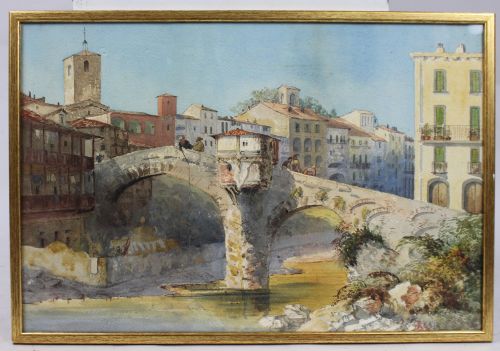
The variety encompasses distinct regional schools and stylistic approaches, ranging from nineteenth-century Italianate watercolours to Flemish street scenes and German expressionist canvases. Artists sign their works with initials or full names, anchoring each piece to a specific maker and moment in European art history.
Materials and methods
Painters utilised oil paint or watercolour paint applied to traditional supports such as canvas, wood, paper, and board. Canvases are stretched over wooden frames, whilst works on paper or board often employ protective framing.
Finishing touches frequently include gold leaf or gilt metal highlights within the frames, framing the painted surface and adding a reflective quality to the overall presentation.
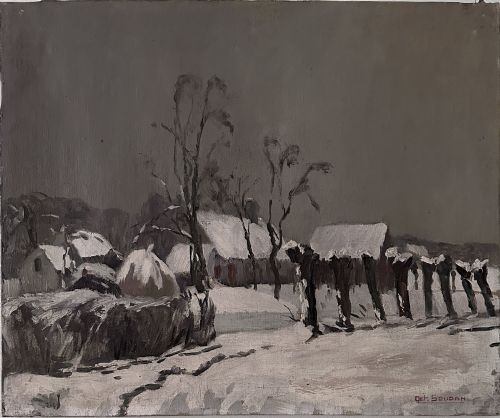
Several artists braved wartime winters to paint snowy village scenes, proving that creativity thrives even when resistance takes the form of a brush.
Judging quality
Quality rests upon the confidence of the brushwork and the clarity of the composition, distinguishing hastily produced decorative items from works executed with deliberate artistic vision. The handling of light, atmosphere, and perspective within landscapes marks the distinction.
The legibility and authenticity of the signature contribute to a piece's standing, alongside the preservation of the original paint layer and support materials free from heavy restoration.
L. De Gent·Mercedes Legrand·E A Minardo·R. Palnay·A. Michaelis
The Signed European Landscape Painting Glossary
- Canvas
- A heavy woven fabric used as a surface for oil painting. It is typically stretched tightly over a wooden strainer frame before painting.
- Watercolour paint
- A water-soluble pigment medium applied to paper. It relies on the white of the paper to show through translucent washes of colour.
- Impressionism
- A style of painting focusing on transient effects of light and ordinary subject matter. Brushstrokes are visible and rapid.
- German Expressionism
- A modernist movement prioritising emotional experience over physical reality. Colours are often bold and forms distorted to convey inner feeling.
- Gilt metal
- A metal base treated with a thin layer of gold or gold-coloured finish. It is frequently found on period picture frames.
Signed European Landscape Painting: Frequently Asked Questions
How do I date these paintings?
Dating relies upon stylistic markers, materials, and explicit inscriptions or dates left by the artist. Comparing the painting technique to established periods like Victorian or mid-century helps narrow the timeframe.
Frame construction and canvas types also offer clues to the era of production, alongside any signatures or biographical records of the maker.
Where should I hang a landscape painting?
These works suit spaces with stable temperature and humidity away from direct sunlight, which can fade pigments over time. Wall placement should consider the scale of the room and the artwork.
Pairing the painting with complementary lighting enhances the visibility of the brushwork and surface texture without causing heat damage.
What is the difference between oil and watercolour?
Oil paint uses drying oils to bind pigments, resulting in a thick, textured surface that can be layered and reworked. Watercolour uses water-soluble binders on paper, creating translucent effects.
Oils require stretcher frames and canvas or wood boards, whilst watercolours need glass protection to prevent moisture and handling damage.
How do I interpret artist signatures?
Signatures appear as initials, monograms, or full names written directly onto the paint surface, often in the lower corners. They link the work to a specific hand recorded in the evidence.
Researching the name can reveal the artist's operational period, regional school, and stylistic context within European art.