
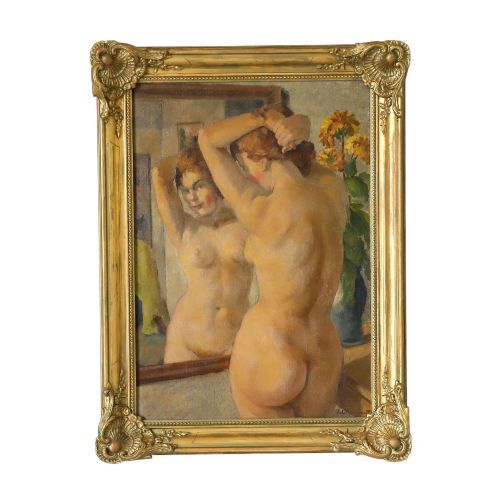
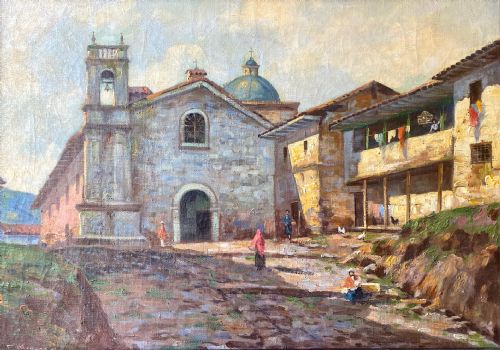


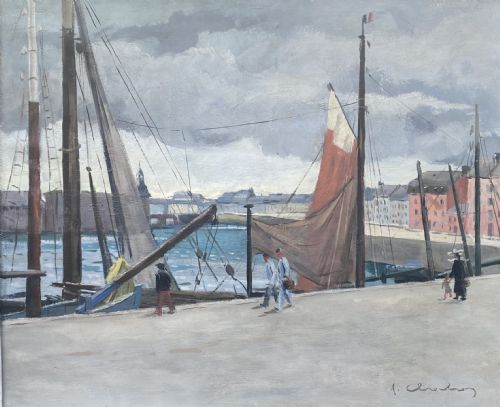
1940s Oil on Canvas
These 1940s oil on canvas works capture wartime resilience, coastal light, and modernist abstraction through rich pigment and texture.
1940s Oil on Canvas
A 1940s oil on canvas brings together mid-century modernism, impressionism, and realism executed across European and American studios. The pieces you meet here include street scenes from the South of France, sporting art, and cubist interiors.
The decade's output reflects both the shadow of conflict and a vibrant push into abstraction. French, Swedish, and British painters dominate the selection, often working in smaller formats suited to wartime conditions.
How they were made
Artists built these images using oil paint applied directly onto stretched canvas surfaces. Wooden frames, sometimes finished with gilt, complete the construction of the surviving works.
Pigment handling varies from thin, sun-drenched washes in Mediterranean scenes to thick, expressive impasto found in German expressionist and modernist compositions.
1940s Oil on Canvas Retail Price Guide 2026
Typical asking prices for 1940s oil on canvas among the pieces listed under this phrase on Sellingantiques today, from the lower quarter to the upper quarter. They describe what is for sale here now, not the wider market.
Materials recorded across the archive include oil paint, canvas, wood, and gilt frames.
What varies in quality
Compositional strength and brushwork control separate routine decorative output from commanding works of the period. The handling of light, particularly in street scenes and interiors, defines the success of the canvas.
The clarity of provenance and the artist's engagement with contemporary movements such as the St Ives School or French avant-garde circles elevate specific pieces above the general run.
Philippe de Rougemont·Denis Mitchell·Mercedes Legrand·William McCance
The 1940s Oil on Canvas Glossary
- Impasto
- Paint applied thickly to a canvas, standing out in relief from the surface. This technique allows brush marks or palette knife strokes to catch the light.
- St St Ives School
- A group of artists living and working in Cornwall during the mid-twentieth century. Their output is closely linked to British modernism and abstract landscape art.
- Avant-garde
- New and experimental ideas in art, particularly those challenging traditional representation. In this period, it manifests in distorted perspective and bold colour choices.
- Gilt frame
- A wooden picture surround covered with a thin layer of gold leaf or gold paint. These frames are period-appropriate fixtures for mid-century canvases.
1940s Oil on Canvas: Frequently Asked Questions
What subjects appear most often?
Portraits, domestic interiors, and continental street scenes dominate the painted output of this decade. Landscapes from the South of France and rural Britain also recur frequently across the selections.
Artists frequently turned to still life and figurative work, reflecting both immediate domestic surroundings and broader European modernist currents.
How should I care for an oil on canvas?
Keep the canvas away from direct sunlight and dramatic shifts in room humidity to prevent paint cracking. Dust the surface gently with a soft, dry brush without applying pressure.
Avoid using liquid cleaners or water on the painted area. Ensure the wooden frame is securely hung to support the weight safely.
How do I identify a 1940s frame?
Mid-century frames often feature simple wooden mouldings, sometimes with subtle gilt finishes or painted borders that complement the modernist aesthetic. They lack the heavy plaster ornamentation typical of Victorian examples.
Checking the reverse reveals aged wood, old fixings, and occasionally exhibition labels or artist inscriptions from the period.
Did wartime shortages affect the paintings?
Canvas and quality pigments were difficult to source during the Second World War in Europe. Some artists reused older canvases or painted on smaller boards.
This material constraint sometimes results in a leaner application of paint or interesting under-paintings visible beneath the final composition.