






Cubist Oil Painting
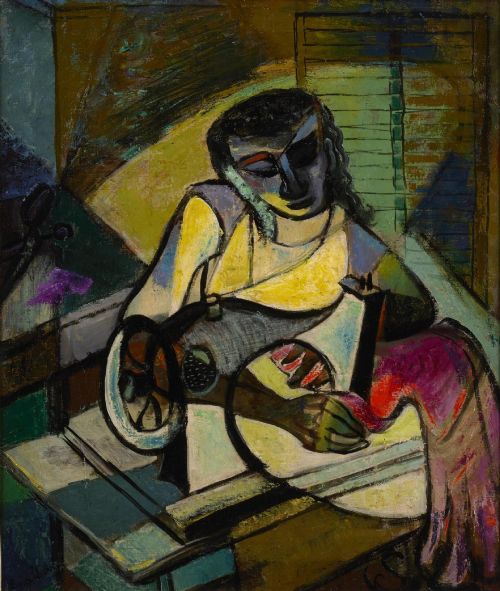
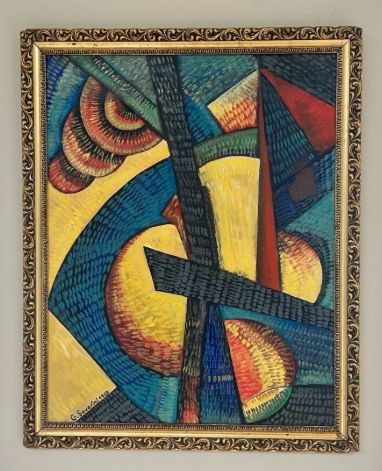
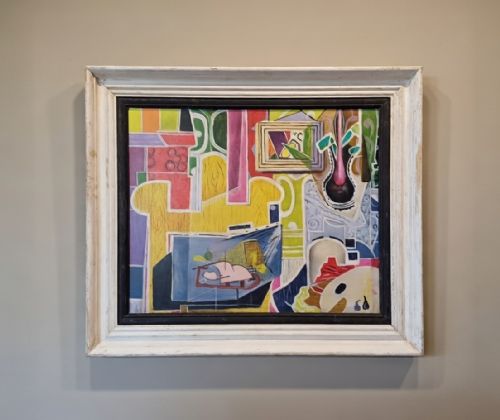
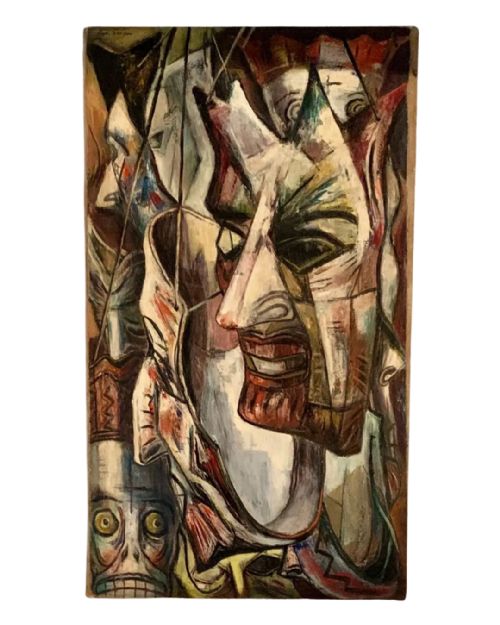
Cubist oil painting works display fractured forms and intersecting planes, offering structured depth that appeals to collectors seeking avant-garde wall art.
Cubist Oil Painting
A cubist oil painting presents fractured perspectives, reducing subjects like figures, interiors, still lifes, and landscapes into geometric planes and abstracted forms. These artworks span several decades, appearing in mid-century modern, art deco, and French modernist styles.
The compositions on this page range from early twentieth-century works originating around nineteen-twenty to nineteen-forty, through to mid-century modern examples dated across the nineteen-fifties and nineteen-sixties. Forms vary from paintings on canvas and hardboard to framed wall art.
Subjects include interiors, botanical studies, portraits, and village scenes executed by international makers. Buyers encounter French modernist canvases alongside British and Haitian interpretations of the style.
Materials and methods
Artists apply oil paint directly onto canvas or hardboard supports, building up pigment to delineate intersecting planes and structured compositions. Selected works retain their original gilded wood frames.
Makers utilise brushwork and palette knife techniques to manipulate oil paint across the surface, creating textured layers that emphasise the geometric division of space characteristic of the movement.
The listings show works produced across five distinct decades, spanning from nineteen-twenty to nineteen-sixty-eight.
Assessing visual execution
Quality rests in the coherence of the geometric restructuring and the confidence of the brushwork across the canvas or board. Stronger examples maintain tension between the abstracted subject and the underlying grid.
The strength of the colour palette and the sophistication of the spatial arrangement distinguish ambitious modernist compositions from more derivative decorative pieces.
Gino Severini·Jean Hippolyte Marchand·Burr Singer·Jacques Carelman·Calixte Henri·Nicolas Issaiev
The Cubist Oil Painting Glossary
- Cubism
- An early twentieth-century avant-garde art movement that revolutionised European painting by breaking subjects down into a multiplicity of viewpoints. It rejected traditional perspective in favour of flat, geometric planes.
- Oil paint
- A slow-drying paint made by combining pigments with a drying oil, typically linseed. It allows artists to blend colours smoothly and build thick, textured layers.
- Hardboard
- A type of fibreboard engineered from wood fibres, used as a rigid support for paintings in place of traditional woven canvas.
- Avant-garde
- New and experimental ideas in the arts, describing creators who push beyond traditional boundaries and established conventions.
Cubist Oil Painting: Frequently Asked Questions
What subjects do they show?
The subjects encompass still life arrangements with fruit, chestnut leaves, and soup tureens, alongside interior scenes, dancers, landscapes, and human figures. Artists also depict village views and abstract geometric compositions.
These varied motifs allow the artists to experiment with fractured perspectives and intersecting planes across different genres of painting.
How should I hang them?
These works suit modern and traditional interiors alike, often housed in their original gilded wood frames that complement the painted geometry. Consider placing them where lighting enhances the texture of the oil paint.
Ensure the wall space allows the bold lines and structured compositions to command attention without visual competition from surrounding furnishings.
How do I identify the period?
Dating relies on stylistic markers, dated signatures, and recorded periods ranging from nineteen-twenty through to the nineteen-sixties. Mid-century examples often display brighter palettes and looser abstraction.
Early pieces from the nineteen-twenties and nineteen-thirties frequently align with art deco sensibilities and strict cubist geometry.
Are they painted on canvas?
Many examples are executed in oil on canvas, while others utilise hardboard supports or wooden boards. Some pieces retain period framing that matches the construction era.
The choice of support often influences the texture and preservation of the paint layer over time.