

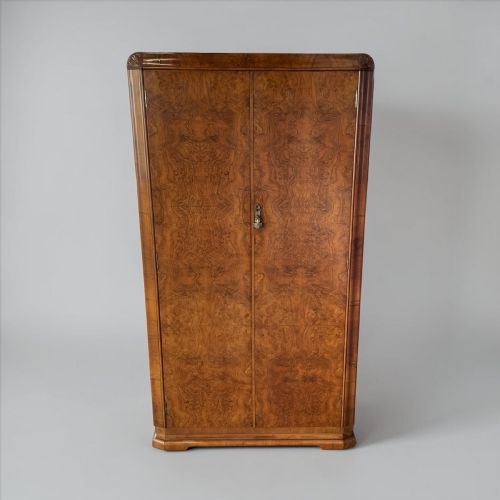

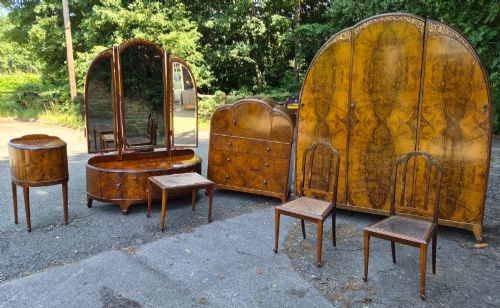
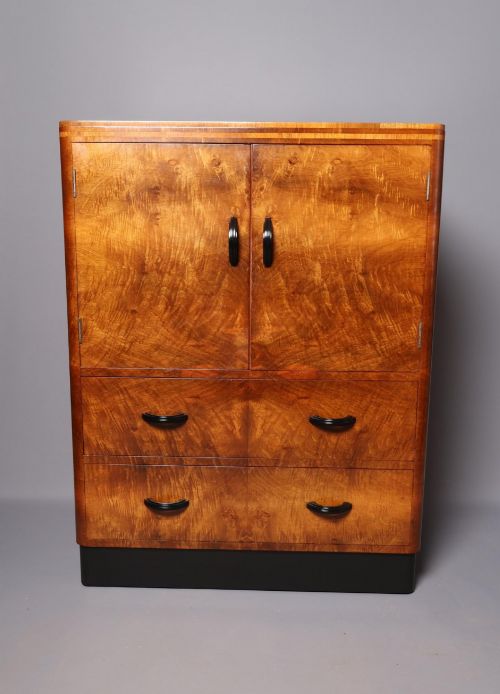
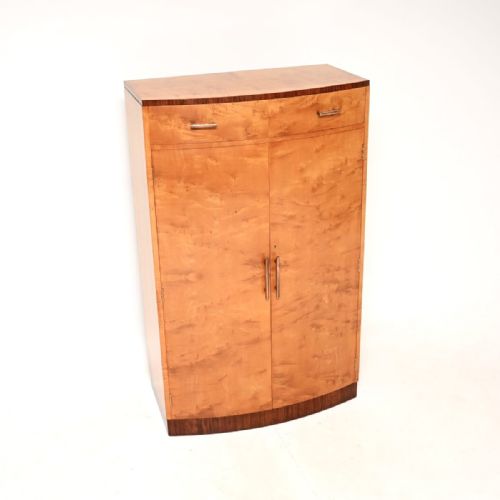
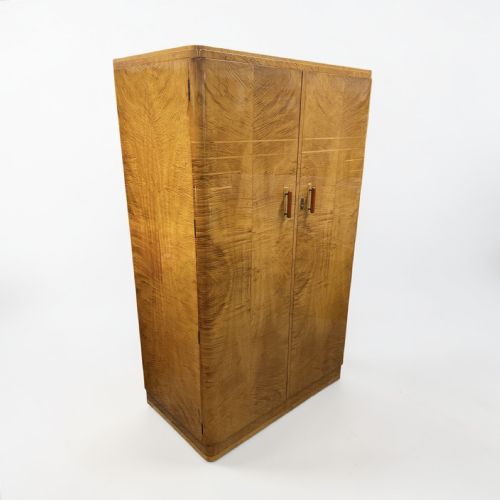


1930s Walnut Wardrobe
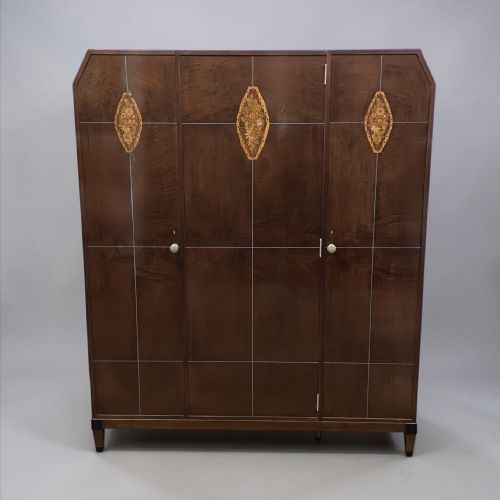
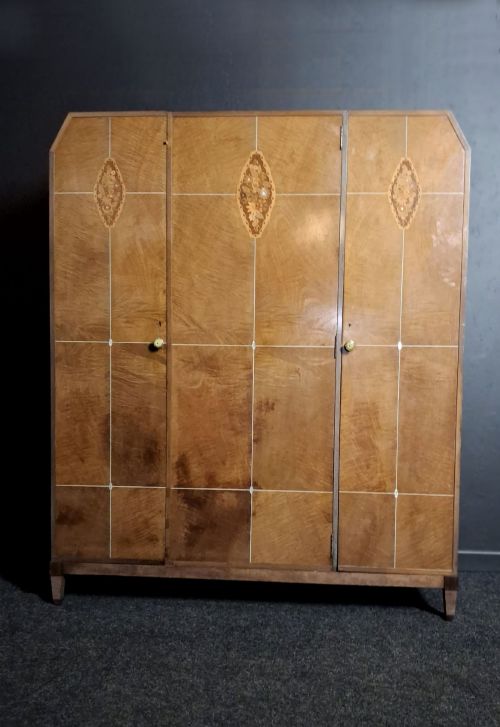
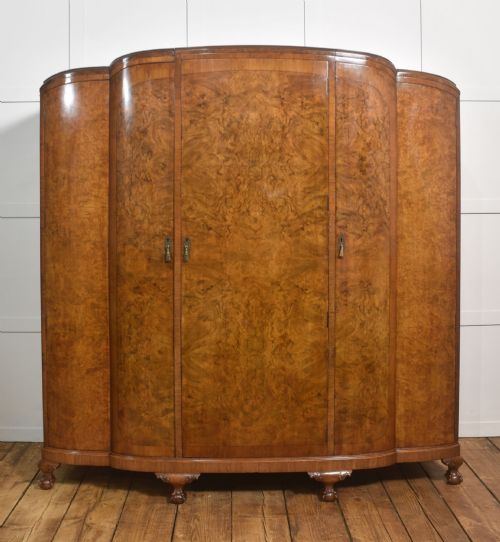
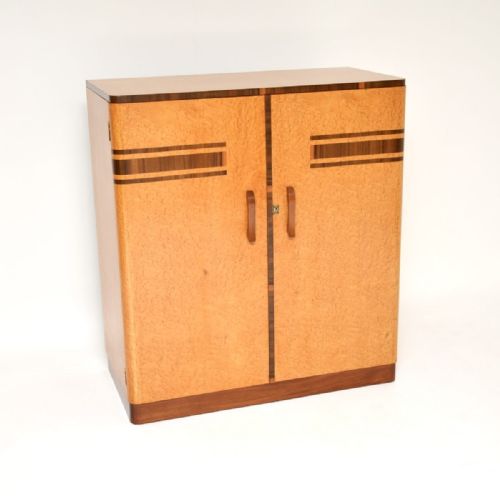
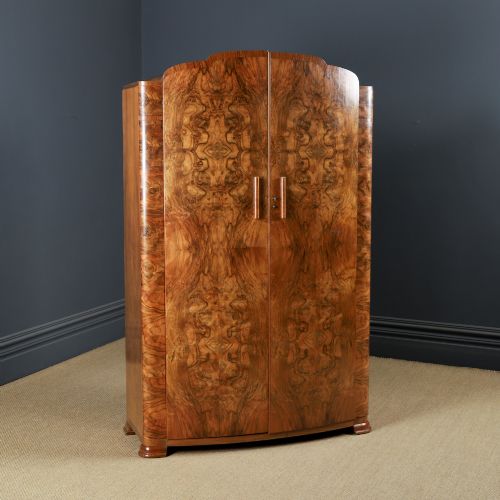
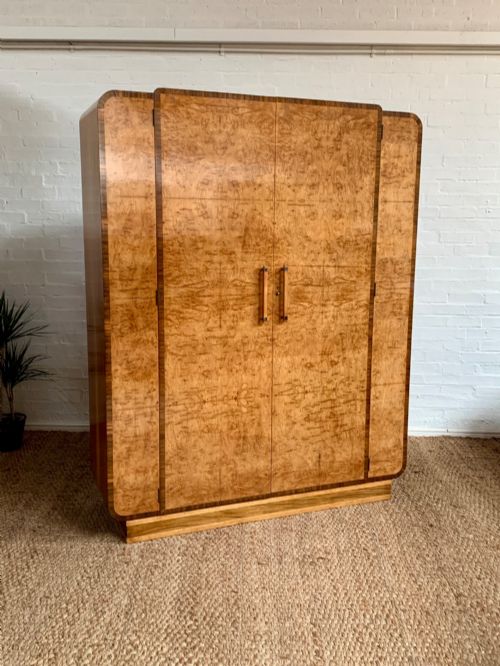
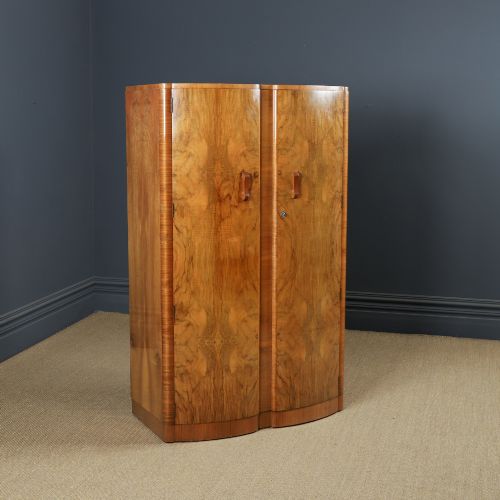
These 1930s walnut wardrobe pieces offer striking Art Deco grain patterns and generous storage, bringing genuine period character to a modern bedroom.

1930s Walnut Wardrobe
A 1930s walnut wardrobe is a substantial bedroom storage piece defined by the bold geometric styling of the Art Deco period. Most examples you will encounter combine practical hanging space with fitted interior compartments, serving as both wardrobe and compactum.
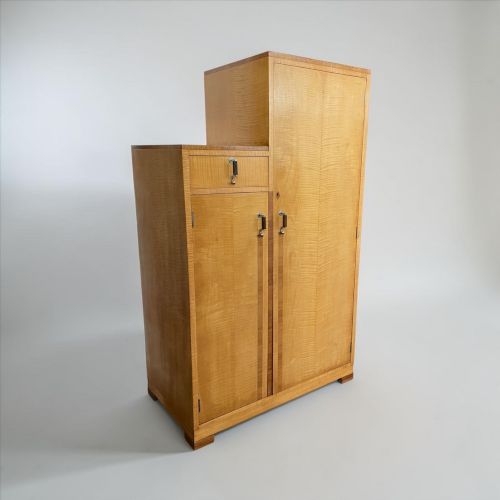
The selections recorded here span the 1920s to the 1940s, capturing the height of English Art Deco cabinetmaking. Alongside standard two and three-door wardrobes, you will find tallboys, chests of drawers, and complete bedroom suites sharing the same distinctive timber finish.
What varies in quality
Quality in these pieces rests primarily on the selection and preservation of the veneer work, where master makers achieved striking visual rhythm through careful timber pairing. The complexity of the interior fitting also separates standard storage cupboards from superior compactums equipped with specialised compartments.
Maker attribution elevates certain pieces, with workshops known for distinct architectural lines and meticulous construction commanding particular attention. The integrity of the foundational wood and the precision of the door alignment further distinguish the finest examples.
1930s Walnut Wardrobe Retail Price Guide 2026
Typical asking prices for 1930s walnut wardrobe among the pieces listed under this phrase on Sellingantiques today, from the lower quarter to the upper quarter. They describe what is for sale here now, not the wider market.
Some compactums include specialised compartments designed specifically to keep gentlemen's trousers crisp and hats protected.
Frank Taylor & Co.·Heal's·Harry and Lou Epstein·Waring & Gillow
The 1930s Walnut Wardrobe Glossary
- Burr walnut
- A prized timber harvested from the irregular growths of a walnut tree, yielding dense and swirling grain patterns. It was frequently sliced into thin veneers for the face of Art Deco wardrobe doors.
- Compactum
- A multi-functional wardrobe that incorporates drawers, shelving, and hanging space within a single cabinet. These units often feature specialised compartments for gentlemen's or ladies' attire.
- Breakfront
- A cabinet design where the central section projects forward from the flanking doors. This architectural layout adds depth and visual interest to larger wardrobes.
- Tallboy
- A tall storage chest combining wardrobe or drawer compartments in a vertical format. It provides ample vertical capacity while occupying a smaller floor footprint.
1930s Walnut Wardrobe: Frequently Asked Questions
Will a 1930s wardrobe fit modern clothes hangers?
Many wardrobes from this era were built with shallower depths than contemporary closets, meaning standard modern coat hangers may need to be hung at an angle or replaced with narrower alternatives.
It is advisable to check the internal hanging depth of specific models before purchase to ensure your garments will fit comfortably without crushing the doors.
How do I care for burr walnut veneer?
Burr walnut requires protection from direct sunlight and extreme temperature fluctuations to prevent the delicate veneer from drying out or lifting over time.
Regular dusting with a soft, dry cloth and occasional application of appropriate furniture wax will maintain the lustre of the timber without damaging the surface.
What is the difference between a wardrobe and a compactum?
A standard wardrobe focuses primarily on vertical hanging space behind two or three large doors, sometimes supplemented by a single base drawer.
A compactum divides the interior space to include built-in shelving, smaller drawers, and compartmentalized storage alongside the main hanging section.
Can these wardrobes be dismantled for moving?
Most pieces from this period were constructed as solid, single-carcass units designed to remain assembled rather than flat-packed for transport.
Because of their heavy wood construction and fitted interiors, professional removal or careful planning for stairways and doorways is usually necessary when relocating them.