


1930s Walnut Desk
Looking for a 1930s walnut desk means hunting for striking grain patterns and geometric forms that bring genuine Art Deco character to a home office.
What a 1930s walnut desk is
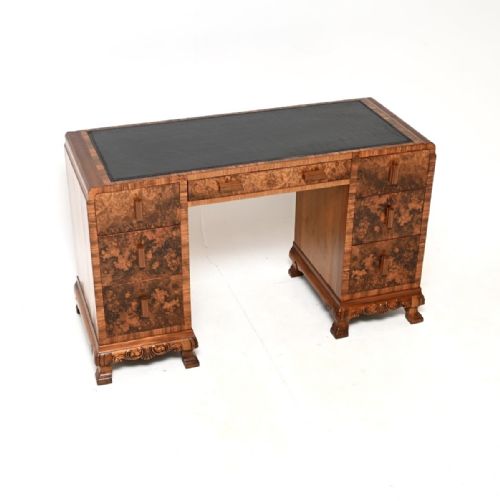
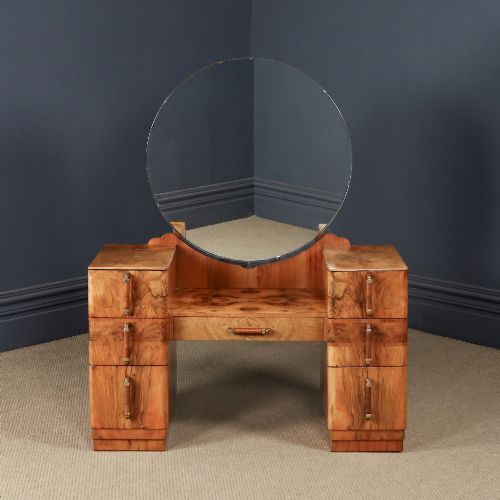
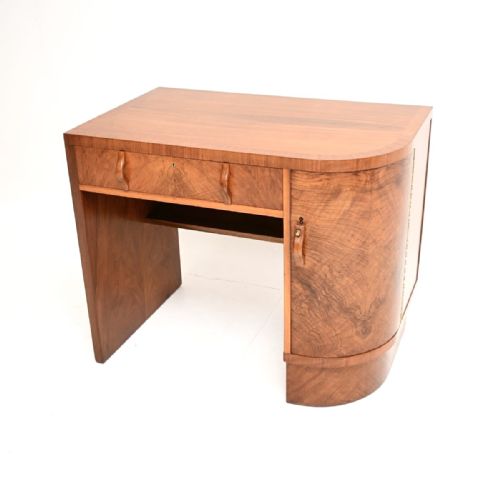
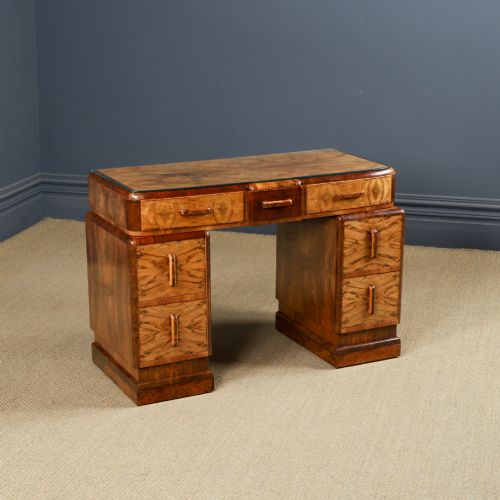
A 1930s walnut desk brings distinct Art Deco style into a room through geometric forms, cloud-shaped silhouettes and compact writing furniture. Buyers searching this phrase look for functional workspace combined with the rich, decorative grain characteristic of the period.
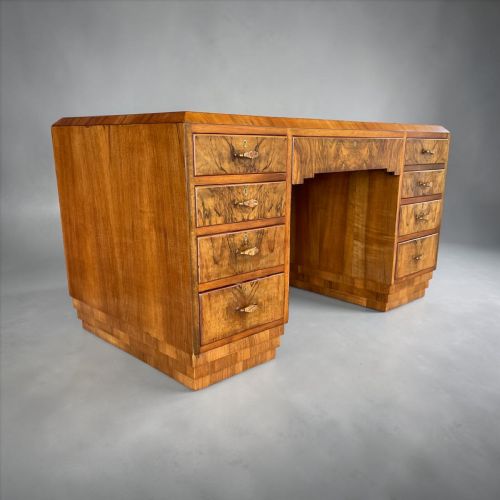
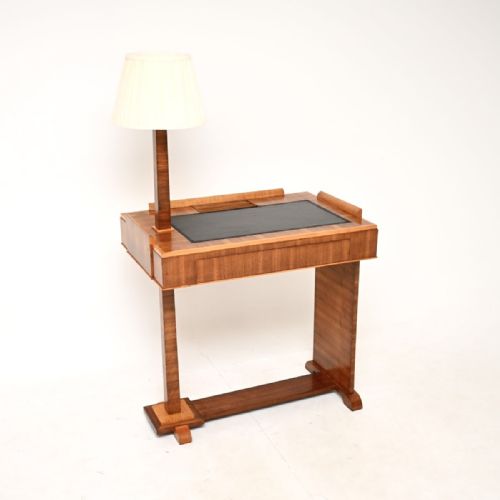
English pieces from this era frequently employ figured walnut or burr walnut veneers over solid carcases. The designs range from simple writing tables to integrated setups with built-in lighting.
How they were made
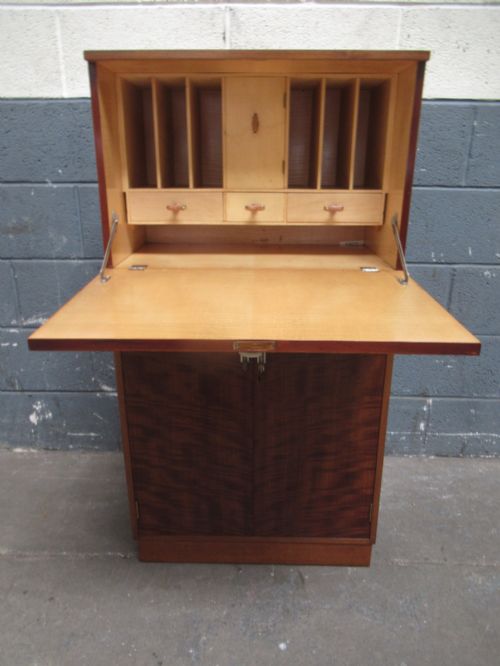
Cabinet makers constructed these desks using timber frames finished with walnut, burr walnut, and walnut veneer, occasionally pairing the dark wood with lighter sycamore contrasts. Writing surfaces frequently incorporated inset leather panels.
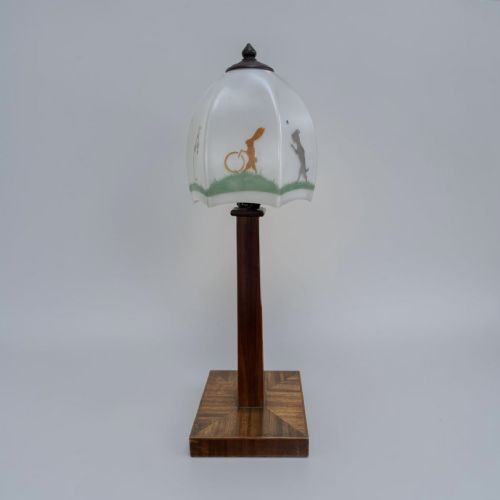
Metal elements including brass fittings and chrome details appeared alongside wooden structures, particularly in desks featuring integrated lamps or specialised hardware.
Retail Price Guide 2026
Typical UK retail prices for 1930s walnut desk, calculated from the Sellingantiques database of over a million retail prices indexed since 2003. This retail price guide relies exclusively on Sellingantiques data; no external sources or auction records are used, so the figures do not describe the wider market.
Current listings feature pieces exclusively from the 1920 and 1930 periods, executed in walnut, burr walnut, sycamore, metal, leather, brass, and chrome.
What varies in quality
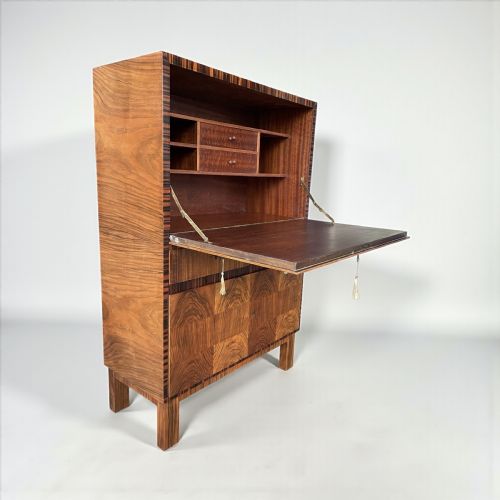
Quality separates through the selection and matching of wood veneers, where symmetrical figured walnut or burr walnut creates a balanced facade across drawers and writing flaps. The handling of secondary timbers like sycamore and the integration of metal components demonstrate the skill of the maker.
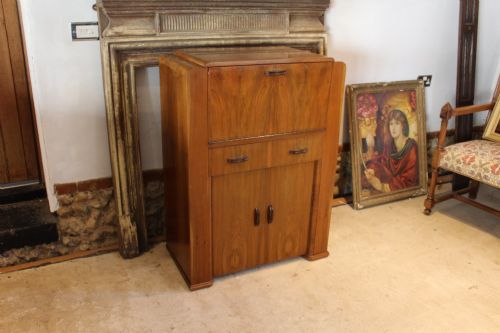
Design ambition dictates the upper tier of pieces, moving away from simple rectangular forms toward cloud-shaped silhouettes or specialised pieces associated with known designers like Maurice Adams.
Maurice Adams
The 1930s Walnut Desk Glossary
- Burr walnut
- A prized wood veneer showing knotted, swirling grain patterns formed from tree growths. This material provides highly decorative surfaces on Art Deco furniture.
- Art Deco
- A design style from the early twentieth century characterised by sleek lines, geometric shapes, and modern materials. It dominates the aesthetic of these desks.
- Sycamore
- A light-coloured hardwood utilised for contrasting details and internal linings within walnut furniture. It highlights the darker surrounding veneers.
- Writing bureau
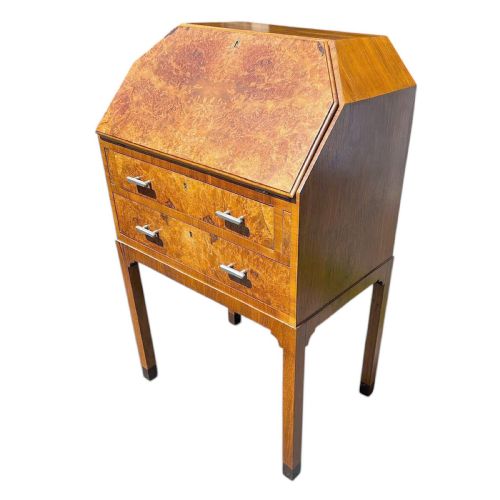
- A desk featuring a sloping flap that opens down to reveal a writing surface and pigeonholes. These items offer compact storage for correspondence.
Frequently Asked Questions
What makes a 1930s walnut desk distinct?
These pieces stand out through their embrace of Art Deco design principles, utilising figured walnut and burr walnut veneers to create striking visual patterns. Forms often include cloud-shaped writing bureaus and compact writing tables.
They combine practical workspace with decorative ambition, frequently incorporating materials like chrome, brass, sycamore, and leather alongside the primary wood.
How do I fit a vintage desk into a modern room?
A compact walnut desk functions well as a standalone workspace in a study or living area without dominating the room. The rich brown tones of the walnut grain pair easily with neutral walls and modern seating.
Peculiarities like integrated lamps or drop-down bureau flaps add practical utility while maintaining a distinct historical focal point.
Were these desks used primarily for writing?
While designated as writing tables or bureaus, these pieces served for correspondence, household administration, and early paperwork. The inclusion of integrated drawers and writing flaps provided storage for stationery.
Some specialised examples incorporated built-in lighting to aid evening work before overhead room lighting was common.