


1930s Vitrine Cabinet
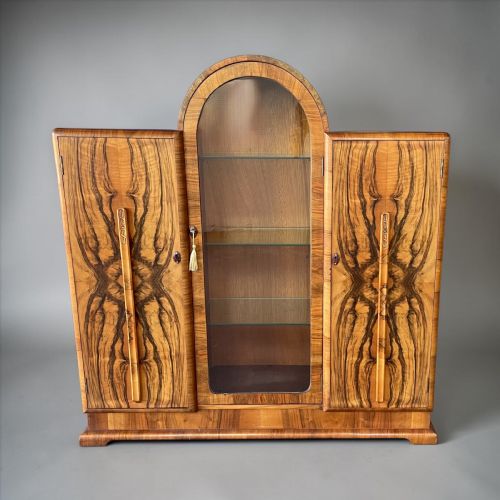
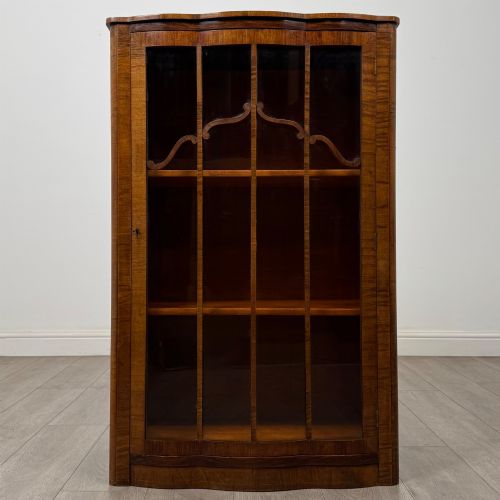
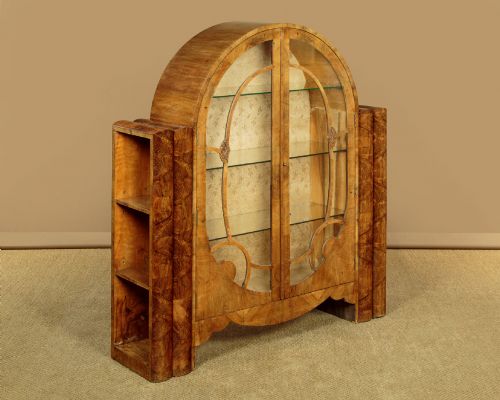
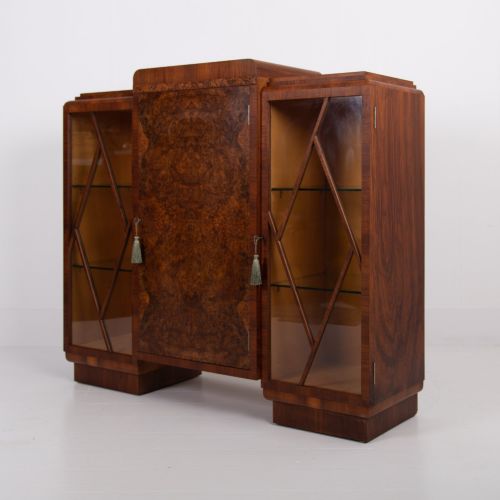
A 1930s vitrine cabinet brings sophisticated display space into a room through curved glazing and rich walnut veneers.
1930s Vitrine Cabinet
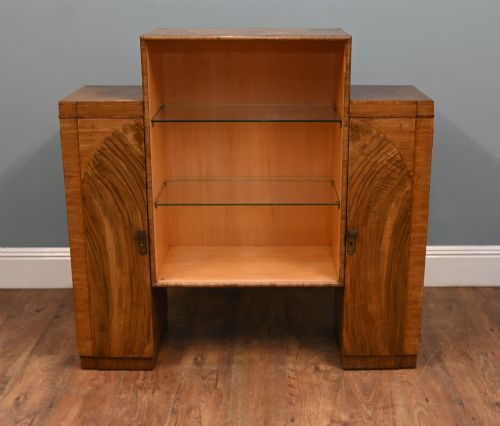
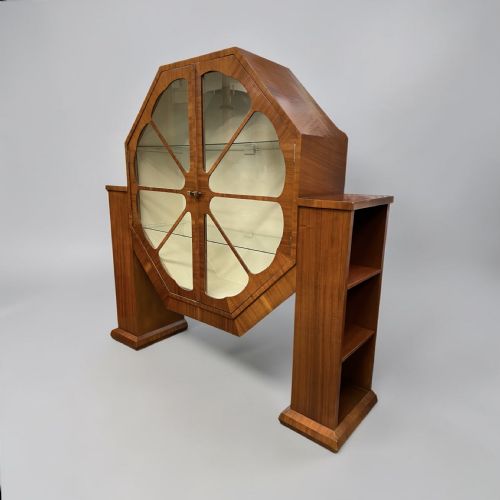
When searching for a 1930s vitrine cabinet, collectors encounter primarily Art Deco pieces designed to showcase porcelain, glass, and silverware. The selection centres on display cabinets, bookcases, and specialised forms shaped with distinct geometric or curvilinear silhouettes.
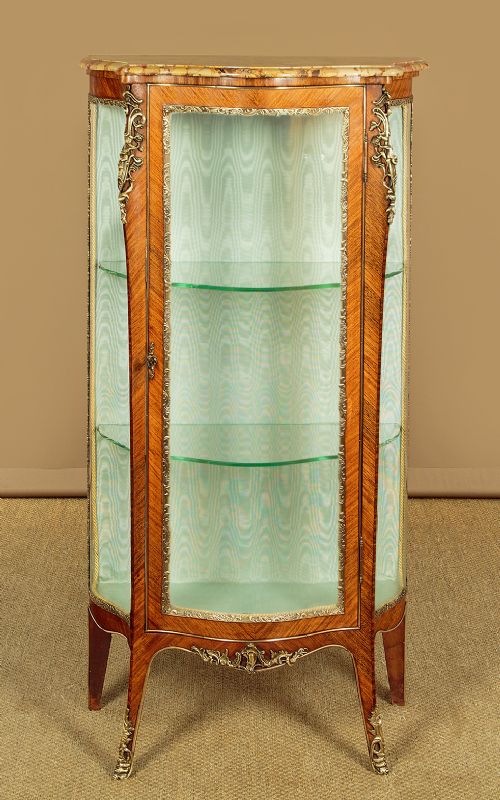
The dominant aesthetic draws heavily from the 1930s interwar period, though Edwardian examples and revivals referencing Louis XV, Queen Anne, and Neoclassical styles also appear. English workshops produced many of the walnut and oak variations, alongside occasional French and Italian pieces.
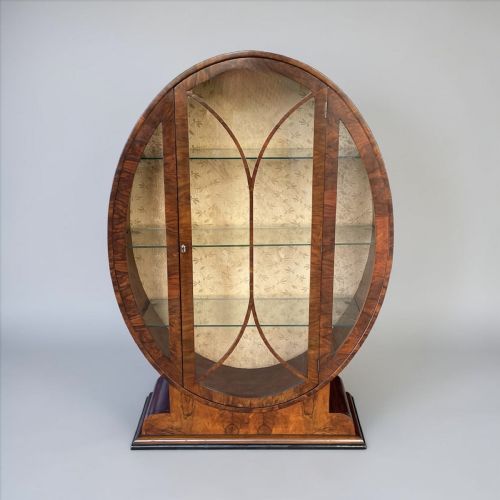
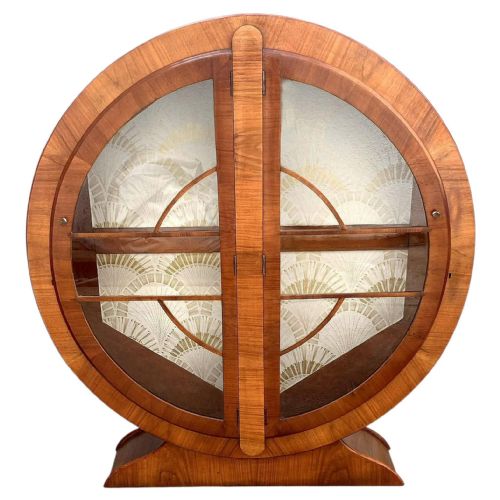
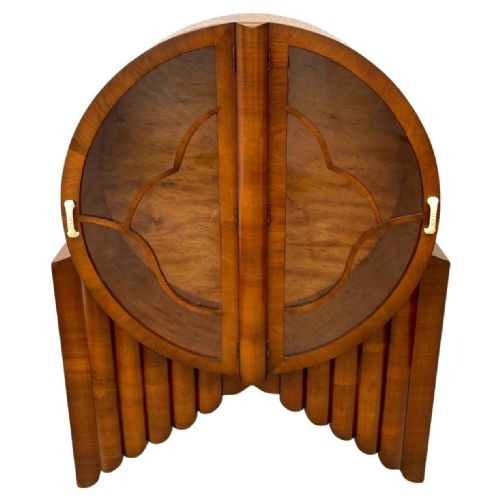
Formations range from standard rectangular display cabinets to unusual circular, oval, clove-shaped, hexagonal, octagonal, and rocket cabinet designs. Glazed doors dominate the inventory, frequently paired with fitted shelving to hold collections securely in view.
How they were made
Cabinet makers constructed these pieces primarily using solid timbers like oak and mahogany as foundational frames, overlaid with figured walnut, burr walnut, and sycamore veneers. Brass mounts frequently accent the woodwork, adding structural and decorative contrast.
Glazing techniques define the period, utilising standard glass alongside leaded panels and curved panes tailored to circular or polygonal bodies. Fabric linings sometimes furnish the interior back panels to complement the displayed objects.
Listings feature walnut, oak, mahogany, and marble, spanning Art Deco, Edwardian, and Neoclassical Revival styles.
What varies in quality
The caliber of a 1930s vitrine cabinet rests heavily on the selection and matching of walnut veneers across the curved and flat surfaces. Exceptional pieces demonstrate seamless grain continuity and deliberate patterning that elevates the visual impact of the silhouette.
Joinery execution and the complexity of the cabinet's geometry separate standard commercial production from masterwork output. Superior items incorporate custom-bent glass and meticulous brass detailing that withstands close inspection.
Rurka·Maurice Adams·Epstein·E. Pollard & Co. Ltd.
The 1930s Vitrine Cabinet Glossary
- Vitrine
- A glass-fronted cabinet designed specifically for displaying fine objects or collections. These pieces rely heavily on transparent panels to maximise visibility from multiple angles.
- Burr walnut
- A highly prized wood veneer derived from the growths or burrs on walnut trees. It yields swirling, intricate grain patterns that catch the light.
- Art Deco
- A dominant design style of the interwar period characterised by streamlined shapes, geometric ornamentation, and modern materials. It heavily influences the silhouette of these cabinets.
- Leaded glass
- Glass panes held together by strips of lead came to form decorative geometric windows. This technique appears on select glazed doors of the era.
- Rocket cabinet
- A colloquial term for tall, tapered circular display cabinets popular during the interwar period. Their slender profile resembles the nosecone of a rocket.
1930s Vitrine Cabinet: Frequently Asked Questions
What is a 1930s vitrine cabinet?
A 1930s vitrine cabinet is a glazed display case produced during the interwar period, typically styled in Art Deco designs with walnut veneers. They served to display porcelain, glassware, and decorative objects safely behind glass doors.
Most examples employ curved or geometric forms such as circles, hexagons, and ovals. They stand in living rooms or dining spaces as both storage and focal furniture pieces.
How do I identify an Art Deco display cabinet?
Art Deco display cabinets are recognised by their streamlined silhouettes, symmetrical geometry, and lavish use of figured walnut or burr walnut veneers. They frequently feature curved glass panes and minimal carved ornamentation.
Makers of the era prioritized sleek lines over historic revival details, resulting in forms like circular, octagonal, and clove-shaped bodies. Brass mounts and sycamore stringing often provide subtle contrast.
Where were these cabinets placed in a home?
These cabinets were historically positioned in reception rooms, drawing rooms, and dining areas where guests could admire displayed collections. Their glazed panels kept dust away from delicate porcelain and silver.
Today, they function similarly in domestic interiors, anchoring corners or wall spaces while providing vertical display storage without dominating a room.
How do I clean walnut veneer?
Walnut veneer requires gentle cleaning with a soft, dry cloth to remove dust without scratching the polished surface. Avoid using harsh chemical sprays or excessive water that could penetrate the wood.
Applying a traditional beeswax polish occasionally helps nourish the wood and maintain its natural lustre. Care must be taken around glazed joints and brass mounts.