


1930s Still Life
1930s still life works capture the domestic and decorative shifts of the interwar period through oil on canvas, gouache, and board.
1930s Still Life
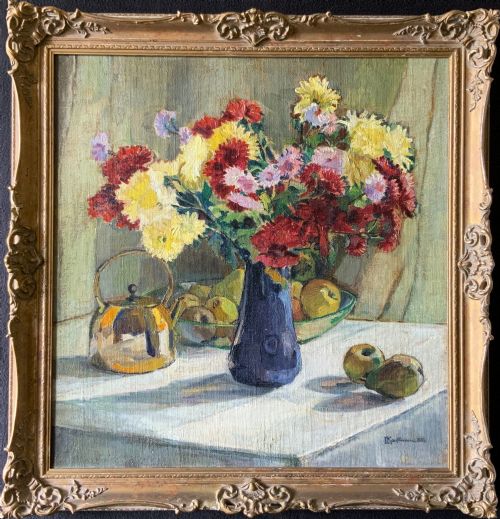
When you search for 1930s still life, you encounter paintings that record interiors, domestic objects, and floral arrangements produced during the 1930s and 1940s. These pieces reflect the dominant visual languages of the decade, shifting between traditional realism, post-impressionist brushwork, and surrealist composition.
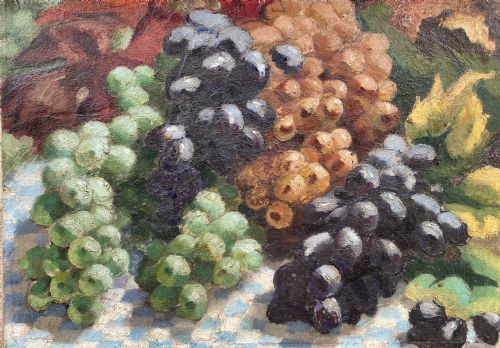
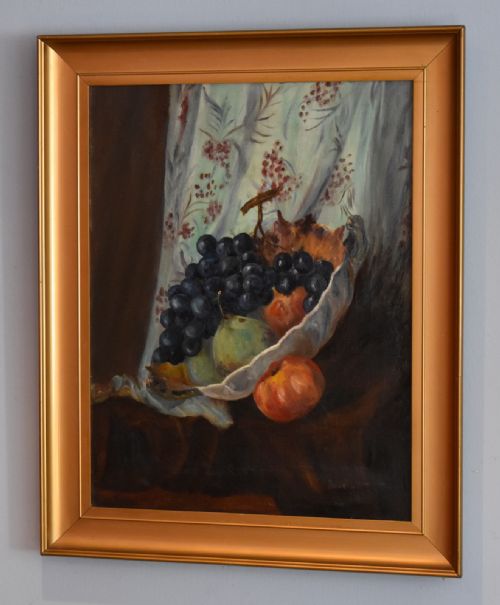
The most common form on this page is the oil painting on canvas, frequently depicting floral bouquets, bowls of fruit, or studio interiors. Painters of this period worked within distinct regional movements, ranging from British modernism to French and Swedish schools.
Subjects range from simple tables set with geraniums and oranges to complex interior views featuring art deco motifs and globes. These works offer a direct window into the domestic aesthetics and painterly techniques of the interwar years.
How they were made
Artists of this period primarily applied oil paint to stretched canvas or prepared board, utilising brushes and palette knives to build texture and form. Gouache on board also appears, offering a more matte surface finish for detailed graphic compositions.
Supports often include wooden stretchers and occasionally incorporate carved frames that reflect the period aesthetic. Pigments were worked wet-on-wet or in distinct layers to capture the interplay of light on interiors and tabletop arrangements.
A lone globe spins quietly inside a surrealist French interior, reminding everyone that even still life artists needed to escape the room.
What varies in quality
Quality in these paintings rests upon the handling of light, shadow, and spatial depth within the composition. Works that successfully balance tone and structure stand apart from simpler decorative studies.
The sophistication of the palette and the confidence of the brushwork dictate the standing of a piece. Finer examples display a assured command of colour and form, whereas lesser works rely on rigid arrangements and flat application.
Sir Matthew Smith·Rowland Henry Hill·Harold Edward Conway·Victor Simonin·Bertoldo Taubert·Emile Compard·Jean Francois Laglenne
The 1930s Still Life Glossary
- Oil on canvas
- A painting technique where oil-based pigments are suspended in a drying oil and applied to a woven fabric support. This method allowed artists to achieve rich colour depth and subtle blending.
- Gouache on board
- An opaque water-based medium applied to a rigid wooden or paperboard backing. It dries to a flat, velvety finish.
- Post-Impressionism
- An art movement that extended impressionism while rejecting its limitations, favoring bold colours and distinct symbolic forms. Painters in this tradition focused on structural clarity over pure optical realism.
- Surrealism
- A cultural movement that sought to release the creative potential of the unconscious mind. Works in this style often juxtaposed unrelated everyday objects in dreamlike spaces.
- Art Deco
- A design style characterised by sleek geometric shapes, streamlined forms, and vibrant colours. This aesthetic influenced both the framing and the interior settings of the period.
1930s Still Life: Frequently Asked Questions
What defines a 1930s still life?
These works are paintings created during the 1930s that depict inanimate subject matter such as flowers, fruit, and household items. They reflect the artistic styles of the decade, including realism, post-impressionism, and surrealism.
The materials typically involve oil paint on canvas or board, capturing the domestic interiors and tabletop scenes popular among artists of the period.
How were these paintings used?
Artists created these pieces as studio studies, exhibition works, and decorative items for domestic interiors. They served as a primary outlet for exploring colour harmony and compositional arrangement.
Buyers during the period hung them in living spaces and dining rooms to complement contemporary interior design schemes.
How do I live with an oil painting?
Keep oil paintings away from direct sunlight and steady sources of extreme heat to protect the canvas and pigment. Stable indoor humidity prevents the wooden stretchers and canvas from warping.
Display them on interior walls using secure picture hangers suited to the weight of the frame and support.
How can I tell the period apart?
Dating relies on stylistic markers such as art deco interior elements, modernist brushwork, and the specific composition of tabletop objects. Signatures, exhibition labels, and the construction of the canvas support offer further clues.
Materials like oil on board and specific framing styles also help align a work with the interwar timeframe.