
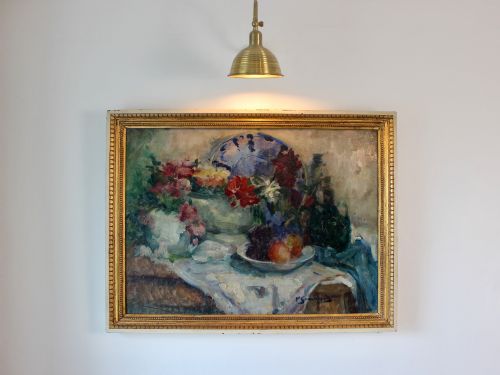

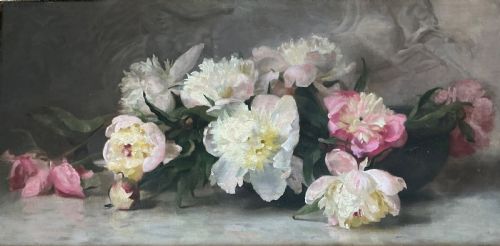

Impressionist Floral Canvas
An impressionist floral canvas brings loose brushwork and vibrant garden scenes into a room through historic oil paintings.
Impressionist Floral Canvas
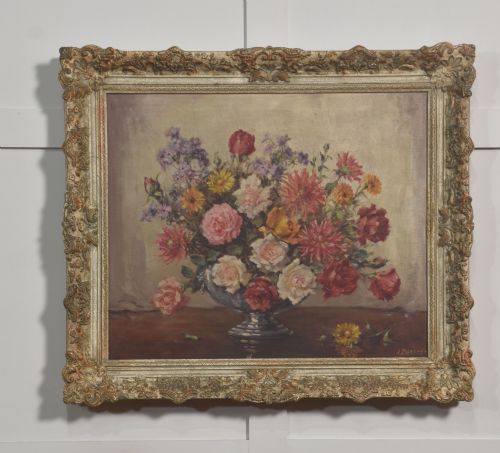
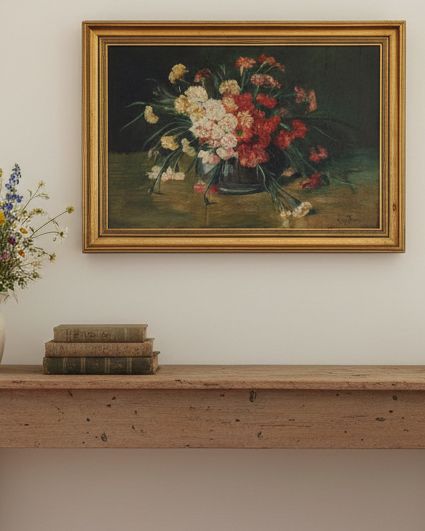
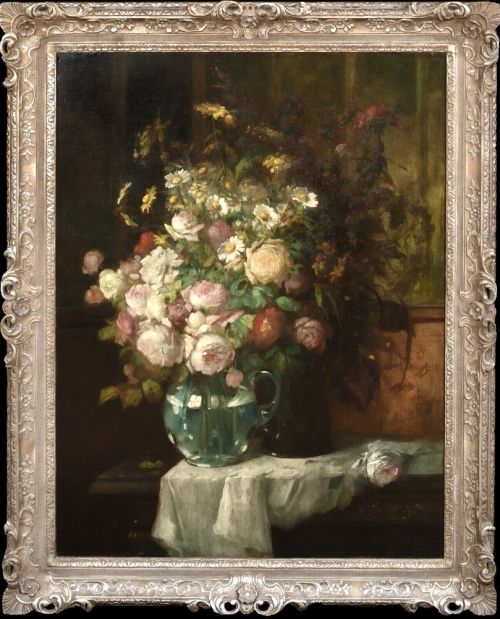
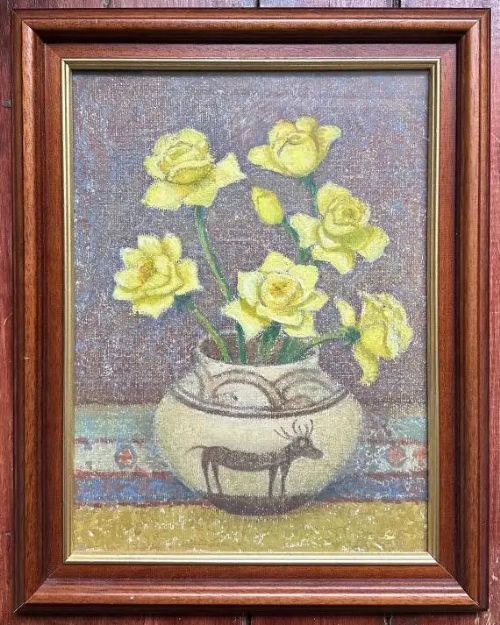
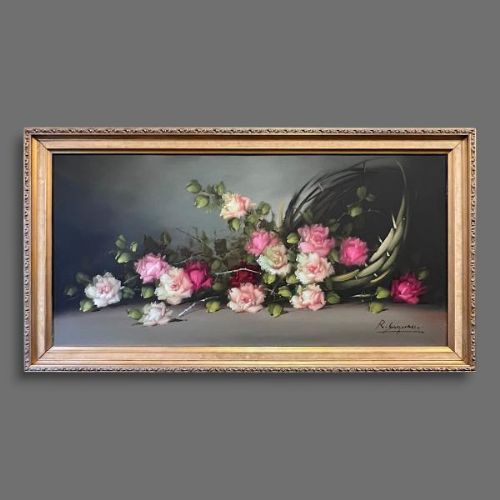
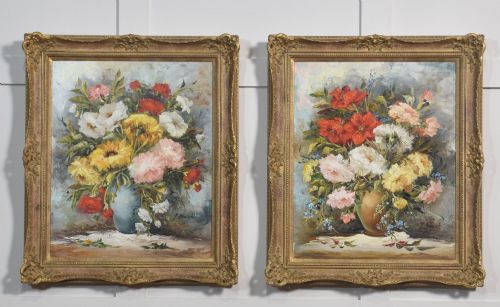
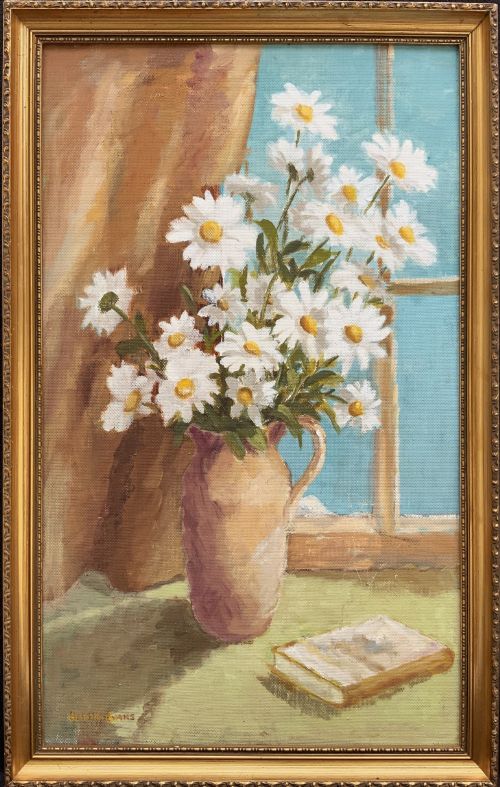
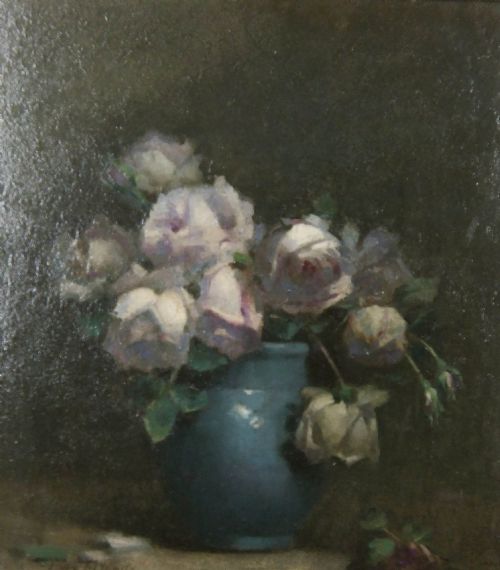
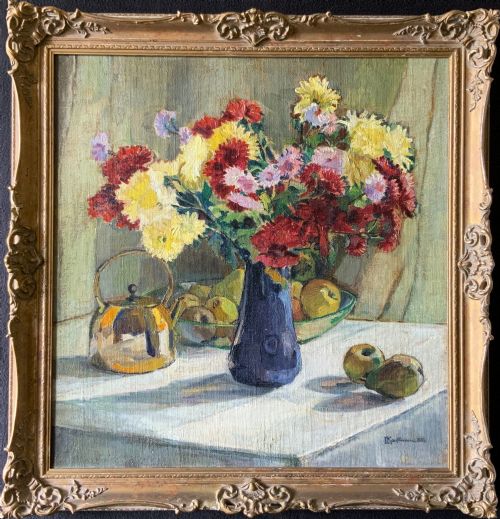
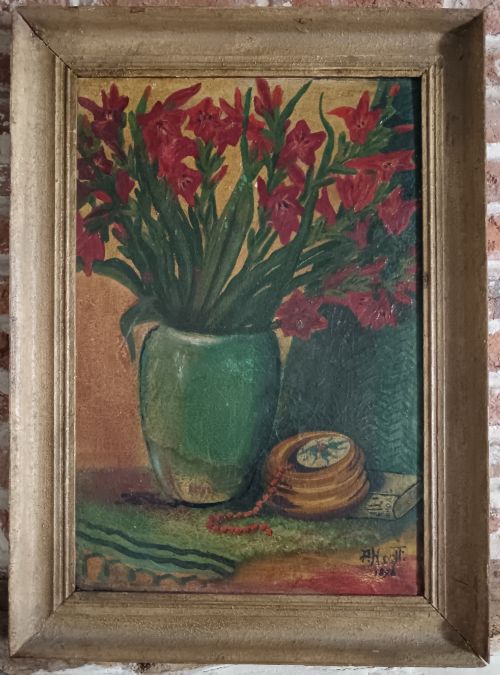
An impressionist floral canvas captures blooms, vases, and garden settings through loose, expressive brushwork rather than rigid botanical precision. When searching for an impressionist floral canvas, collectors encounter oil paintings originating from the nineteenth century through to the mid-twentieth century.
The subjects on this page centre heavily on still lifes of roses, peonies, and summer flowers arranged in pots, baskets, or jugs. Alongside these studio studies, buyers also find garden landscapes and interior window views executed in British Impressionism, Post-Impressionism, and Art Deco styles.
How they were made
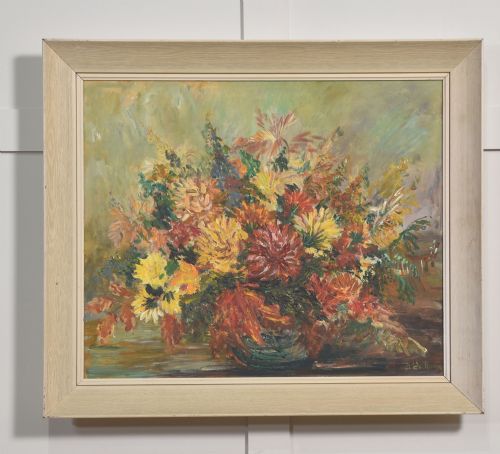
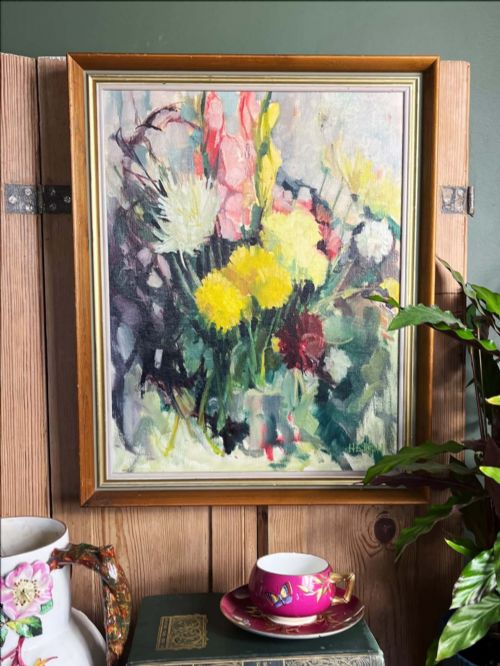
These works rely on oil paint applied to woven canvas supports, occasionally utilising oil on board or prepared panels. Painters built up texture using impasto techniques, laying down thick pigments that catch the light and emphasise the movement of individual petals and leaves.
Many of these paintings survive housed within their original wooden frames, frequently enhanced with gilt and gesso moulding. The combination of oil pigments and period framing defines the physical presence of these historic artworks.
Styles represented include British Impressionism, Post-Impressionism, and Art Deco alongside mid-century interpretations.
What varies in quality
Quality in an impressionist floral canvas rests in the confidence of the brushwork and the harmony of the palette. Stronger examples display a sure command of light and shadow, where loose strokes cohere into a convincing sense of depth and atmosphere.
The integrity of the canvas and the preservation of the pigment layer also differentiate works. Pieces that retain their original textured impasto without heavy overpainting or stabilization issues offer a more direct connection to the artist's hand.
I. Berezny·D. L. Williams·Konstantin Stoitzner·Emma Fordyce MacRae·Manuela Bonati·William Thomas Wood·Victor Simonin·Owen Bowen·Gertrude Hayes·Thomas Bromley Blacklock·Amile Coppieters·Florence Hess·Ernest Higgins Rigg·Sir Matthew Smith·Elizabeth T. Sutcliffe·Edgar Bundy
The Impressionist Floral Canvas Glossary
- Impasto
- Paint applied thickly to a canvas, standing in relief and showing the marks of the brush or palette knife. This technique adds tactile dimension to floral petals and foliage.
- Post-Impressionism
- An art movement following impressionism that explored emotional response and structural form through bolder colours. Artists pushed beyond strict optical realism.
- Still Life
- A painting featuring inanimate subject matter, typically commonplace objects like vases of flowers or bowls of fruit. These compositions focus on arrangement, light, and colour.
- Gesso
- A plaster-like mixture applied to wood or canvas as a base for painting or moulding. On frames, it provides a smooth surface for gilding.
Impressionist Floral Canvas: Frequently Asked Questions
Where should I hang an impressionist floral canvas?
These paintings suit living rooms, dining spaces, or studies where natural light can catch the texture of the oil paint. Placing them away from direct sunlight protects the pigments over time.
Pairing a floral canvas with neutral walls allows the colours of the blooms to stand out clearly within the room.
How do I date an impressionist floral canvas?
Dating relies on stylistic clues, framing, and canvas preparation methods visible on the reverse of the work. Edwardian and art deco pieces often reflect the interior aesthetics and palette choices of their specific decade.
Signatures, dates inscribed on the stretcher bars, and artist records provide further confirmation of the painting's period.
Are these paintings supplied with frames?
Many listings feature original wooden frames, including gilt and gesso designs that match the era of the canvas. These frames are selected to complement the tone and period of the artwork.
Reviewing individual descriptions clarifies whether a specific piece retains its historic frame or is presented unframed.
How do I care for an oil painting on canvas?
Maintenance involves keeping the canvas in stable environments with moderate humidity and away from extreme temperature shifts. Dusting should be done gently with a soft, dry brush.
Avoiding harsh cleaning agents preserves the varnish and the underlying oil layers for future years.