




1930s Round Cabinet
A 1930s round cabinet brings genuine Art Deco geometry to a room, offering practical storage disguised as striking architecture.
1930s Round Cabinet
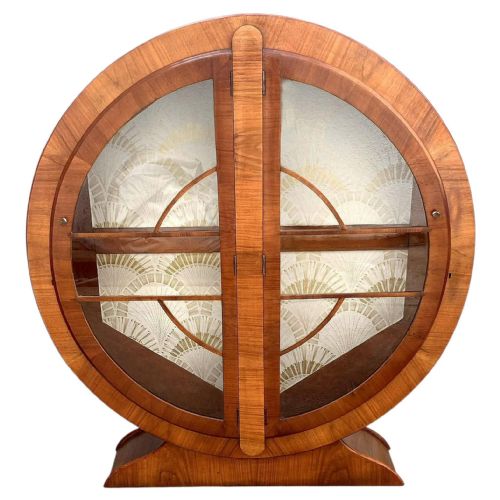
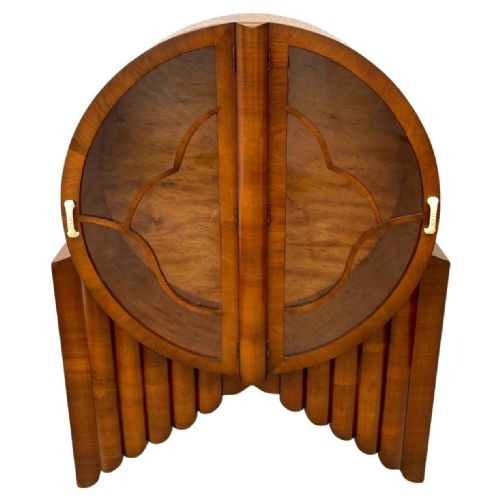
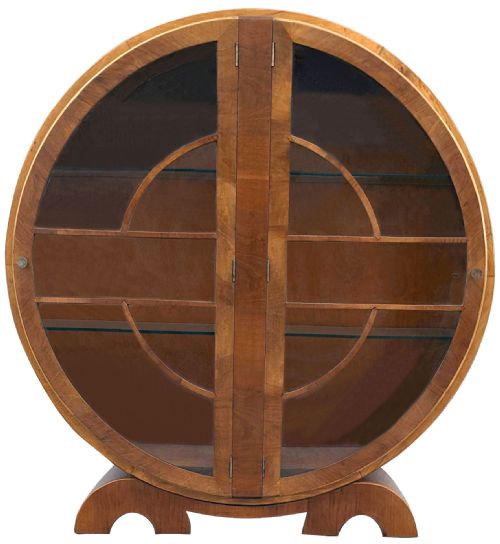
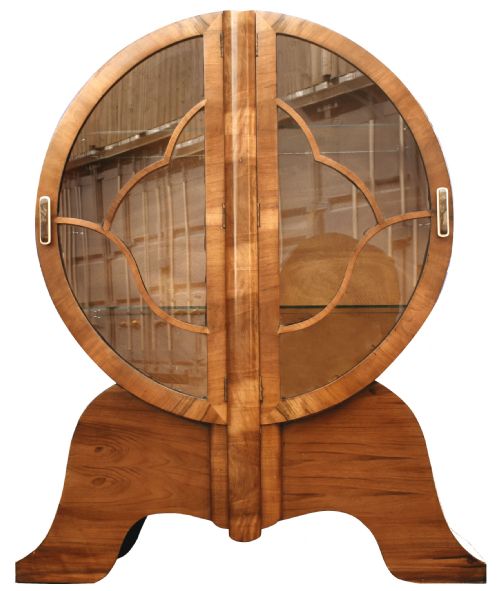
When you search for a 1930s round cabinet, you encounter distinctive circular forms from the Art Deco period, mostly English in origin. These pieces span display cabinets, vitrines, and bedside tables shaped as drums or cylinders.
The selection centres heavily on circular display cabinets designed to showcase china and glass through curved glass doors. Alongside these tall vitrines, smaller bedside tables and side tables appear in matching drum shapes.
Most examples date firmly to around 1930, capturing the modernist appetite for clean geometric lines softened by cylindrical silhouettes.
How they were made
Cabinet makers utilised rich timbers like walnut, burr walnut veneer, and maple over sturdy wood carcases to build these curved structures. Veneers were carefully matched across the circular surfaces to create symmetrical grain patterns.
Specialist glazing techniques required lead and curved glass to fit the rounded door frames of the display cabinets. Brass hardware and metal accents completed the construction, adding contrast to the polished timber finishes.
Makers occasionally pushed geometry aside for botany, naming one sculptural variation a clove-shaped cabinet.
What varies in quality
The choice of veneer defines the visual hierarchy, with figured walnut and burr walnut sitting at the top of the range for their complex grain movement. Plain timber surfaces offer a simpler aesthetic that alters the overall presence of the cabinet.
Complexity of form also separates standard builds from exceptional items, particularly in unusual configurations like clove-shaped silhouettes or rocket cabinets. The integration of leaded glass and specialised lighting compartments further distinguishes finer pieces.
The 1930s Round Cabinet Glossary
- Art Deco
- A design style characterised by sleek geometric shapes, streamlined forms, and modern materials popular during the interwar years. It dominates the aesthetic of circular cabinets from this era.
- Vitrine
- A glass-fronted cabinet specifically designed for displaying fine china, glass, or collectables. These tall pieces often feature curved glass to match the circular footprint.
- Burr Walnut Veneer
- A thin slice of decorative wood taken from a walnut tree growth, prized for its swirling, highly figured grain patterns. Makers applied this to the exterior surfaces of high-end cabinets.
- Leaded Glass
- Glass panes held together by narrow strips of lead, forming geometric patterns within the cabinet doors. This technique provides structural support while adding decorative detail.
1930s Round Cabinet: Frequently Asked Questions
Where should I place a round cabinet?
A round cabinet works well in corners or as a freestanding statement piece where its curved silhouette can be appreciated from multiple angles. It breaks up the rigid straight lines typically created by standard rectangular furniture.
Smaller drum-shaped versions function effectively as bedside tables or side tables, holding lamps while offering concealed storage inside their cylindrical bodies.
How do I identify a 1930s circular cabinet?
Look for characteristic Art Deco design markers, including symmetrical wood veneers, curved glass doors, and geometric brass fittings. The proportions typically favour low, wide profiles or tall, slender cylinders.
Construction methods from this era involve walnut and maple timbers combined with leaded glass panels, aligning with the manufacturing standards of the period.
Are these cabinets suitable for displaying items?
Display cabinets and vitrines from this period were specifically built to showcase china and glassware. The curved glass panels allow light to enter from multiple directions, highlighting the objects stored inside.
Some advanced models incorporate illuminated top sections to further emphasise the contents displayed on the internal wooden or glass shelves.
What materials are typical for these cabinets?
Walnut is the predominant timber found in these circular designs, frequently enhanced by highly figured burr walnut veneer. Maple and other secondary woods also appear in the construction of larger china cabinets.
Metal elements like brass feature in the hardware and decorative trims, while glass and lead make up the transparent curved door panels.