
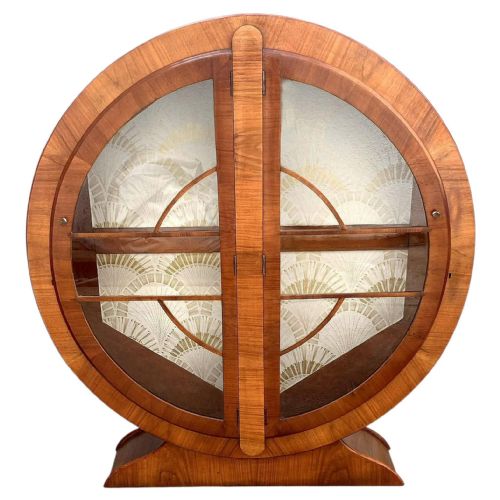


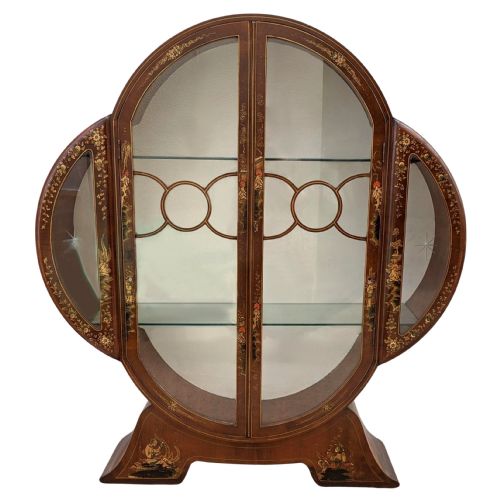

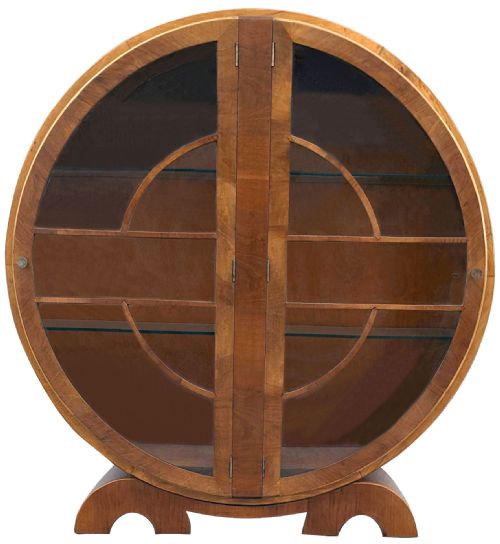


Circular Glass Cabinet
A circular glass cabinet brings a curved silhouette and open display space to a room, holding small objects and curiosities with ease.
Circular Glass Cabinet
A circular glass cabinet provides a rounded vitrine for exhibiting ornaments, silverware, and treasured small possessions. When you search for a circular glass cabinet, you find pieces designed to sit neatly in corners or anchor a wall with curved panes of glass.
The selections available include notable Art Deco walnut designs from nineteen thirty alongside Edwardian bijouterie tables and Victorian French vitrines. These forms range from tall display cabinets to low glass display cases resting on slender legs.
Makers and designers from the nineteenth century through the nineteen thirties utilised the curved form to maximise light refraction around delicate objects. The integration of glazed doors and leaded glass highlights the contents from multiple angles.
Materials and Construction
Makers built these cabinets using timber frames of walnut, mahogany, kingwood, and oak, often incorporating maple for interior contrast. The wooden structures provide structural support for the curved glass panes and heavy doors.
Glazing techniques include leaded glass and bent glass secured with brass fittings. Interiors frequently feature velvet or fabric linings to cushion displayed items, while brass mounts and inlay work adorn the exterior woodwork.
Listings feature walnut, mahogany, kingwood, oak, and maple, paired with glass, brass, velvet, fabric, and lead.
Quality and Craftsmanship
The refinement of the timber veneer and the precision of the bent glass dictate the standard of each cabinet. Figured walnut and kingwood exhibit complex grain patterns that elevate the visual weight of the piece.
Hardware execution and interior fabric choices separate standard production from finer examples. Solid brass mounts and neatly fitted lead cames demonstrate greater attention to detail than basic metalwork.
The Circular Glass Cabinet Glossary
- Vitrine
- A glass-fronted cabinet designed for displaying fine porcelain, curiosities, or books. The term originates from the French word for glass.
- Bijouterie table
- A low display table with a glass top and upper section used for housing small jewellery and trinkets. These tables often stand on slender legs with brass mounts.
- Demi-lune
- A half-moon shape used for furniture surfaces and tabletops. This form allows cabinets to sit flush against a wall while offering curved presentation space.
- Lead cames
- The slender grooved rods of lead used to hold individual pieces of glass together in leaded windows and cabinet doors. They create geometric or decorative patterns across the pane.
- Kingwood
- A dense, heavily figured exotic timber with dark violet and brown striping. Cabinet makers prized this wood for fine nineteenth-century French furniture.
Circular Glass Cabinet: Frequently Asked Questions
What fits inside a circular glass cabinet?
These cabinets house small collections, silverware, porcelain, and curiosities that benefit from all-around visibility. The curved shelves and glass panels showcase details without visual obstruction.
Larger items suit wider display cabinets, whereas compact bijouterie tables hold flat items, medals, and jewellery beneath glass tops.
How do I date a glass cabinet?
Stylistic markers and timber choices indicate the era of manufacture, ranging from Victorian mahogany to nineteen thirties Art Deco walnut. Edwardian pieces often feature lighter woods and delicate proportions.
Construction methods, such as the use of leaded glass or specific types of brass hinges, also help confirm the period.
Are these cabinets stable on carpets?
Most circular cabinets stand on slender legs or pedestal bases that require a flat, even surface to remain steady. Tall display cabinets benefit from positioning away from heavy foot traffic areas.
Checking the floor level prevents the glass doors from binding or swinging open unexpectedly.
How do I care for the wood and glass?
Dust timber surfaces with a dry cloth and apply appropriate wax sparingly to maintain the finish of walnut, mahogany, or kingwood. Glass panes require standard glass cleaner applied to a cloth rather than sprayed directly.
Protecting the interior velvet or fabric lining from direct sunlight preserves the original colour and texture.