





1930s Octagonal Side Table
A 1930s octagonal side table brings compact geometric presence to a room, offering practical surface space combined with distinct period design.
1930s Octagonal Side Table
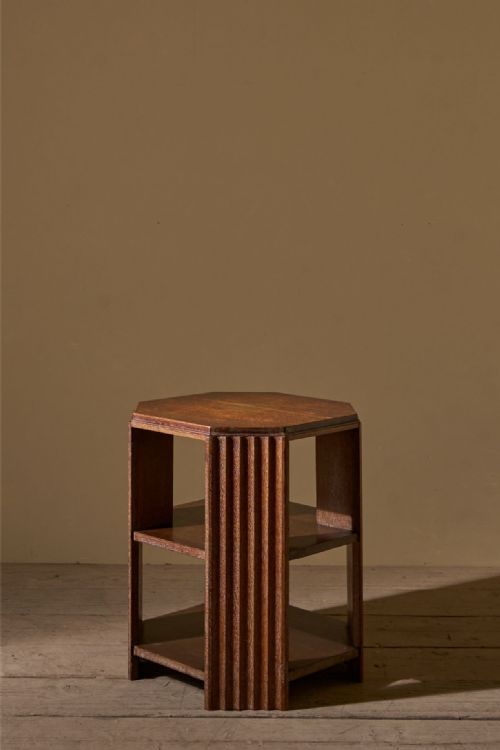
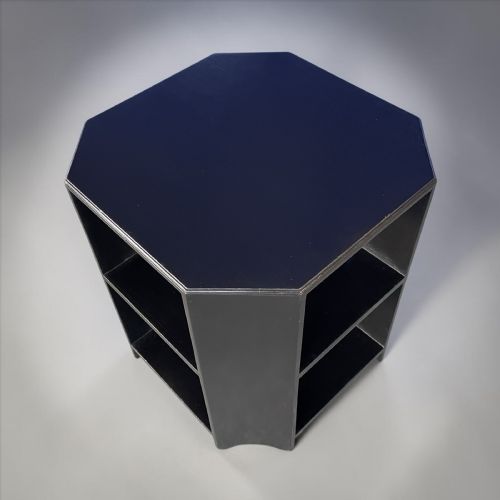
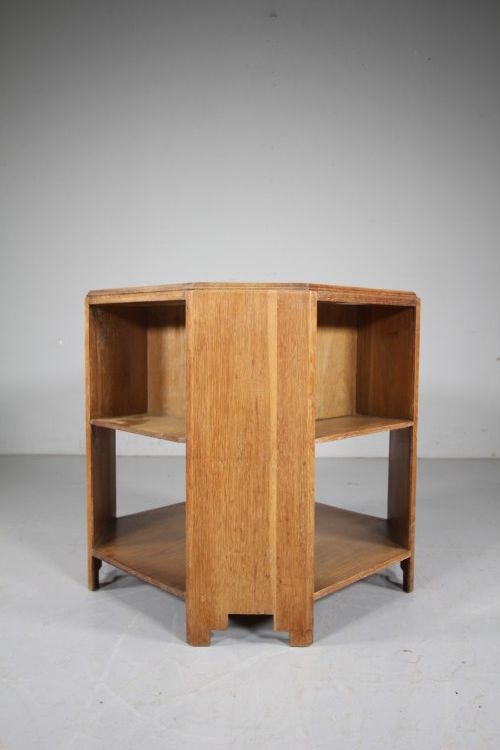
A 1930s octagonal side table is a compact occasional piece built with an eight-sided top, frequently taking form as an Art Deco occasional table or a practical book table with integrated shelving. These items serve smaller spaces efficiently while maintaining strong geometric lines characteristic of the period.
The pieces appearing on this page span the 1920s and 1930s, showing styles from stark Art Deco to Jacobean Revival and Anglo-Indian influences. Buyers encounter forms ranging from simple pedestal coffee tables to tiered revolving book tables and nest of five tables.
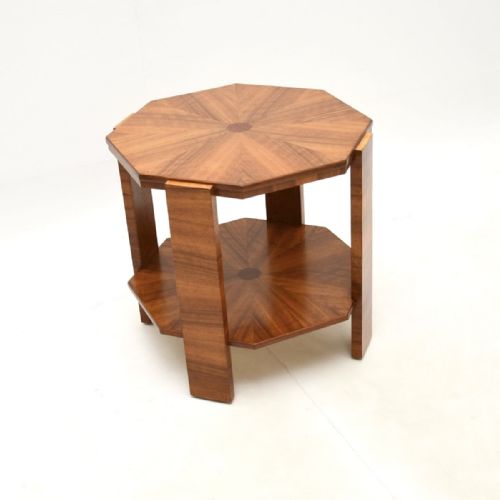
Oak and walnut dominate the selection, often finished as burr walnut veneer, limed oak, or ebonised wood alongside exotic timbers like ebony macassar. Some incorporate specific functional details such as built-in storage or barley twist legs.
How they were made
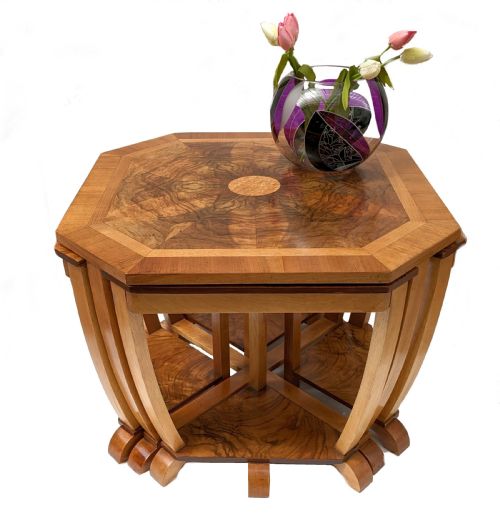
Cabinet makers utilised solid timbers alongside finely selected veneers, applying walnut and burr walnut veneer over stable wood cores to create striking grain patterns on the octagonal tops. Ebonised wood and limed oak finishes provided contrasting modern surfaces popular during the interwar years.
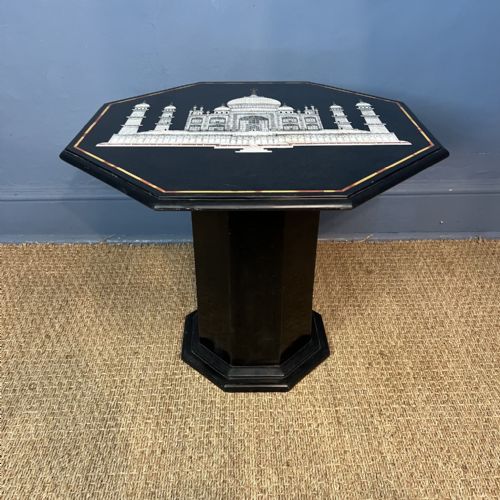
Construction techniques balanced traditional joinery with the innovative multi-tiered and revolving mechanisms seen in specialised book tables. More elaborate examples integrated contrasting inlays, such as black marble work set into the timber frame.
Some interwar book tables spin around so you can find your detective novel without getting out of your chair.
What varies in quality
The grade of timber selection and veneer matching defines the visual weight of the piece, particularly where burr walnut or ebony macassar creates complex geometric patterns across the top. Superior examples demonstrate seamless application of veneer without lifting or awkward grain intersections at the eight corners.
Structural complexity also separates standard occasional tables from sophisticated designs featuring revolving tiers, integrated book storage, or specialised pedestal bases. The integrity of the underlying timber framework dictates how well these multi-functional items endure daily use.
Heals
The 1930s Octagonal Side Table Glossary
- Art Deco
- A design style characterised by sleek geometric shapes, streamlined forms, and modern industrial materials. It dominated decorative arts throughout the interwar period.
- Burr Walnut Veneer
- A thin slice of wood cut from a walnut tree growth, prized for its swirling, highly figured grain patterns. Makers applied this decorative layer over a stable timber base.
- Limed Oak
- Oak timber treated with a white pigment or lime to highlight the open grain texture. This finish lightened the appearance of traditional oak furniture for interwar interiors.
- Ebonised Wood
- Timber treated with chemical stains or black paint to imitate expensive ebony. This dark finish provided sharp visual contrast in modernist designs.
- Barley Twist
- A turned wooden leg carved in a helical spiral resembling twisted rope. This traditional detail appeared frequently on revival furniture styles of the era.
1930s Octagonal Side Table: Frequently Asked Questions
What rooms suit a 1930s octagonal side table?
These compact tables fit easily beside armchairs, sofas, or in reception rooms where surface space is limited. Their eight-sided tops break up the straight lines of modern interiors.
Versions with built-in shelves or revolving tiers add practical storage to living areas and home libraries without demanding a large footprint.
How do I identify Art Deco tables?
Art Deco tables rely on geometric symmetry, clean silhouettes, and rich wood veneers like walnut or ebony. They often feature stepped profiles or minimal ornamentation.
Unlike heavier Victorian or revival pieces, these tables emphasise smooth polished surfaces and architectural forms.
Are these tables sturdy enough for daily use?
Most examples are constructed from solid oak or timber frames veneered in walnut, making them robust for standard placement needs. Pedestal designs and multi-tiered book tables distribute weight evenly across their bases.
Care should be taken with veneered surfaces to avoid moisture damage or heavy impact against the eight-sided edges.
What is the difference between a side table and a book table?
A standard side table provides a simple flat surface for lamps or drinks, while a book table incorporates built-in shelving beneath the top. Some advanced interwar designs feature revolving tiers for accessible book storage.
Both maintain the characteristic octagonal top shape while serving distinct functional roles in a room.