
Geometric Side Table
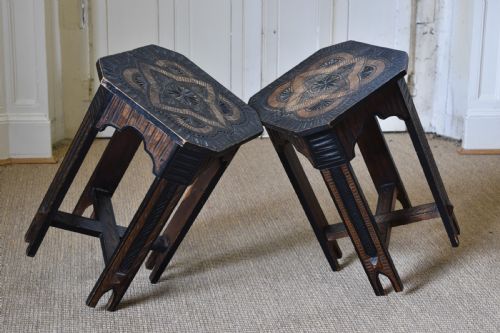
A geometric side table brings patterned woodwork and compact surface space into a room, joining utility with striking surface design.
Geometric Side Table
A geometric side table encompasses a range of compact surfaces including occasional tables, lamp tables, nesting tables, and lowboys designed for incidental placement beside seating or beds.
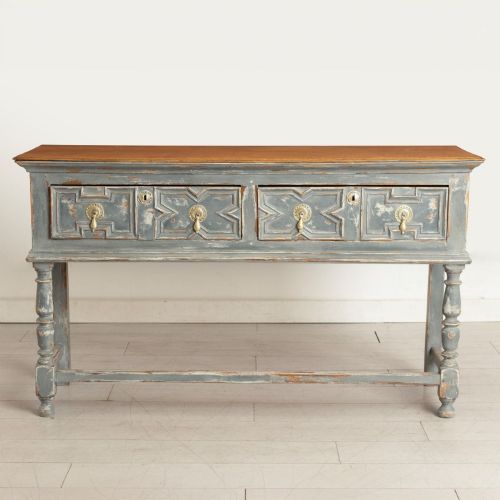
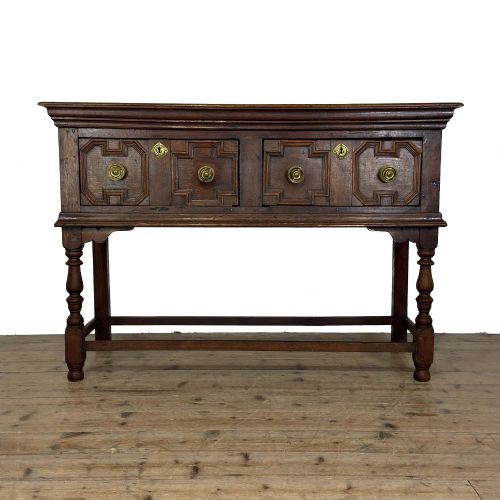
The selections span from seventeenth-century oak pieces with geometrically moulded drawer fronts to nineteenth-century parquetry and marquetry examples, alongside twentieth-century Art Deco modernist oak and walnut designs.
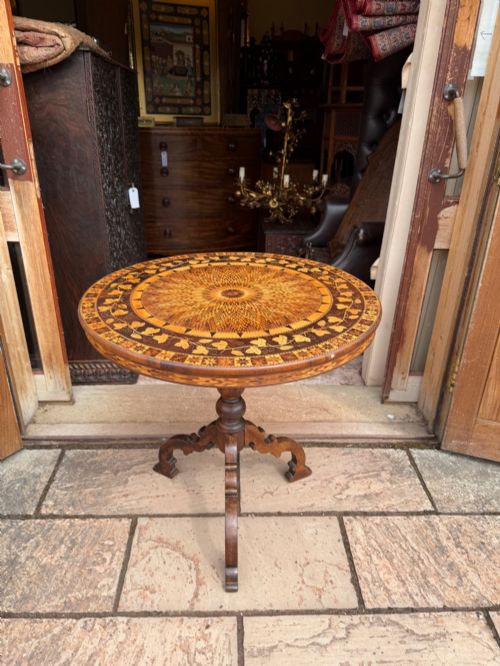
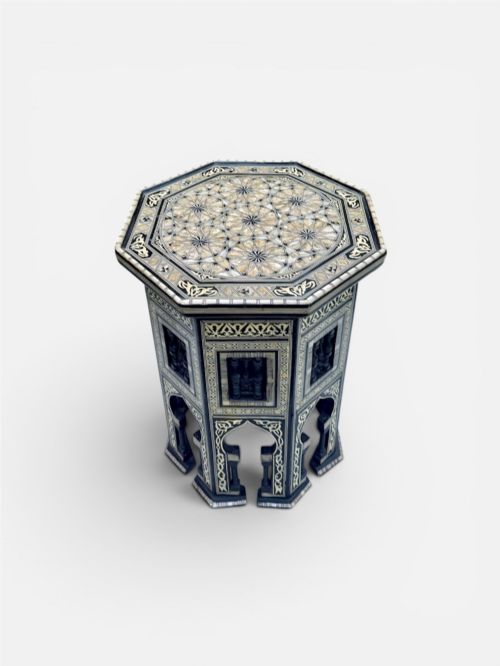
Origins vary widely across the inventory, ranging from English oak country workshops and nineteenth-century Italian Sorrento production to Middle Eastern Moorish revival and New Zealand specimen wood crafting.
Materials and Technique
Cabinet makers utilised dense hardwoods such as oak, walnut, mahogany, and rosewood, often pairing them with contrasting softer timbers like satinwood and maple.
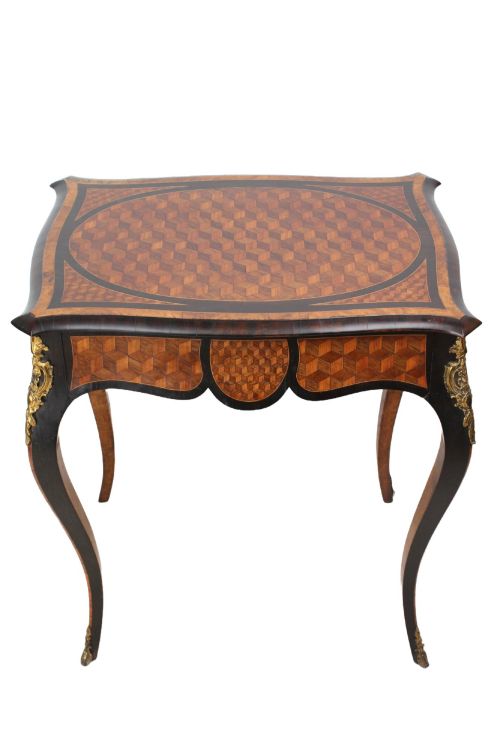
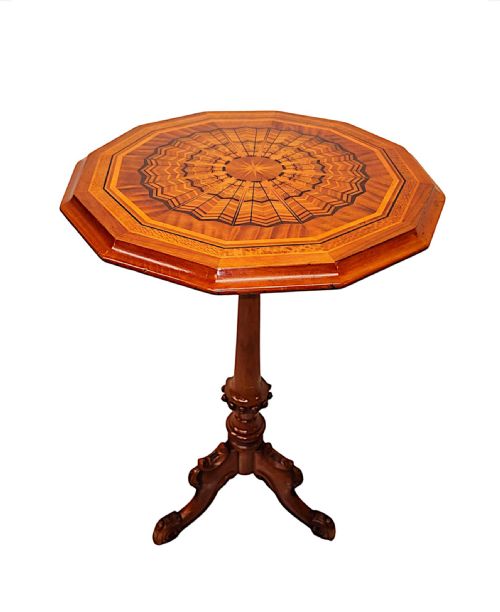
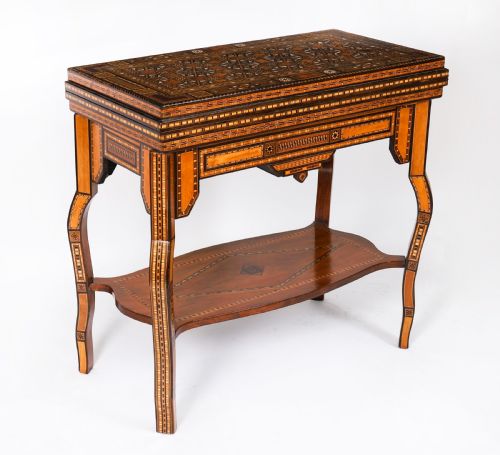
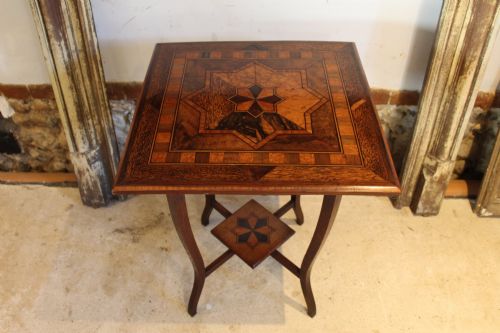
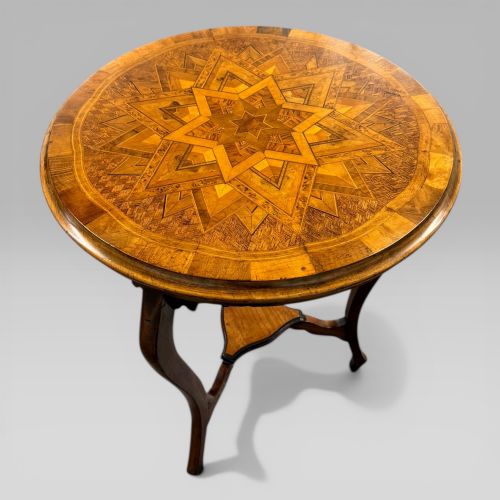
Surface patterns were achieved through intricate techniques including parquetry, marquetry, chip carving, and geometric drawer moulding, sometimes incorporating inlay materials such as bone, mother-of-pearl, and specimen marble.
The listings span multiple centuries, uniting seventeenth-century oak joinery with nineteenth-century Sorrento inlaid walnut and twentieth-century Art Deco modernist designs.
Craftsmanship and Construction
Quality rests in the precision of the geometric surface arrangement and the tightness of the wood joints, where the alignment of parquetry or moulded drawer fronts demands exacting hand labour.
The choice of timber significantly dictates the standard, distinguishing between straightforward local oak builds and elaborately assembled multi-wood specimen marquetry or intricate bone and mother-of-pearl inlay work.
JAS Shoolbred·Gillows·Anton Seuffert
The Geometric Side Table Glossary
- Parquetry
- A geometric mosaic of wood pieces used for surface decoration on tabletops. This technique creates repeating patterns like squares, triangles, and lozenges.
- Marquetry
- The art of applying pieces of veneer to a structure to form decorative patterns and pictures. It differs from parquetry through its use of varied floral or pictorial motifs alongside geometric lines.
- Dresser base
- A low wooden storage piece featuring drawers or cupboards beneath a flat top surface. Earlier versions often display pronounced geometric moulding on the drawer fronts.
- Specimen wood
- Furniture constructed from a multitude of different native and exotic timber species. Makers arranged these varied natural colours and grains to display botanical collections.
- Moorish style
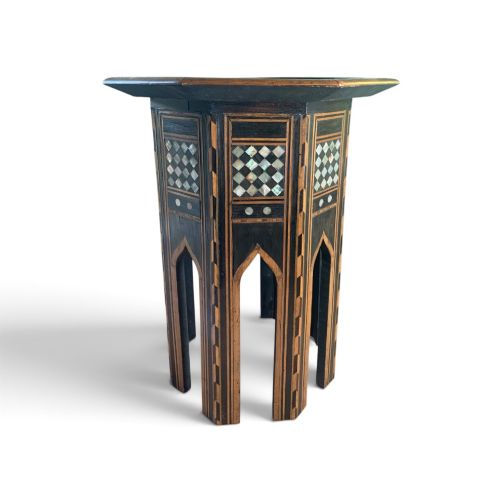
- Design influenced by Islamic architecture and decorative arts, characterised by intricate geometric lattice work and mother-of-pearl or bone inlays.
Geometric Side Table: Frequently Asked Questions
How do I identify a seventeenth-century geometric table?
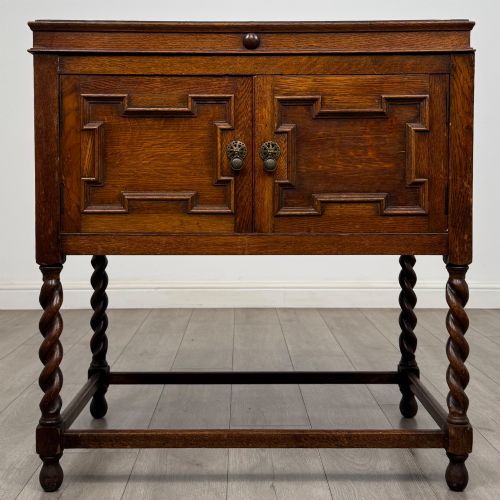
Seventeenth-century pieces typically rely on solid oak construction featuring applied mitred mouldings on drawer fronts to create rectilinear geometric panels.
These early examples emphasise joinery and natural wood grain rather than the colourful multi-wood veneers seen in later centuries.
What is the difference between parquetry and marquetry?
Parquetry strictly uses geometric shapes like triangles and squares to build repeating mathematical patterns across a wooden surface.
Marquetry allows for curvilinear and pictorial designs, utilising varied veneers to picture scenes or botanical motifs.
Where should I place a geometric side table?
These tables function effectively beside sofas, armchairs, or beds where their patterned surfaces can be viewed from above.
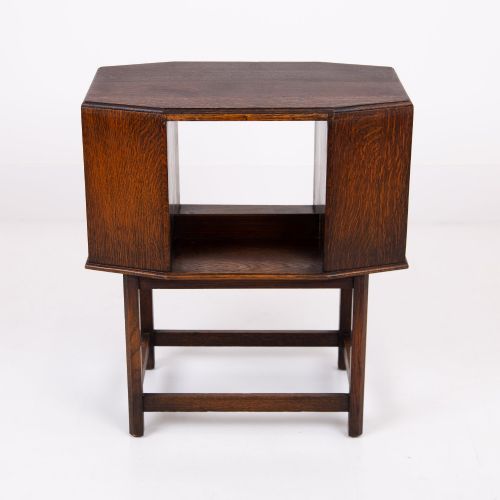
Smaller nesting versions and octagonal lamp tables allow for flexible placement around a sitting room depending on daily needs.
How do Art Deco geometric tables differ from older ones?
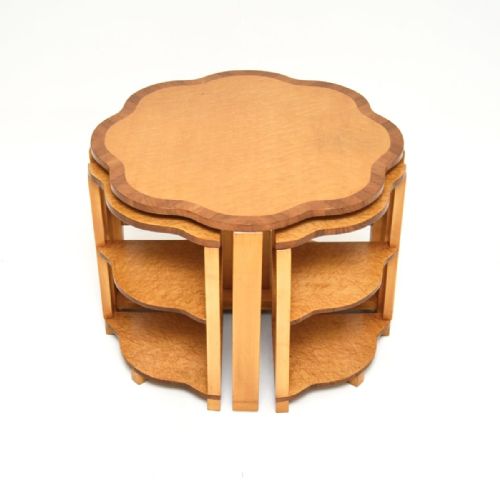
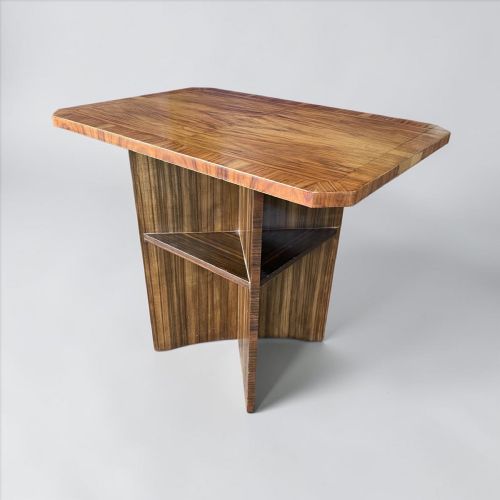
Art Deco pieces from the twentieth century favour streamlined modernism, utilising blonde oak, walnut, and mirrored glass alongside birds-eye maple.
Older nineteenth and seventeenth-century variants lean heavily on traditional timbers like heavy oak, mahogany, and dense specimen wood mosaics.