
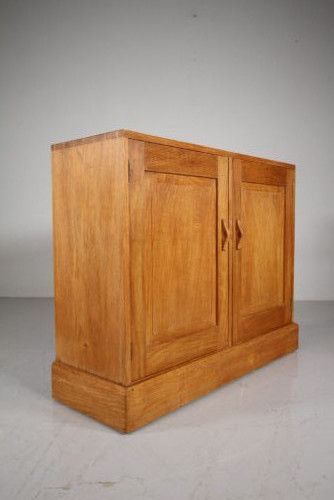
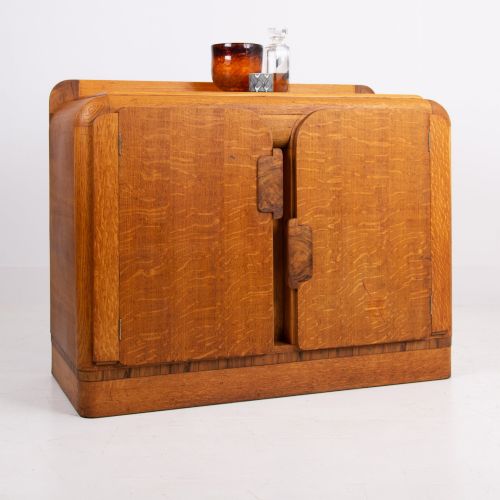
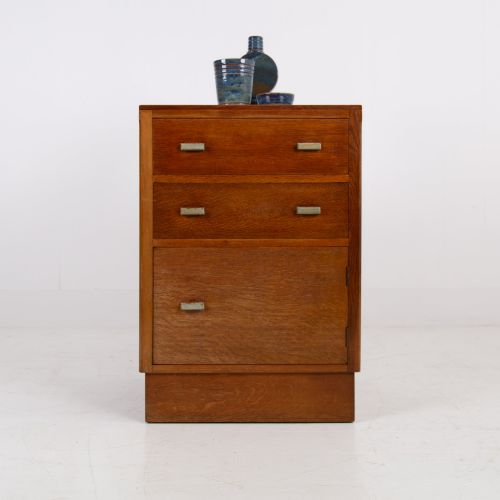
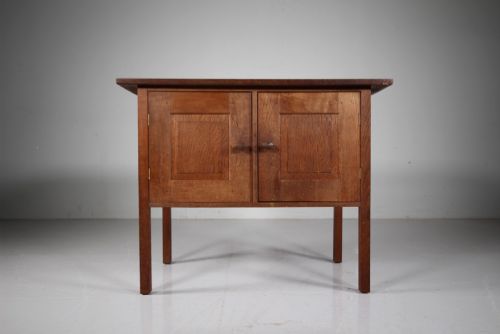
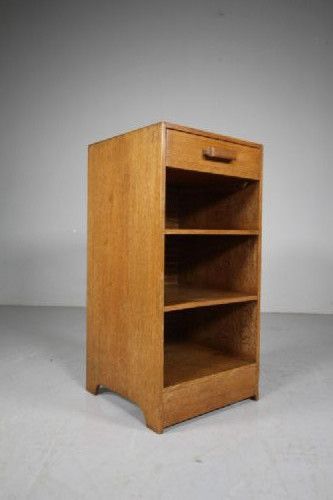
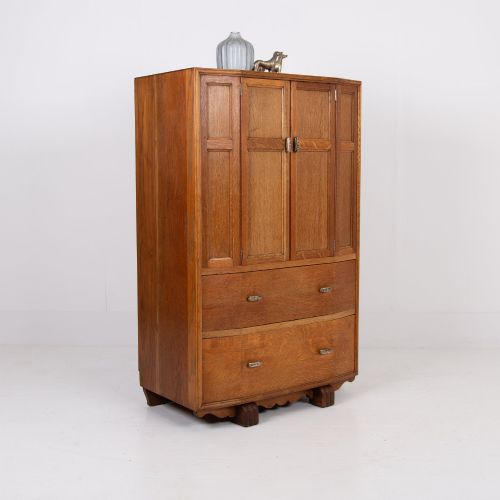


1930s Oak Storage Cupboard
These 1930s oak storage cupboard examples bring sturdy interwar utility and distinct period character into modern rooms.
1930s Oak Storage Cupboard
A 1930s oak storage cupboard spans utilitarian institutional forms and refined domestic cabinetmaking from the interwar period. Buyers searching this phrase encounter diverse object types including sideboards, tallboys, bedside cabinets, and specialised storage pieces.
The domestic pieces lean heavily into Art Deco and Cotswold School aesthetics, whilst institutional examples reveal industrial origins. English oak dominates the construction, accompanied by occasional walnut and contrasting metal or brass hardware.
Craftsmanship ranges from commercial interwar production to workshop-stamped studio pieces by notable makers. These cupboards serve practical storage needs whilst displaying the distinct grain and warm tones characteristic of period oak.
How they were made
Makers utilised solid English oak as the primary structural and visible timber, frequently chosen for its durability and prominent grain pattern. Walnut also appears selectively in veneer or secondary elements on more decorative cabinets.
Hardware typically consists of brass handles and metal fittings that reflect either industrial function or modernist design sensibilities. Construction methods vary from robust commercial joining in school and watchmaker cabinets to refined cabinetmaking in Cotswold School pieces.
Materials across the inventory centre on English oak and walnut, accented with brass and glass.
What varies in quality
The distinction between standard commercial production and superior workshop output rests in the joinery and design execution. Pieces bearing maker stamps or originating from renowned Cotswold School traditions command greater appreciation than generic interwar commercial items.
Material selection and hardware integrity further separate the tiers, where solid English oak and original brass fittings elevate a piece. The refinement of stylistic details, from Art Deco moulding to Tudor Revival carving, dictates the overall sophistication of the cabinet.
Gomme·Peter Waals·Heals
The 1930s Oak Storage Cupboard Glossary
- Cotswold School
- A regional design movement rooted in the Arts and Crafts tradition, emphasising traditional woodworking techniques and honest construction. Pieces from this circle often display hand-finished details and superior joinery.
- Art Deco Modernist
- A style defining the interwar period through stylised geometric forms, clean lines, and rejection of excessive ornamentation. Cabinets in this style utilise the natural grain of oak to create visual rhythm.
- Tallboy
- A vertical storage unit combining drawers and cupboard space to maximise capacity within a compact footprint. This form appears frequently in interwar bedroom furniture.
- Watchmaker's Cabinet
- A specialised multi-drawer storage piece designed for precision instruments and small components. These industrial items feature numerous shallow drawers constructed for organised storage.
1930s Oak Storage Cupboard: Frequently Asked Questions
What styles define a 1930s oak storage cupboard?
The listings show a broad stylistic range encompassing Art Deco, Arts and Crafts, Cotswold School, and industrial institutional designs. Period revivals such as Tudor and Elizabethan styles also appear alongside interwar commercial work.
This variety means buyers can find everything from streamlined modernist sideboards to rustic school department cabinets and fitted bedside units.
Are these cupboards made of solid English oak?
English oak is the predominant timber recorded across the inventory, supplemented occasionally by walnut and structural metal or brass. Workshop pieces utilise the natural properties of native oak to create durable, heavy furniture.
Different pieces balance this solid timber with glass panels or metal hardware depending on whether their origin is domestic or institutional.
How do domestic and institutional cupboards differ?
Domestic examples include sideboards, tallboys, and bedside cabinets intended for refined home environments, often bearing hallmarks of specific designers or makers. Institutional variants include school art department and watchmaker cabinets built strictly for function.
Both categories rely on oak construction but serve entirely different aesthetic and practical roles within an interior.
How do I identify workshop pieces?
Certain cabinets feature maker stamps or originate from specific progressive design movements like the Cotswold School or firms such as Gomme and Heals. These pieces exhibit higher levels of individual craftsmanship compared to standard commercial interwar production.
Examining the joinery, hardware, and overall architectural proportion helps distinguish standard utility items from named workshop pieces.