
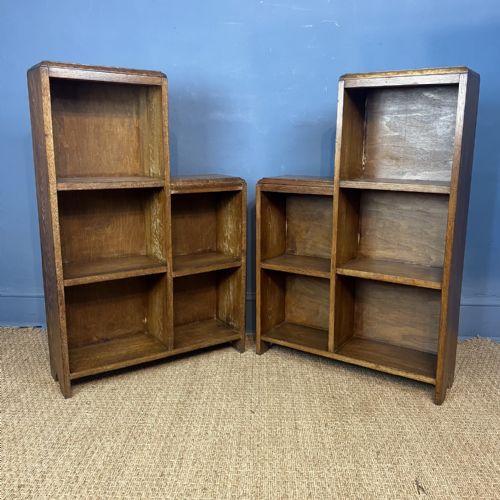

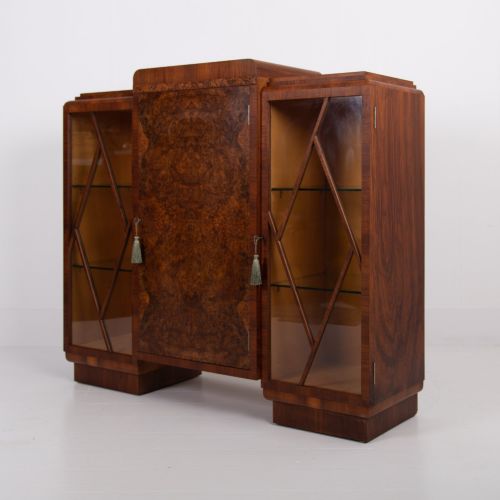


Vintage Stepped Bookcase
A vintage stepped bookcase gives a room architectural height and clean lines, combining useful display space with the distinctive geometry of the early twentieth century.
Vintage Stepped Bookcase
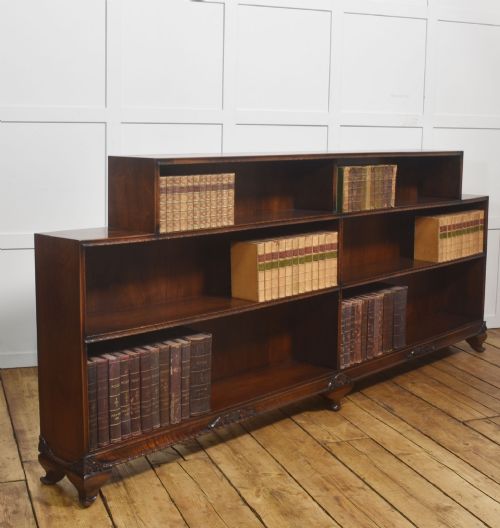
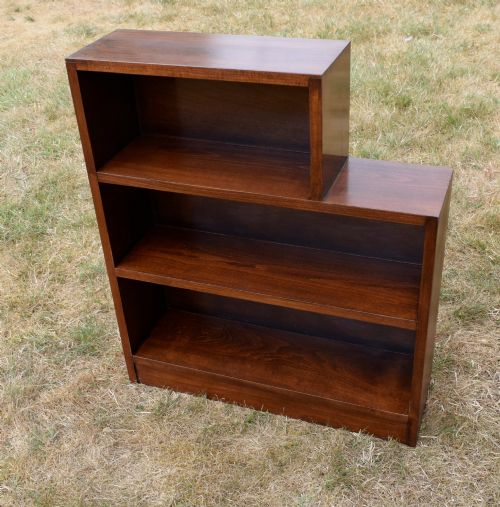
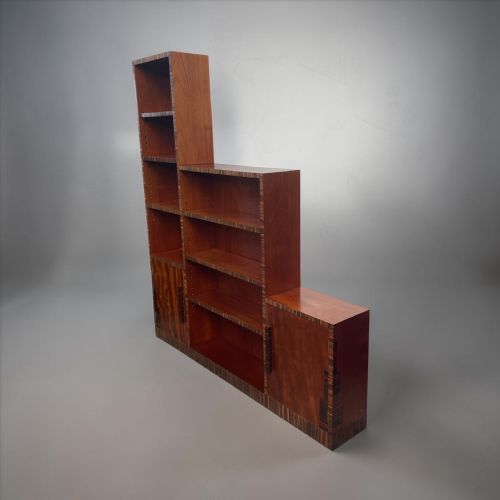
A vintage stepped bookcase brings together tiered open shelving and enclosed cabinets, structured around a descending profile that catches the eye. When you search for a vintage stepped bookcase, you encounter walnut and oak constructions from the early twentieth century, particularly the nineteen-thirties.
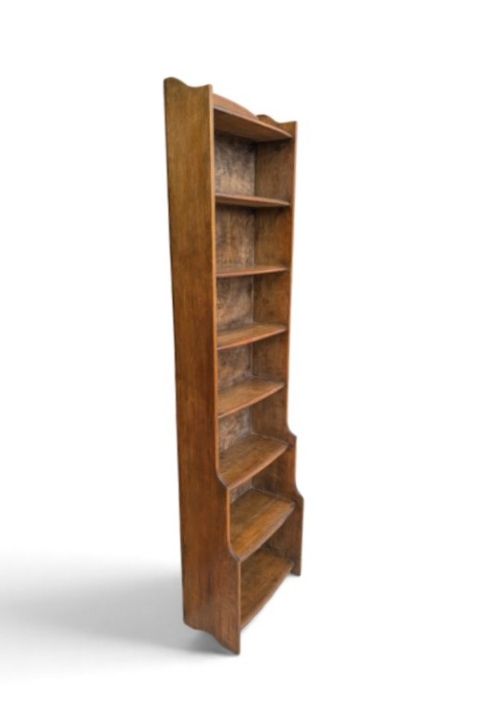
The pieces on this page span several decades and origins, ranging from Edwardian waterfall designs to striking Art Deco creations. Alongside standard bookcases, you find bureau cabinets, display cabinets, and related library steps that share similar tiered characteristics.
Art Deco examples dominate the selection, featuring stepped silhouettes and rich veneer work that define the period aesthetic. Walnut veneers and solid oak provide the primary structural forms, while occasional glazed doors and brass fittings add functional variety.
How they were made
Cabinet makers utilised solid woods like oak alongside decorative veneers such as burr walnut to create striking visual grain patterns across the tiered surfaces. These materials were shaped using traditional joinery techniques, ensuring sturdy construction for heavy volumes and display items.
Selected pieces incorporate glass panels and brass hardware, integrating functional doors and handles into the stepped architectural framework. Leather accents appear on related library steps, combining durable writing surfaces with timber frames.
The listings on this site combine nineteen-thirties Art Deco walnut designs with earlier Edwardian oak waterfall bookcases.
What varies in quality
The distinction between standard production and exceptional work lies in the handling of veneer patterns and the crispness of the stepped angles. Finer examples display carefully matched grain across the descending tiers, creating a cohesive visual flow.
Design attribution also separates the range, where pieces associated with known makers demonstrate superior proportions and more refined hardware choices compared to anonymous workshop output.
Betty Joel·Heals
The Vintage Stepped Bookcase Glossary
- Art Deco
- A design style prevalent in the nineteen-thirties characterised by sleek geometric shapes, stepped forms, and modern industrial materials. It moves away from ornate Victorian decoration towards streamlined modernity.
- Walnut Veneer
- A thin layer of walnut timber applied over a secondary wood base to provide decorative surface patterns without the weight and cost of solid hardwood. Master cabinet makers bookmatch these veneers for symmetry.
- Waterfall Bookcase
- A tiered shelving unit where the sides curve downward in a cascade resembling falling water. This Edwardian form anticipates the later stepped geometry of the Art Deco period.
- Bureau Cabinet
- A combination piece featuring a sloping writing flap above shelving or enclosed storage. These multifunctional items suit compact domestic spaces.
Vintage Stepped Bookcase: Frequently Asked Questions
Where should I place a stepped bookcase?
These pieces suit living rooms and studies where their architectural height can anchor a wall without dominating the floor space.
The tiered shelves also work well in alcoves or corners, drawing the eye upward and providing varied display heights for books and objects.
How do I care for walnut veneer?
Keep walnut veneer surfaces away from direct sunlight and excessive heat sources to prevent the wood from drying and cracking.
Dust regularly with a soft cloth and apply quality beeswax periodically to maintain the lustre of the timber.
What is the difference between Edwardian and Art Deco styles?
Edwardian pieces often feature softer curves, lighter timbers, and waterfall silhouettes that build on late Victorian traditions.
Art Deco design introduces sharp geometric angles, stepped profiles, and dramatic contrasting veneers that reflect machine-age modernity.
Can these bookcases hold heavy books?
Solid oak and hardwood variations provide robust support for extensive libraries and heavy volumes across their lower shelves.
Veneered tiered sections benefit from sensible weight distribution, placing heavier folios on the deeper bottom tiers.