
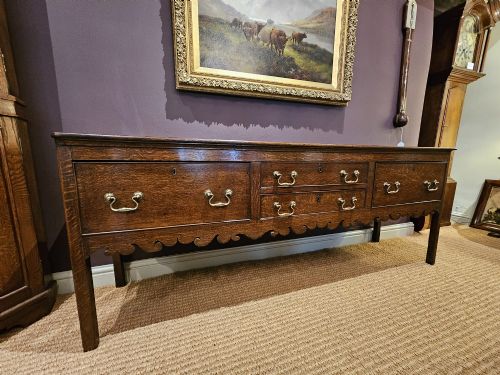
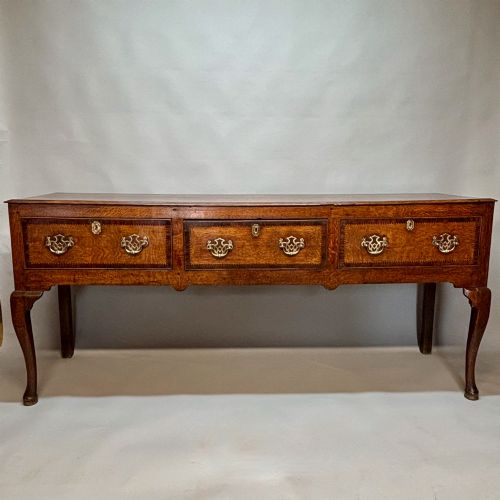
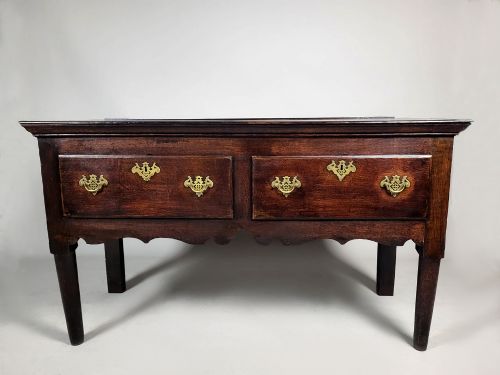
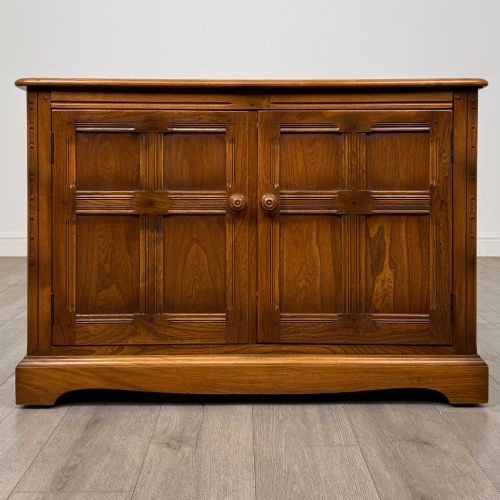

Antique Oak Low Credenza
An antique oak low credenza brings heavy timber character to a room, offering low storage built from robust materials.
Antique Oak Low Credenza
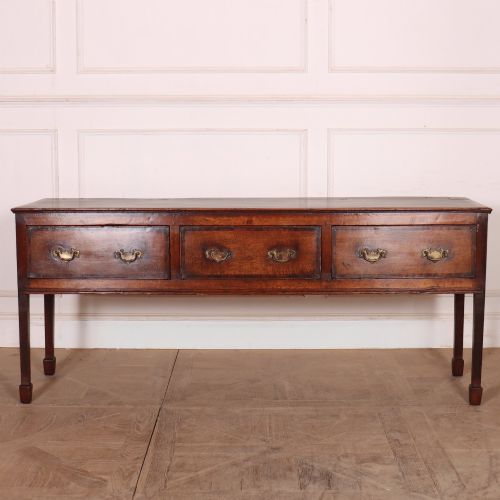
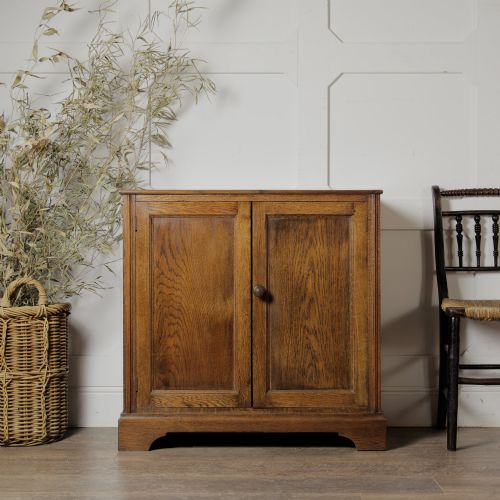
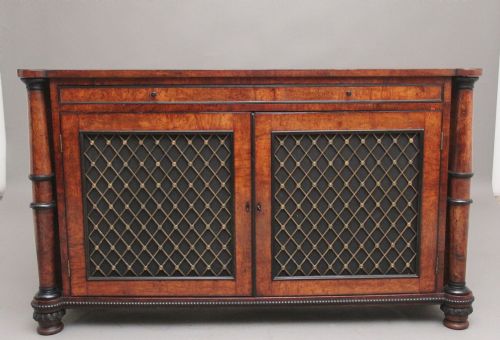
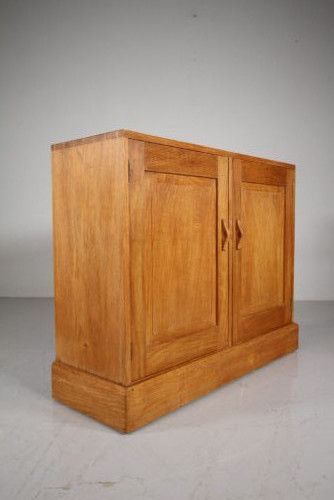
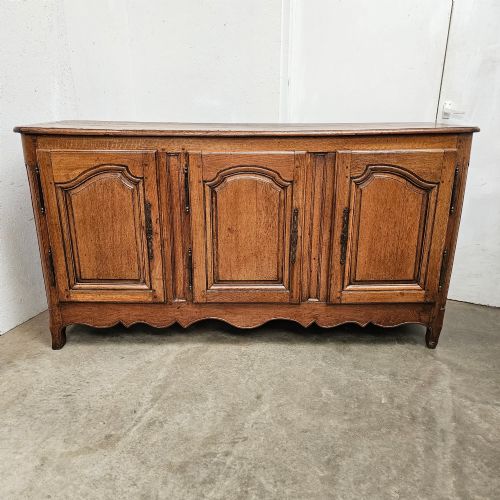
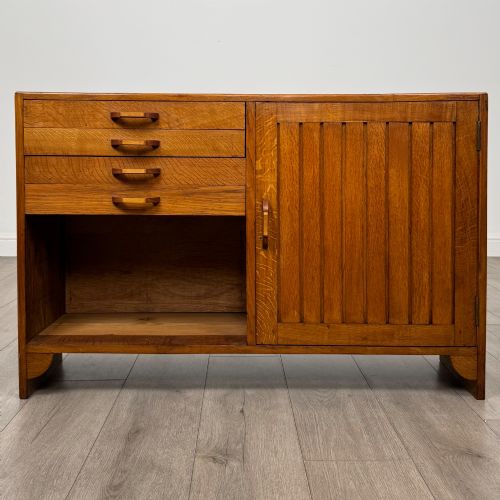
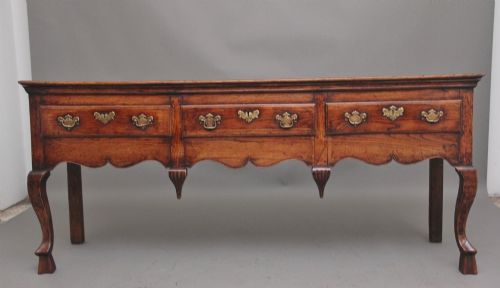
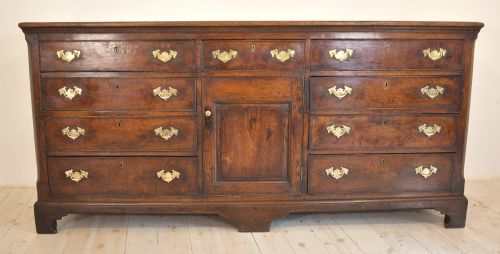
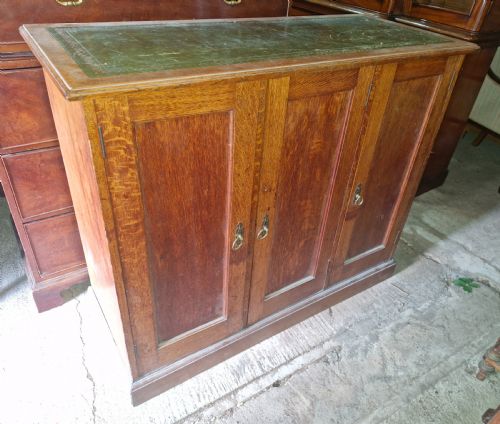
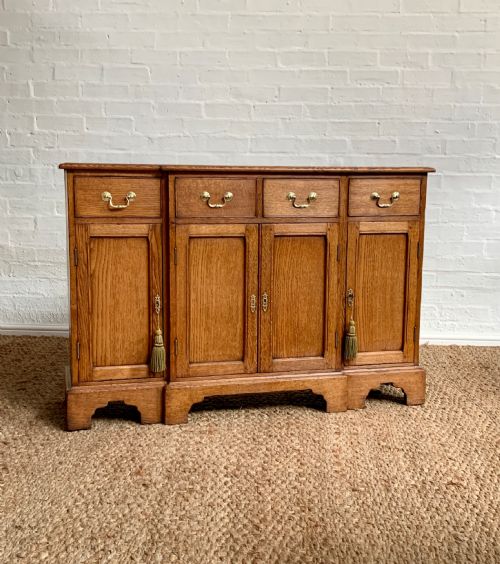
When searching for an antique oak low credenza, buyers examine low storage furniture that traditionally served domestic spaces for holding provisions or tableware. These low-slung formats appear most often as dresser bases, sideboards, and cupboards originating from British and European workshops.
The selections span centuries of cabinet-making, with significant representation from the seventeenth, eighteenth, and nineteenth periods. Regional variations emerge through vernacular builds, including Lancashire dresser bases, French provincial enfilades, and Cotswold school cabinets.
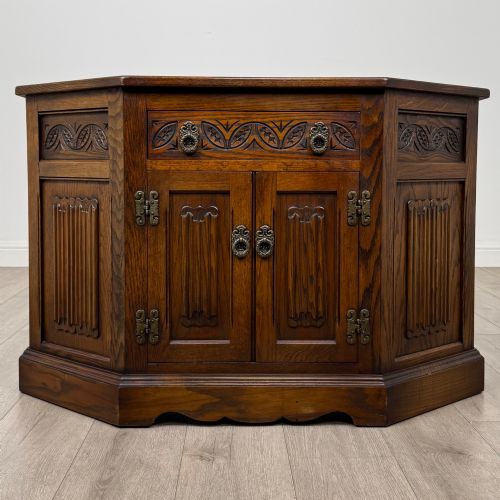
Moulded fronts, potboards, and panelled doors define the primary forms encountered within these listings. Buyers frequently select these pieces for living rooms, hallways, and dining spaces where low profiles provide surface display alongside concealed storage.
Materials and construction
Solid oak serves as the foundational material across the majority of pieces, frequently complemented by secondary timbers such as fruitwood, elm, and pollard oak for contrast. Cabinet-makers utilised traditional joinery methods, incorporating pegged mortise and tenon joints to secure heavy timber frames.
Metalwork details appear in brass handles, escutcheons, and original brasses that punctuate the dark timber surfaces. Painted finishes and ebony accents occasionally modify the plain wood, reflecting specific period tastes ranging from Jacobean geometric mouldings to Edwardian linenfold carving.
Listings feature oak alongside secondary timbers like pollard oak, fruitwood, and burr elm across 17th, 18th, and 19th-century periods.
Judging build and preservation
The standard of an antique oak low credenza rests upon the depth of patination on the timber and the integrity of the original hardware. Pieces retaining their early brasses and untouched surface finishes demonstrate superior preservation compared to those altered by modern interventions.
Construction crispness distinguishes finer workshops, visible in the precision of geometric drawer mouldings and carved elements. Well-balanced proportions and heavy, unwarped solid timber carcasses mark the upper tier of surviving examples.
The Antique Oak Low Credenza Glossary
- Potboard
- An open slatted lower shelf beneath a dresser base traditionally used for storing pots and earthenware. This lower tier raises the main body slightly off the floor.
- Dresser base
- A low wooden cabinet featuring drawers above cupboards, forming the lower section of a traditional kitchen or dining room dresser. They function independently as sideboards.
- Enfilade
- A long low cabinet or buffet of French provincial origin, designed with multiple doors accessing interior storage space. These units suit dining and living environments.
- Linenfold
- A style of carved wooden panelling that imitates folded fabric, popular during Tudor and later revival periods. This decorative technique adds texture to cabinet doors.
- Block front
- A cabinet facade divided vertically into three sections, with the outer sections projecting forward from a recessed centre. This architectural treatment creates shadow and depth.
Antique Oak Low Credenza: Frequently Asked Questions
Where should I place a low credenza?
These low cabinets suit placement in dining rooms, long hallways, or living spaces where height restrictions apply. Their surface provides a platform for display while keeping sightlines open across the room.
Positioning them against a blank wall anchors the space, allowing the timber grain and period details to contrast with plain backgrounds.
How do I care for antique oak?
Maintain the timber by applying natural beeswax periodically to nourish the dry wood and preserve the surface sheen. Avoid placing the furniture near direct heat sources or in strong sunlight to prevent warping and fading.
Dust regularly with a soft, dry cloth rather than using silicone-based polishes that build up residue over time.
What is a potboard base?
A potboard base incorporates an open wooden platform built close to the floor beneath the main drawers and cupboards. Originally, this shelf held heavy ceramic pots and metalware off damp stone floors.
In modern rooms, this open lower tier creates a lighter visual weight than a fully enclosed cabinet base.
How do I distinguish eighteenth-century pieces?
Eighteenth-century examples often display hand-planed surfaces, pegged joinery, and drawer construction utilising hand-cut dovetails. Timber selection tends towards heavy native oak with deep, warm patination accumulated over generations.
Hardware fixtures on pieces from this era frequently include brass drop handles mounted on backplates.