

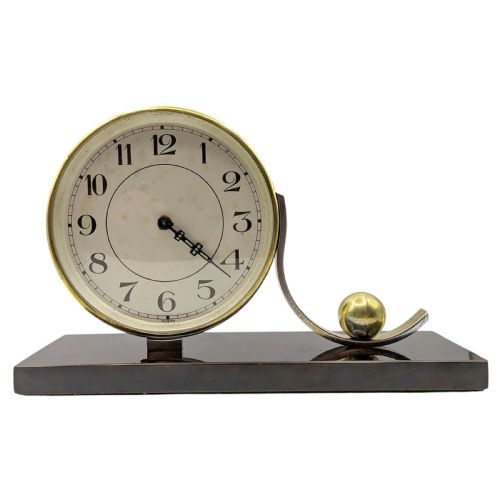
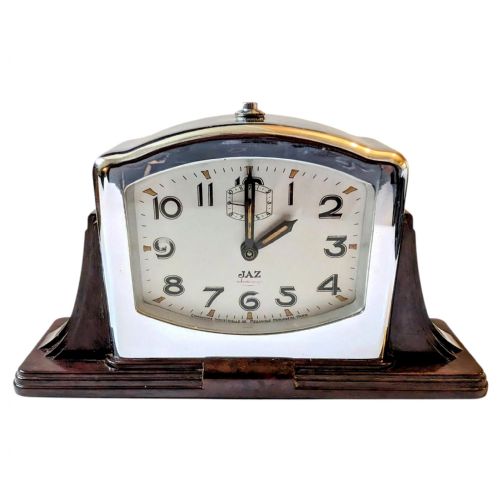
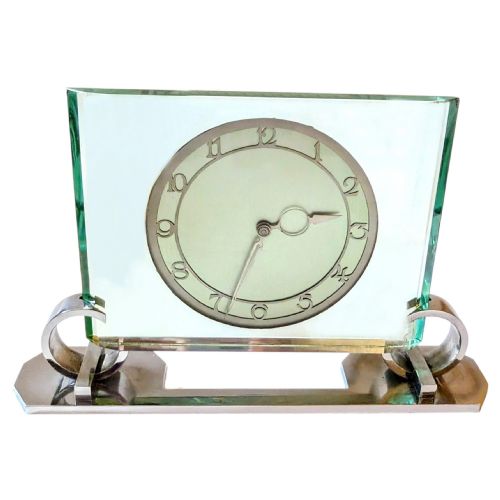
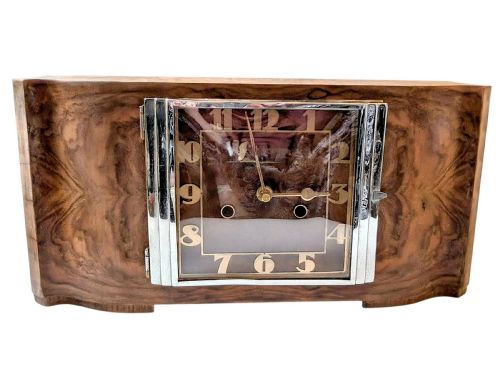
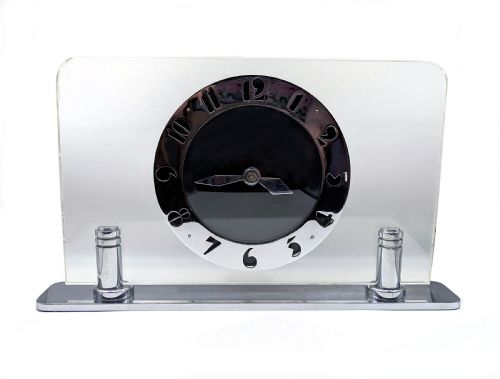
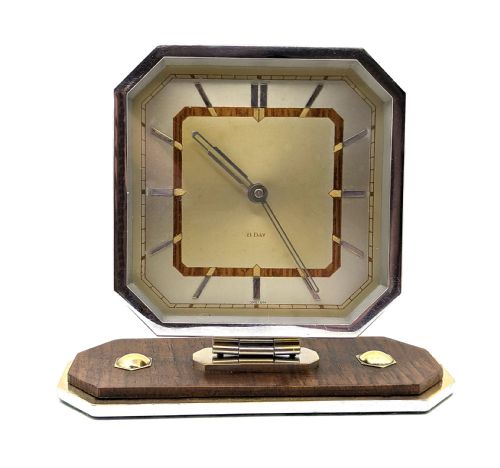
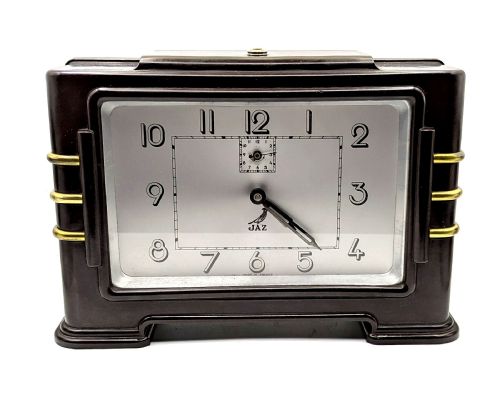
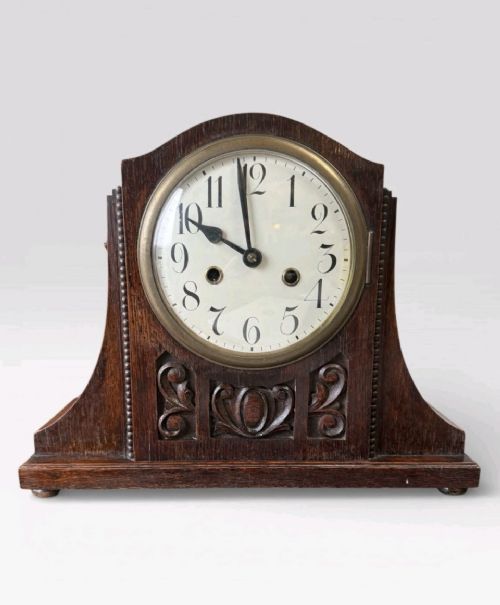
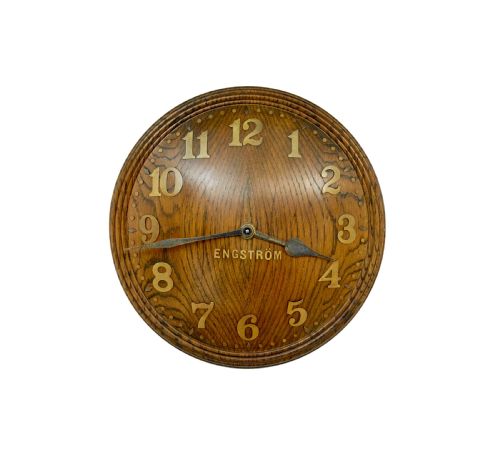


1930s Mechanical Clock
When buying a 1930s mechanical clock, you are choosing a wind-up timepiece that defines the bold geometrical lines of the Art Deco period.

1930s Mechanical Clock
A 1930s mechanical clock takes many domestic shapes, appearing most frequently as mantel clocks, desk clocks, and wall clocks designed during the interwar years. These pieces span mantle clocks, table clocks, and travel clocks, alongside occasional variations such as carriage clocks, easel clocks, and novelty alarm clocks.
The aesthetic is grounded firmly in the Art Deco style, utilising modernist layouts and streamline forms that reflect the design language of the 1920s, 1930s, and 1940s. Buyers will encounter both compact bedside alarms and large chiming mantel pieces intended for principal rooms.
Materials and construction
Makers constructed these timepieces from a diverse mix of traditional timbers and industrial materials, pairing walnut, burr walnut, golden oak, and oak with polished chrome, brass, and heavy glass. Moulded synthetic materials such as bakelite appear frequently in colourful desk and mantel formats.
Movements rely on mechanical wind-up mechanisms, encompassing standard thirty-hour units alongside eight-day movements that require less frequent winding. Cases combine wood veneers, metal plating, and glass panels assembled with modernist precision.
Listings feature mechanical clocks spanning the periods 1910, 1920, 1930, and 1940, encompassing styles predominantly rooted in Art Deco.
Distinctions in craftsmanship
Quality separates standard production items from pieces engineered by recognised makers and prominent retailers. The sophistication of the movement, whether an eight-day mechanism or a specialised Westminster chime, elevates the standing of the clock.
The choice of materials dictates the tier of the piece, with figured burr walnut veneers, heavy chrome plating, coloured glass, and moulded bakelite representing higher levels of design ambition than plain oak.
Smiths Clockmakers·Jaz·Mauthe·Zenith·Jaeger·Harrods of London·Perivale·Bravingtons Ltd of London·Junghans·Bayard·Blangy
The 1930s Mechanical Clock Glossary
- Bakelite
- An early form of thermosetting plastic frequently moulded into colourful, streamline clock cases during the interwar period. It holds a smooth finish and distinctive tactile weight.
- Eight day movement
- A mechanical clock movement designed to run for eight days on a single wind before requiring attention. This technical upgrade appears widely in desk and mantel clocks.
- Westminster chime
- A melodic quarter-hour chime sequence historically associated with clock towers and incorporated into larger mantel and wall clocks. It requires a more complex gear train.
- Streamline
- A late phase of the Art Deco style characterised by aerodynamic curves, horizontal lines, and smooth surfaces. It heavily influences the design of 1930s bakelite and chrome timepieces.
- Mystery clock
- An uncommon time-indicating device where the mechanism appears hidden, often utilising glass dials with floating hands. These pieces demand high ingenuity from the maker.
1930s Mechanical Clock: Frequently Asked Questions
How do I wind a mechanical clock?
Most mechanical clocks require a key or an attached butterfly key to tension the mainspring inside the movement. Turn the key gently until you feel firm resistance, taking care not to overwind the mechanism.
Eight-day movements need attention roughly once a week, whilst thirty-hour clocks require daily winding to keep accurate time.
Where should I place a mantel clock?
Position your mantel clock on a level, stable surface such as a fireplace mantel, sideboard, or sturdy desk. A level base ensures the pendulum or balance wheel beats evenly.
Keep the clock away from direct sunlight, damp environments, and extreme temperature fluctuations to protect wooden veneers and metal finishes.
How do I identify an Art Deco clock?
Look for geometric shapes, stepped cases, symmetric layouts, and stylised Arabic or Roman numerals on the dial. The use of contrasting materials like chrome against walnut or bright bakelite is a strong indicator.
Many pieces also feature streamline curves or modernist architectural silhouettes typical of the interwar decades.
What is the difference between oak and walnut models?
Oak clocks typically display a prominent grain and a warm, traditional tone suited to sturdy wall and mantel designs. Walnut and burr walnut offer a smoother, more decorative surface with rich natural figuring.
Walnut was frequently chosen for higher-end architectural cases paired with chrome or brass bezel details.