




Brass Base Clock
A brass base clock brings mechanical mastery and striking period presence to a mantel or desk.

Brass Base Clock
When you search for a brass base clock, you enter a field dominated by skeleton clocks, mantel clocks, and desk compendiums. These timepieces display their brass frames, wheels, and escapements openly or house them within architectural cases of marble, wood, and glass domes.
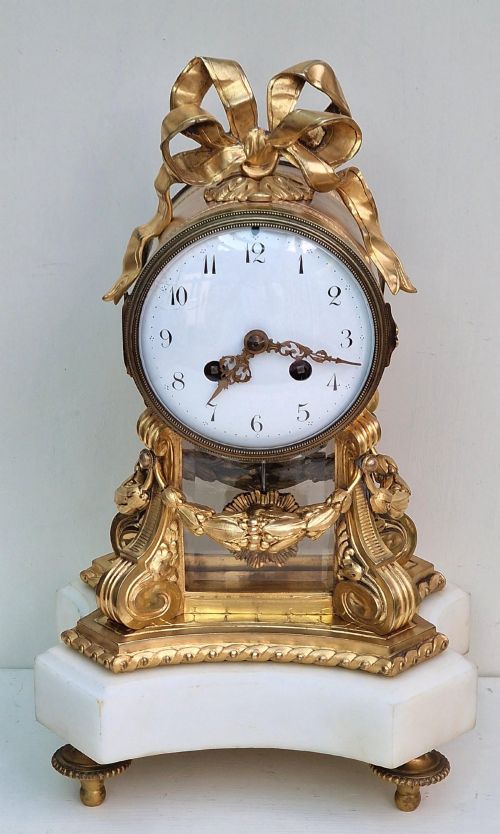
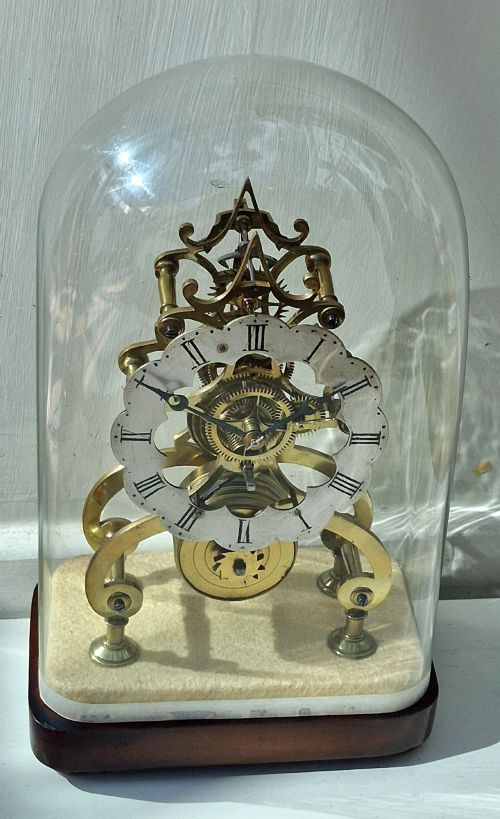
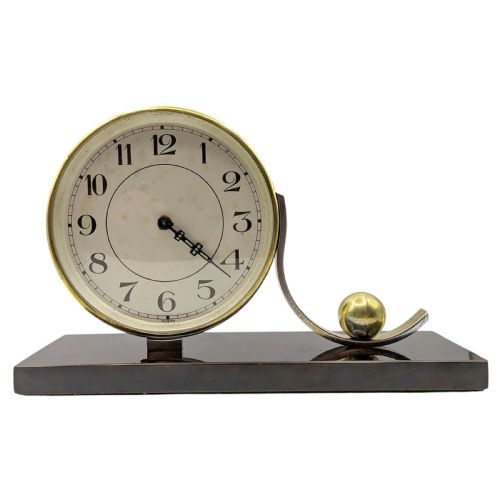
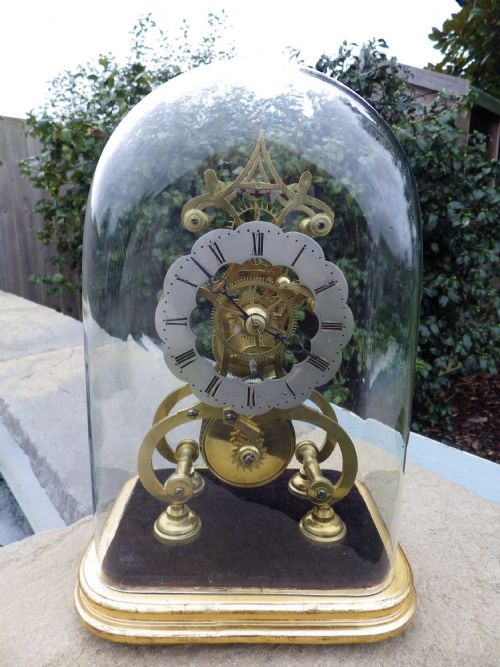
The versions you are most likely to meet on this page range from Victorian skeleton clocks with six-spoke wheel work to Art Deco mechanical desk pieces and French ormolu designs. They draw the eye through the contrast of polished brass, silvered metal dials, and deep mahogany or ebonised wood bases.
Origins span English workshops of the nineteenth century and French horological centres, alongside later twentieth-century electric Bulle movements and rolling ball designs. Each piece combines functional timekeeping with a strong sculptural form rooted in its period of manufacture.
How they were made
Horologists constructed these clocks using cast and turned brass for the frames, skeleton plates, and bezels, often finishing the metal with fire gilding or ormolu. Fusee movements and passing strikes required meticulous hand-cutting of brass wheels and pinions to ensure even power delivery from the mainspring.
Cases and mounts integrate contrasting materials like white marble, ebonised wood, mahogany, and tortoiseshell effect finishes. Many delicate skeleton movements were protected beneath blown glass domes resting securely on circular wooden or brass-edged bases.
Listings feature brass base clocks spanning the Victorian era, the nineteenth century, and the Art Deco period of the 1930s.
What varies in quality
The distinction between standard production and top-tier horology rests on the crispness of the brass skeleton frame and the complexity of the wheel work. Finer examples display bespoke hand-engraving on the plates and silvered chapter rings executed by named London or Parisian makers.
Material selection and proportion dictate the overall presence of the piece, particularly where heavy white marble, fine ormolu mounts, and original glass domes remain intact. The sophistication of the movement, from single fusee timepieces to double fusee striking trains, marks the highest grade of craftsmanship.
Thwaites of London·Le Roy, Paris·William Hardy London·Jean Baptiste Delettrez·Thwaites & Reed
The Brass Base Clock Glossary
- Fusee
- A conical pulley used in mechanical clocks to maintain even tension on the chain or gut line as the mainspring unwinds. This mechanism ensures consistent force is delivered to the escapement for greater timekeeping accuracy.
- Skeleton clock
- A timepiece designed with an open brass framework that exposes the entire gear train and movement to view. These clocks are frequently displayed under glass domes to protect the delicate exposed wheels from dust.
- Ormolu
- A technique of applying finely ground high-carat gold to a bronze or brass base using mercury amalgamation. It yields a rich, warm metallic lustre seen on French mantel clocks and decorative mounts.
- Dial clock
- A wall or desk timepiece featuring a prominent circular face, commonly housed within a mahogany or timber surround. They were widely utilised in public and domestic spaces for clear legibility.
- Desk compendium
- A multifunctional desk object that frequently combines a clock with barometers, thermometers, or compasses mounted on a brass or metal base. These pieces reflect Victorian and later interest in portable scientific instruments.
Brass Base Clock: Frequently Asked Questions
What is a brass base clock?
A brass base clock is a mechanical timepiece featuring a visible metal framework, often displayed on a dedicated plinth or beneath a glass dome. These pieces encompass skeleton designs, desk compendiums, and mantel clocks.
They showcase the interior wheels and escapements openly, combining engineering precision with decorative materials like marble and mahogany.
How do you maintain a mechanical clock?
Mechanical clocks require regular winding and occasional professional servicing to keep the gear trains and escapements functioning correctly. Ensuring the clock sits level on its brass base prevents uneven wear on the pivots.
Keeping the glass dome in place protects the exposed brass work from dust accumulation and accidental contact.
Where should I place a skeleton clock?
Skeleton clocks suit prominent positions on mantelpieces, desks, or tables where light can pass through the open brass frame. Placing them away from direct sunlight and drafts preserves the delicate metal finishes and wooden bases.
Because many include original glass domes, select a stable surface that experiences minimal vibration.
How do I identify Victorian clocks?
Victorian clocks often feature robust fusee movements, six-spoke wheel work, and traditional English or French styling. Makers frequently signed their work on the brass backplate or silvered dial.
Materials like ebonised wood, heavy brass castings, and white marble provide clear stylistic markers of the nineteenth-century period.