




1930s Marble Clock
These 1930s marble clock pieces bring geometric lines and striking period presence to a mantelpiece.
1930s Marble Clock
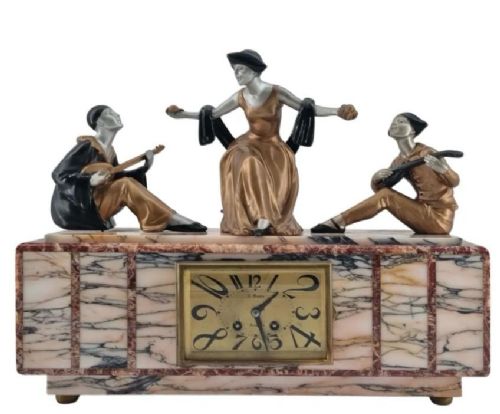
A 1930s marble clock forms the architectural centrepiece of a room, merging functional timekeeping with bold Art Deco sculpture. Buyers searching for a 1930s marble clock seek heavy stone cases that often incorporate metal figures, matching side garnitures, or desk lamps.
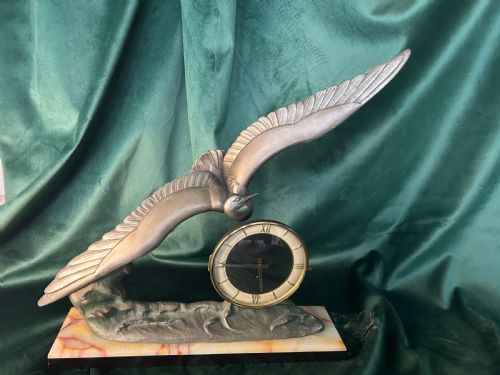
The versions most commonly met on this page span the 1910s to the 1930s, heavily weighted toward French Art Deco designs. These pieces frequently pair polished marble or green onyx with contrasting elements in brass, chrome, and spelter.
Many examples arrive complete with matching garniture sets or animal sculptures depicting greyhounds, elephants, and German shepherds. Desk clocks and mystery clocks also appear alongside traditional mantel clock sets.
What varies in quality
Quality rests in the selection of the stone and the integration of sculptural elements. Superior examples feature richly variegated marble or fine green onyx coupled with crisp metal casting.
The presence of signed works by known sculptors elevates the piece significantly. Complete clock garniture sets matching the central clock case also represent a higher tier of production.
Several clocks double as homes for cast metal greyhounds, elephants, and German shepherds.
Sega·Elliott·Michel Decoux·Jaeger-LeCoultre·Ferdinand Priess·Garrards·P.M.Favre
The 1930s Marble Clock Glossary
- Garniture set
- A matching centrepiece clock accompanied by decorative side ornaments, designed to display together on a mantelpiece.
- Spelter
- A zinc alloy commonly used as a base metal for cast decorative figures and patinated to resemble bronze.
- Green onyx
- A translucent banded variety of chalcedony frequently utilised in Art Deco clock cases for its rich colour.
- Mystery clock
- A timepiece where the dial hands appear to move without any visible mechanical connection to the movement.
- Mantel clock
- A freestanding clock designed specifically to sit upon the shelf or hearth above a fireplace.
1930s Marble Clock: Frequently Asked Questions
How do I wind a marble clock?
Most mechanical versions utilise a key inserted into the dial face to tension the mainspring.
Care should be taken not to overwind the movement to ensure the mechanism continues running accurately.
What is a clock garniture?
A garniture consists of matching decorative objects designed to flank the main clock.
These side pieces often mirror the marble and metal materials of the central clock body.
Where should I place a marble clock?
The weight of the stone requires a sturdy surface such as a mantelpiece, sideboard, or heavy desk.
Placement should avoid direct sunlight to protect any patinated metal figures and delicate dials.
How do I date these clocks?
Dating relies on stylistic markers of the Art Deco period alongside materials like chrome and green onyx.
Signatures from makers inscribed on the dial or sculptural elements also help establish the decade of production.