
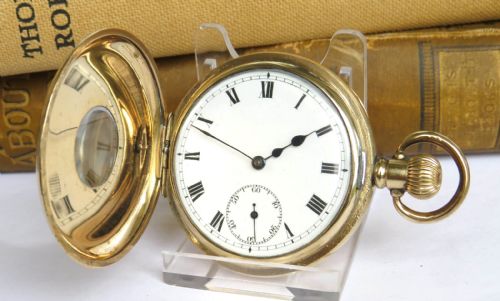


1930s Gold Pocket Watch
These 1930s gold pocket watch pieces combine practical timekeeping with the clean geometries of Art Deco design, offering reliable mechanical movements inside gleaming metal cases.
1930s Gold Pocket Watch
A 1930s gold pocket watch represents a period when traditional timekeeping met modern geometric styling. These portable timepieces bring mechanical precision together with the distinctive aesthetic of the Art Deco era.
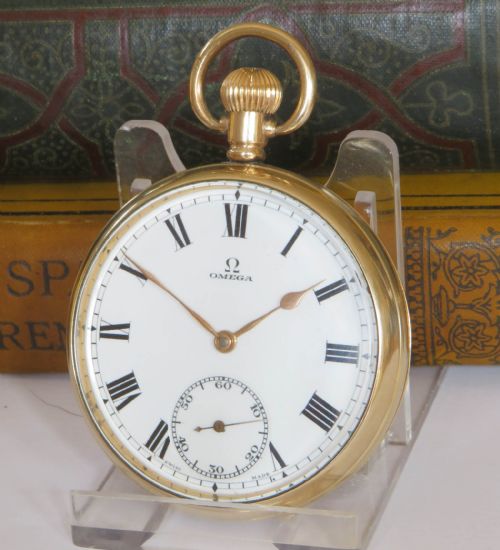
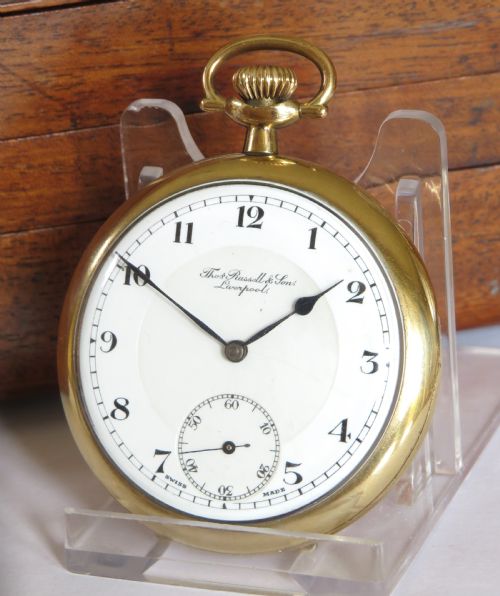
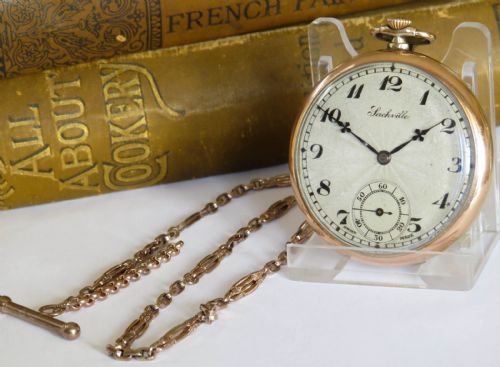
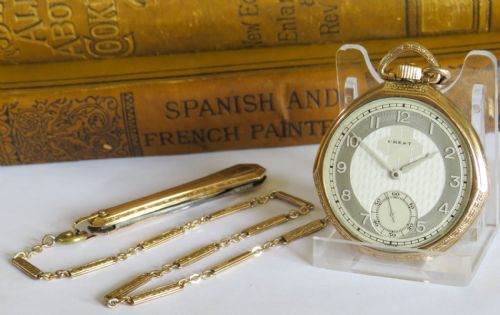
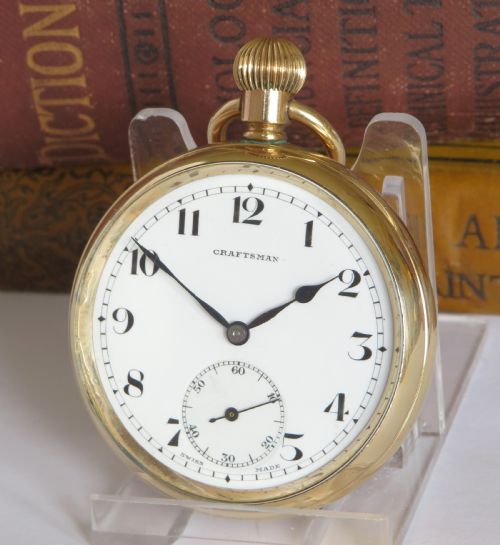
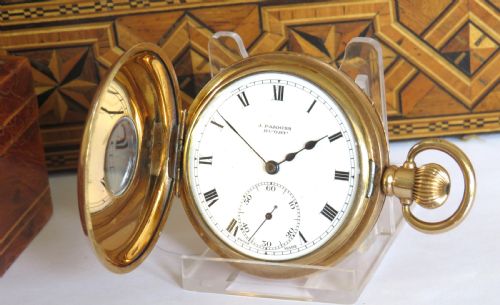
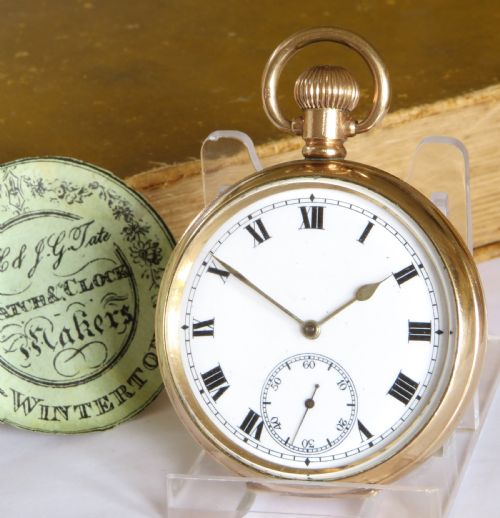
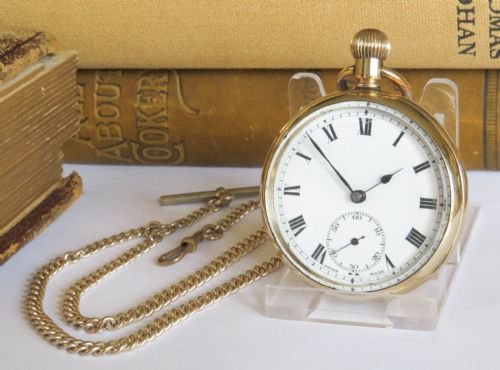
The versions most commonly found here feature cases made from gold plate, gold filled or rolled gold, often accompanied by matching chains and alberts. Open faced designs and half hunter models dominate the selection, showing Swiss and British production.
How they were made
Makers constructed these cases using base metals bonded with gold layers, such as gold filled and rolled gold, to provide the appearance of solid gold at a accessible cost. Stem winding mechanisms replaced older key wind systems, allowing owners to power the watch easily through the crown.
Dials frequently featured enamel finishes with clear Arabic or Roman numerals, protected by glass crystals. Half hunter variants incorporated protective metal covers with small glass apertures to read the hands without opening the case.
Fishermen's societies once ordered specialised pocket watches to keep precise time on turbulent coastal waters.
What varies in quality
The standard of the movement inside determines much of the quality, with well known Swiss and British watchmakers providing superior mechanical reliability. Heavier gold plating thickness and better preserved enamel dials also distinguish finer examples from standard production pieces.
Completeness alters the appeal, particularly when original chains or alberts accompany the watch. The crispness of Art Deco case engravings and the smooth operation of stem winding mechanisms show the initial grade of manufacture.
Omega·Thomas Russell and Son·Tavannes·Revue·Limit·Cyma·Consul·H Samuel·Record·Vertex·J W Benson
The 1930s Gold Pocket Watch Glossary
- Half hunter
- A pocket watch case featuring a closed front cover with a glass centre circle that displays the hands. This design allowed quick time checking while protecting the delicate dial beneath.
- Full hunter
- A pocket watch with a solid hinged metal cover that entirely encloses and protects the glass crystal and dial. The cover springs open by pressing the crown.
- Stem winding
- A mechanical winding system operated by turning the crown at the top of the watch rather than using a separate key. This innovation dominated pocket watch design by the twentieth century.
- Albert
- A short chain attached to a pocket watch, designed to secure the timepiece to a waistcoat buttonhole. These often match the metal finish of the watch case.
- Gold filled
- A manufacturing method where a thick layer of solid gold is mechanically bonded to a base metal core. This technique creates a durable surface that resists wear better than standard plating.
1930s Gold Pocket Watch: Frequently Asked Questions
How do I wind my pocket watch?
Turn the crown at the top of the watch clockwise until you feel gentle resistance. Do not force the mechanism once it stops.
Wind the watch around the same time each day to maintain consistent tension on the mainspring and keep accurate time.
Can I wear a pocket watch without a waistcoat?
Yes, you can secure the attached chain or albert to a belt loop on trousers and slip the watch into the pocket. Many owners use a leather pouch or slip case to prevent scratching against keys or coins.
Shorter chains work well for jacket pockets while longer chains suit traditional waistcoat buttonholes.
How do I tell if the case is solid gold or plated?
Look inside the inner case back for hallmarks or stamped designations such as gold filled, rolled gold, or specific metal grades like ten carat or fourteen carat. Solid gold cases carry official assay office hallmarks indicating metal purity.
Plated and filled cases often show signs of base metal peeking through where friction has worn the outer gold layer thin.