


1930s Glass Ceiling Shade
A 1930s glass ceiling shade brings authentic period geometry and diffused illumination to an interior, channelling the unmistakable spirit of Art Deco design.
1930s Glass Ceiling Shade
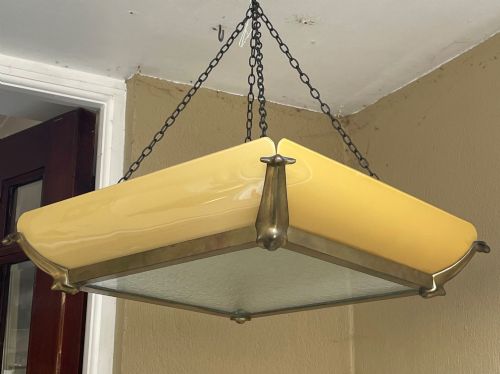
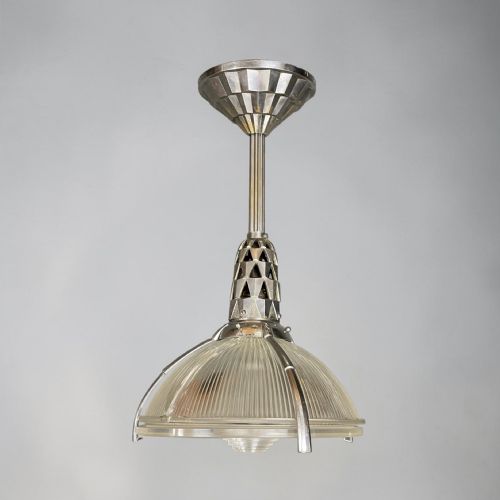
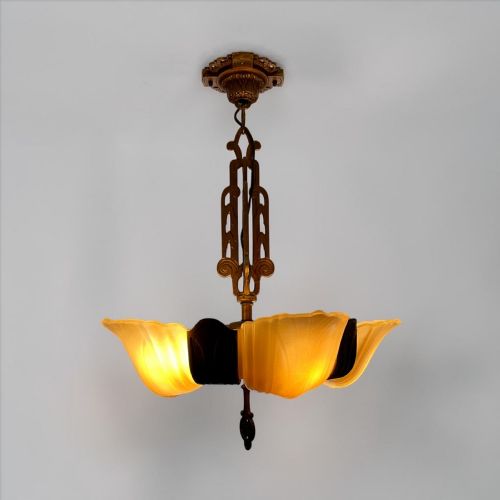
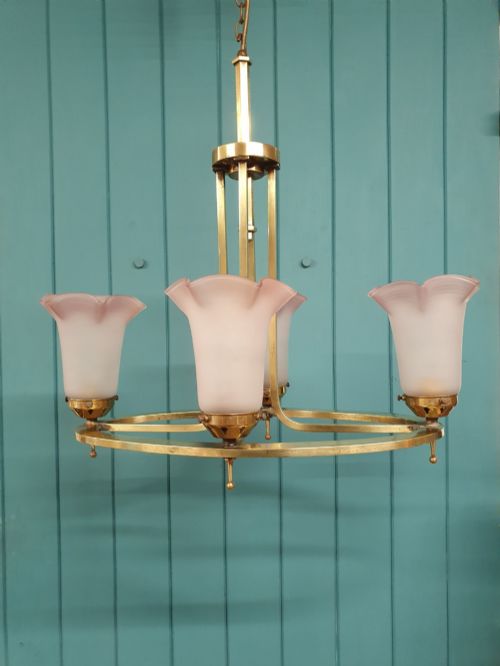
A 1930s glass ceiling shade encompasses architectural pendant lights, flush fittings, and grand chandeliers designed to sit close to the ceiling or hang on chains. The selection relies heavily on the Art Deco idiom, drawing from French, American, and British aesthetics of the interwar years.
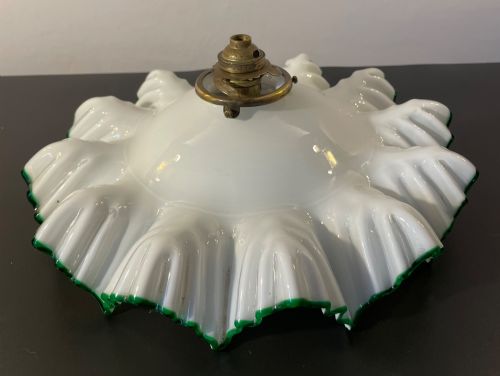
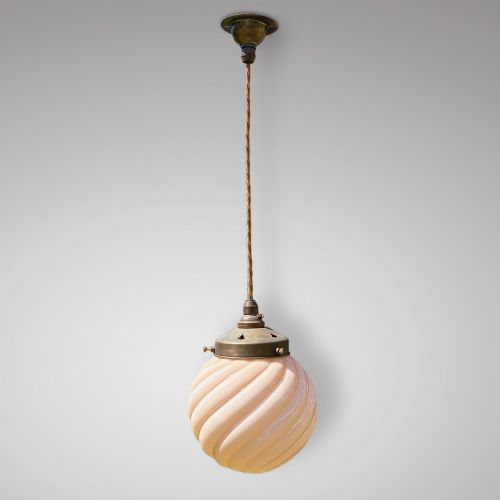
Most examples meet the eye as moulded, frosted, or opaline glass bowls held by metal mounts, channelling light directly downwards or glowing softly through patterned surfaces. Forms range from simple geometric globes to elaborate clam shell and slip shade assemblies.
The material palette is anchored firmly in the styles of 1920 and 1930, capturing an era when industrial techniques first met domestic luxury. Buyers encounter both single-bulb pendants and substantial multi-light chandeliers suited to period hallways and reception rooms.
Materials and construction methods
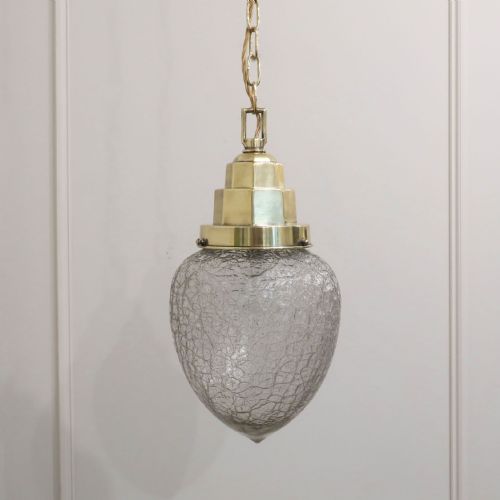
Makers utilised moulded, pressed satin, crackle, and opaline glass to achieve various degrees of translucency and surface texture. Techniques such as acid etching and pressing allowed workshops to produce complex geometric patterns and floral motifs in large quantities.
Metal components - principally brass, chrome, copper, and cast metal - were fabricated to secure heavy glass shades safely against ceilings. Wrought iron and bronze also appear, providing robust structural framing for larger lanterns and chandeliers.
The union of glass and metal relied on engineered galleries, screws, and suspension chains designed to bear the weight of thick decorative bowls. Craftsmanship in these pieces is evident in the precision of the metalwork and the consistent thickness of the moulded glass.
Some 1930s glass shades are shaped precisely like giant clams, proving that interwar interior designers loved a seaside motif indoors.
Distinguishing quality in period lighting
Quality rests upon the weight and clarity of the glass, with heavier pressed satin or opaline bowls commanding attention over thinner alternatives. The depth of moulding and the crispness of etched or frosted details separate standard production items from finer studio outputs.
The calibre of the metalwork dictates the overall integrity of the piece, where solid brass, copper, or heavy chrome plating outlasts lightweight cast metal alloys. Original patination and the survival of matching metal galleries preserve the authenticity of the fitting.
Proportion and scale distinguish exceptional suites from ordinary single fixtures, particularly in multi-light chandeliers and matching sets. The harmony between the glass shade and its suspension hardware remains a key indicator of design success.
Émile-Jacques Ruhlmann·Jean Gauthier
The 1930s Glass Ceiling Shade Glossary
- Pendant light
- A hanging light fixture suspended from the ceiling by a cord, chain, or metal rod. These fixtures direct light downward into a specific area.
- Opaline glass
- A milky, semi-translucent glass that diffuses light evenly across its surface. It gained widespread popularity in domestic lighting during the early twentieth century.
- Slip shade
- A type of glass shade designed to slide into a metal frame or basket, commonly used in American Art Deco multi-light chandeliers.
- Plafonnier
- A shallow ceiling light fitted close to the surface, typically featuring a decorative glass bowl held by a central metal boss or rim.
- Frosted glass
- Glass treated via acid etching or sandblasting to create a textured, opaque surface that softens glare. This finish is a defining characteristic of interwar lighting.
1930s Glass Ceiling Shade: Frequently Asked Questions
How do I hang a heavy glass ceiling shade safely?
Heavy fixtures require direct anchoring into ceiling joists using appropriate steel hooks or mounting brackets rather than relying on plasterboard alone. Professional rewiring and structural assessment ensure the weight of the metal and glass is supported securely.
Working with a qualified electrician also guarantees that older brass or copper frames are properly earthed according to modern safety standards, protecting the historical wiring components.
Can I use modern LED bulbs in these vintage lights?
Modern LED bulbs work exceptionally well in period fittings because they generate very little heat, protecting vintage glass from thermal stress. Selecting warm white bulbs preserves the soft amber or stark white glow intended by the original designers.
It remains essential to check the maximum wattage limits of the original lamp holders and ensure the bulb dimensions fit comfortably inside enclosed glass globes or slip shades.
How do I clean opaline and frosted glass shades?
Cleaning requires a mild solution of warm soapy water and a soft microfibre cloth, taking care to remove shades from their metal mounts beforehand. Abrasive cleaners and harsh scrubbers must be avoided to prevent scratching the delicate frosted or satin surfaces.
Metal galleries should be dusted gently with a dry cloth to preserve their natural patination, avoiding chemical polishes that strip away age-appropriate ageing.
What is the difference between an opaline shade and frosted glass?
Opaline glass contains chemical agents added during manufacturing that create a milky, opaque body diffusing light evenly through its dense material. Frosted glass achieves its translucent quality through surface treatment, such as acid etching or sandblasting a clear or coloured blank.
Both finishes reduce glare effectively, but opaline provides a solid, porcelain-like appearance whereas frosted glass retains a more crystalline texture.