
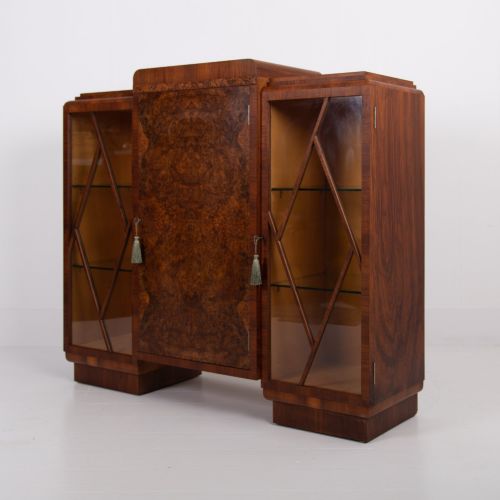


1930s Glass Cabinet
A 1930s glass cabinet brings geometric elegance and practical display space to a room, offering glazed doors to showcase ceramics and books.
1930s Glass Cabinet
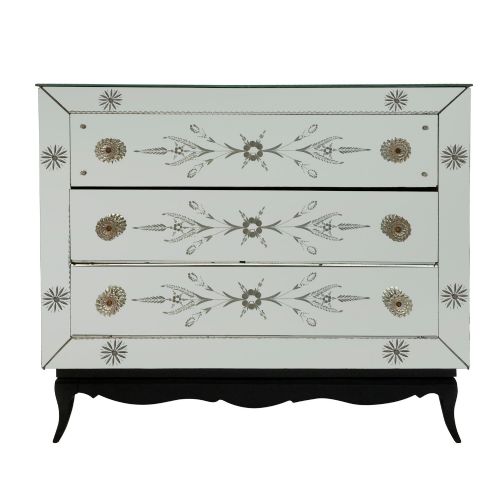
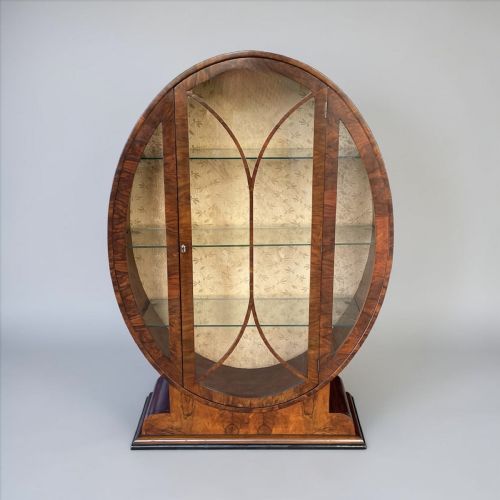
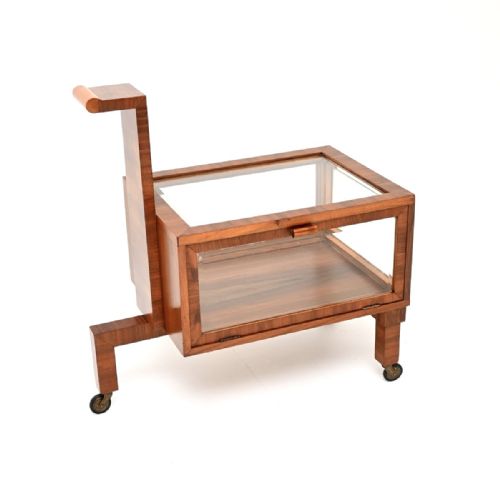
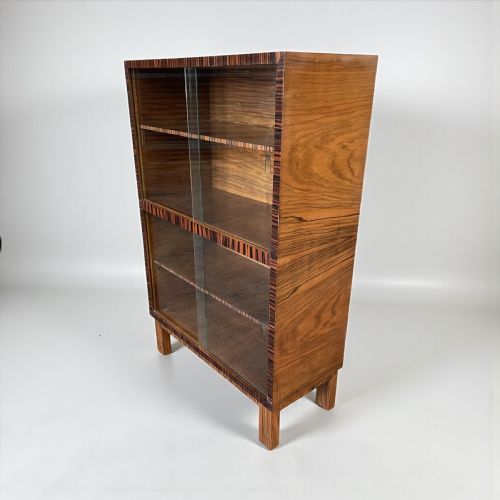
A 1930s glass cabinet encompasses display cabinets, glazed bookcases, and vitrines shaped by the interwar period and the prevailing styles of the decade. These pieces combine timber frames with substantial glass panels intended to protect objects while keeping them visible.
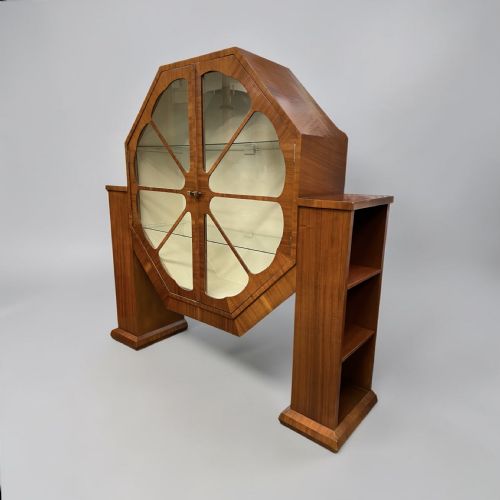
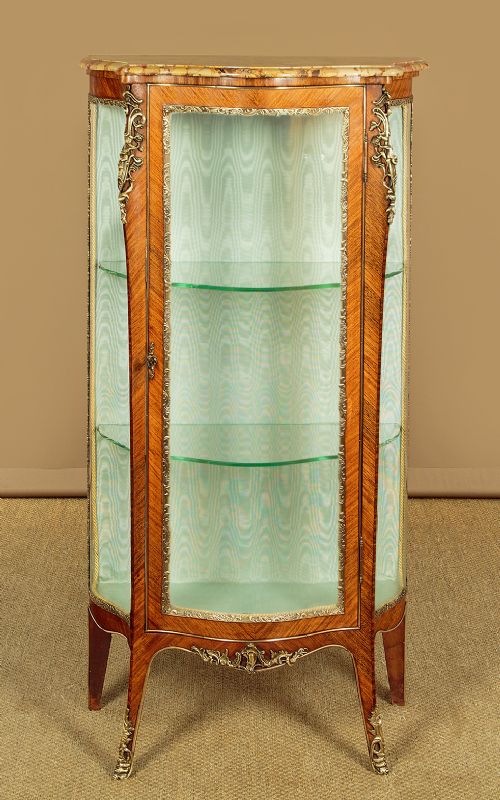
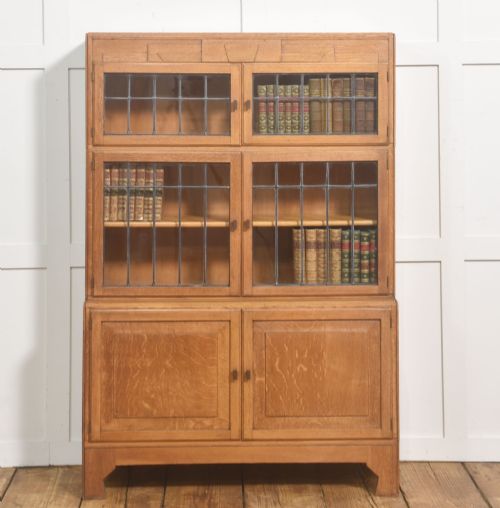
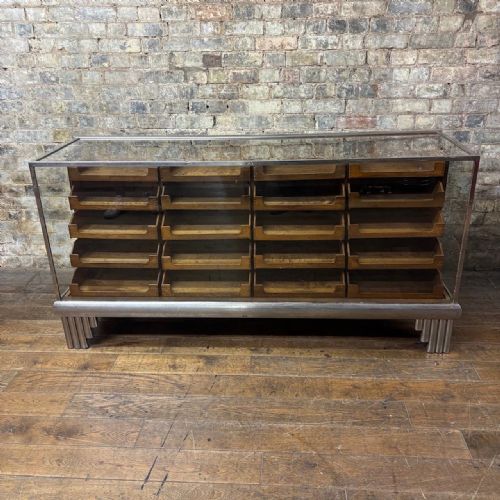
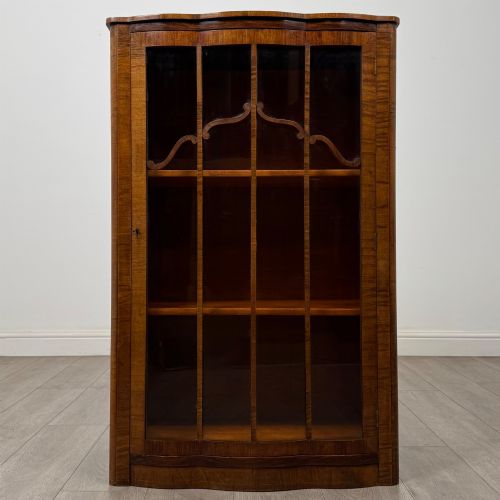
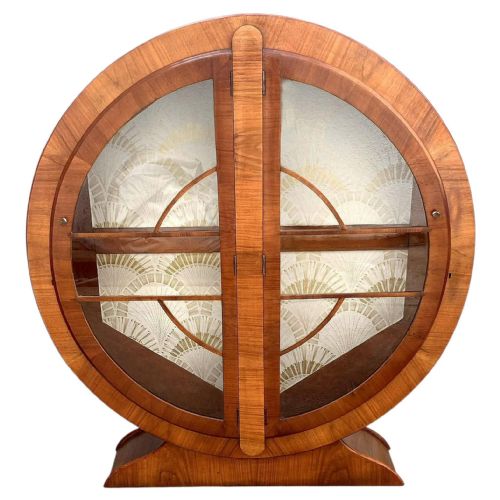
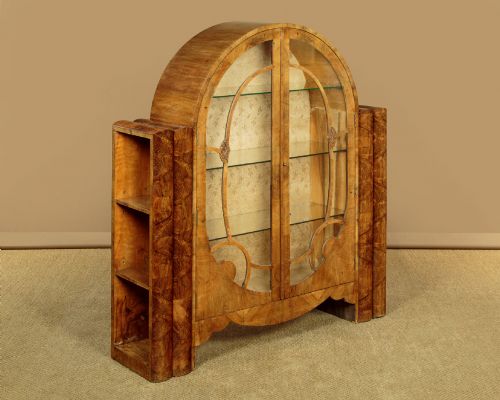
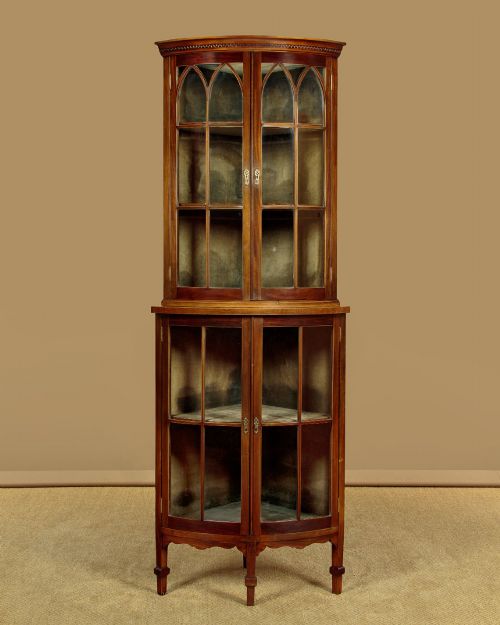
The selection ranges from circular walnut display units and bow-front corner cabinets to oak bookcases with leaded glass. Alongside domestic furniture, the listings include commercial display counters framed in brass, aluminium, or chrome.
Most examples date firmly to around nineteen-thirty, though Edwardian and nineteen-twenty pieces appear with similar glazed forms. Makers and designers of the period produced both streamlined modernist items and traditional revivals.
How they were made
Cabinet makers utilised choice timbers such as walnut, burr walnut, oak, and mahogany, often applying figured veneers to curved or circular carcases. Sycamore and other contrasting woods served as subtle stringing or internal detailing.
Glazing techniques included leaded panels, curved glass to fit circular or bow fronts, and standard clear glass held by wooden rebates. Metal components like brass, chrome, and aluminium provided structural framing for counters and decorative mounts for vitrines.
One clove-shaped cabinet stands out among the circular and bow-fronted timber forms.
What varies in quality
Quality rests upon the selection of timber veneers, particularly the grain matching on burr walnut surfaces and the precision of curved woodwork. Cabinets featuring bespoke design work or attribution to known makers display superior joinery and finishing.
The integration of materials dictates the standard of execution, from solid English oak frames to finely cast brass mounts and specialised bent glass. Simpler commercial counters rely on sturdy aluminium or brass framing designed for daily use.
Dudley & Co·Rurka·Maurice Adams·Epstein·Saml. Elliott & Sons
The 1930s Glass Cabinet Glossary
- Vitrine
- A glass-fronted cabinet or display case designed specifically for showing porcelain, curiosities, and small objects. These pieces usually feature glass on the top and sides to maximise illumination.
- Burr walnut
- A prized timber harvested from the wart-like growths on walnut trees, yielding complex and swirling grain patterns. It is sliced into thin veneers and applied to prominent surfaces.
- Leaded glass
- Small panes of glass joined together by narrow strips of lead, forming geometric or decorative patterns. This technique originates in stained glass windows but appears frequently in interwar bookcases.
- Haberdashery counter
- A commercial display unit featuring multiple glass panels or drawers originally used in shops to exhibit textiles and small wares. In domestic settings, they provide structured visibility for collections.
1930s Glass Cabinet: Frequently Asked Questions
Where should I place a circular display cabinet?
Circular display cabinets work effectively in corners or as free-standing focal points in a room where light can pass around them.
Because the glass wraps around the sides, position them away from heavy foot traffic to protect the curved panes.
How do I clean leaded glass?
Use a soft cloth slightly dampened with a mild glass cleaner, taking care not to press too hard against the lead came.
Harsh chemicals can corrode the lead and dry out the surrounding wooden framework.
Can I use a haberdashery counter at home?
These counters provide exceptional storage and display for collections of small items, textiles, or tableware.
Their sturdy metal or wooden frames and glass panels suit both contemporary and traditional interior schemes.