


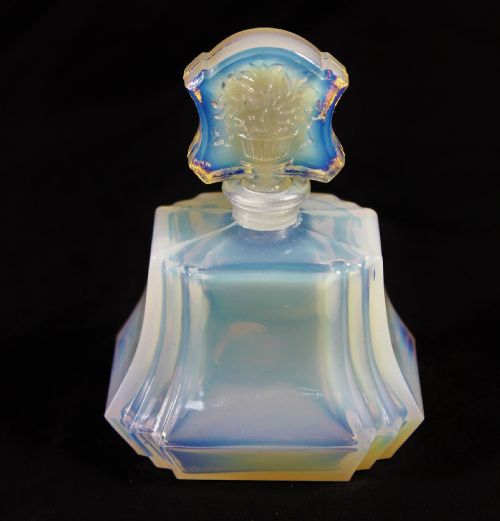


1930s French Perfume Bottle
These 1930s French perfume bottle examples capture the distinctive geometry and tactile glasswork of the Art Deco period, offering a practical touch of dressing table elegance.
1930s French Perfume Bottle
When searching for a 1930s French perfume bottle, collectors seek vessels defined by the bold geometry and stylized motifs of the Art Deco style. These objects served both a utilitarian function on dressing tables and acted as decorative art pieces during the interwar years.
The version most commonly encountered on this page is the pressed opalescent glass bottle, frequently associated with makers working in France during the nineteen thirties. Such pieces often exhibit characteristic milky or translucent qualities that react distinctively to light.
Vessels take various forms, ranging from atomisers fitted with chrome hardware to stoppered bottles moulded with floral or abstract reliefs. Each configuration reflects the manufacturing priorities and design vocabulary characteristic of French glassworks of the period.
Materials and production methods
Makers shaped these glass objects using pressing and moulding techniques to achieve sharp reliefs and consistent patterns across production runs. Opalescent glass, crystal, and clear glass served as the primary media for the body of the vessels.
Metal components such as chrome were integrated into atomisers to provide functional hardware that complemented the glass bodies. Paper labels occasionally survived on the base, while moulded signatures identified the maker directly in the glass.
These charming dressing table companions were designed to make applying French scent feel like an exclusive theatrical event every single morning.
Assessing quality and execution
The distinction between standard production and finer examples rests upon the crispness of the moulded relief and the depth of the opalescent effect within the glass. Superior pieces display sharper detailing in the decorative motifs and a more pronounced play of light across the surface.
The integrity of the material and the subtlety of the glass coloration differentiate individual pieces. Examples bearing clear maker signatures in the glass generally command greater interest from collectors than unmarked counterparts.
Rene Lalique·Sabino
The 1930s French Perfume Bottle Glossary
- Opalescent glass
- Glass containing agents that create a milky, bluish translucence, particularly visible when held against the light. This effect is a defining characteristic of many Art Deco French pieces.
- Art Deco
- The dominant design style of the nineteen twenties and thirties, characterised by geometric shapes, streamlined forms, and stylized motifs. It heavily influences the aesthetic of these bottles.
- Atomiser
- A perfume bottle fitted with a spray mechanism, often incorporating chrome metal components and a bulb pump. This form allowed for a fine mist application of scent.
- Pressed glass
- Glass formed by pressing molten material into a metal mould using a plunger. This technique enabled the repeatable production of complex decorative patterns.
1930s French Perfume Bottle: Frequently Asked Questions
How do I identify a 1930s French perfume bottle?
Look for characteristic Art Deco styling, moulded glass reliefs, and specific maker signatures located on the base or body. The use of opalescent glass and chrome hardware also points directly to this period.
Examining the weight and clarity of the glass helps distinguish authentic interwar pieces from later reproductions.
What materials were used for these bottles?
Makers primarily utilised glass, including clear, crystal, and opalescent varieties, shaped through pressing techniques. Metal elements like chrome appear on atomiser hardware.
Paper components occasionally survive on the underside, though glass signatures remain the most reliable material indicator.
How were these perfume bottles used?
They functioned as dressing table accessories designed to hold and dispense liquid fragrance. Atomiser versions utilised mechanical spray pumps, while standard bottles employed fitted glass stoppers.
Beyond practical use, their decorative forms contributed to the interior aesthetics of dressing rooms during the period.
Are these bottles signed by the makers?
Many pieces feature signatures moulded directly into the glass by prominent French glassworks and designers. Unsigned examples also exist from the same production era.
Signatures provide definitive attribution, though unsigned pieces still reflect the distinct manufacturing methods of the decade.
How should I display a glass perfume bottle?
Position the vessel in a well-lit area to highlight the optical qualities of the opalescent or clear glass. Flat surfaces on dressing tables or display shelves offer stable placement.
Ensure the display location protects the delicate glass body and any metal atomiser hardware from accidental impacts.