


1930s Floor Light
These 1930s floor light examples bring practical height and striking geometric presence to a room, offering warm illumination alongside period character.
1930s Floor Light
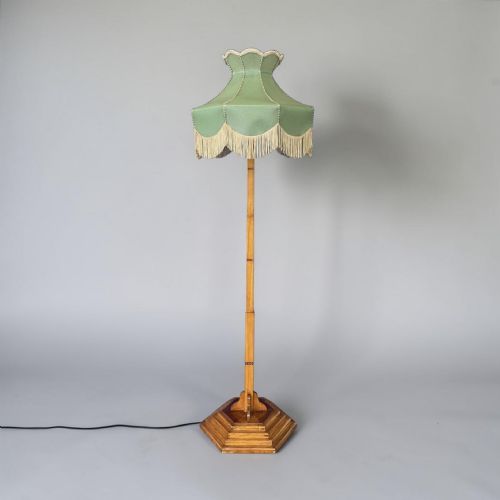
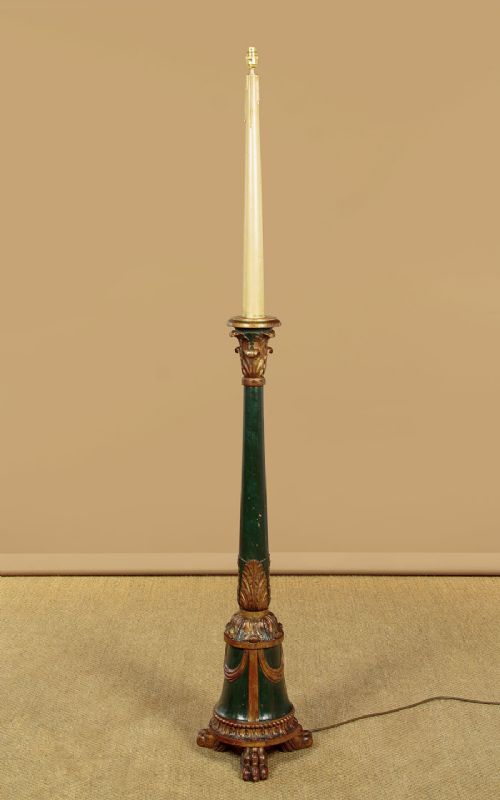
A 1930s floor light encompasses standard lamps, torcheres, and uplighters designed to provide ambient or task lighting from a standing position. These fixtures emerge predominantly in the Art Deco style, accompanied by occasional Neoclassical Revival and traditional pieces.
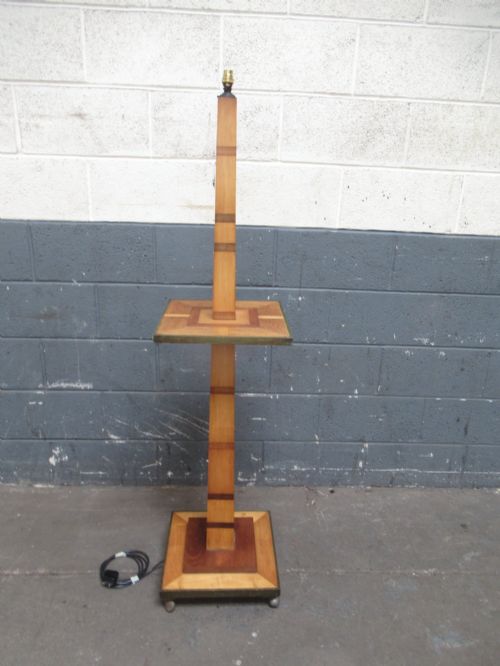
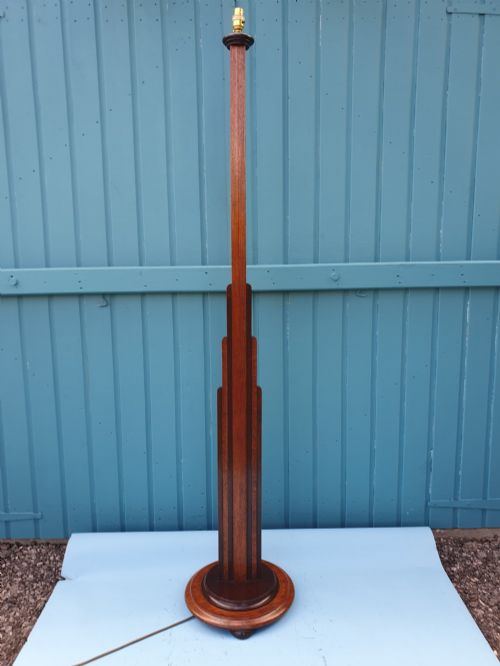
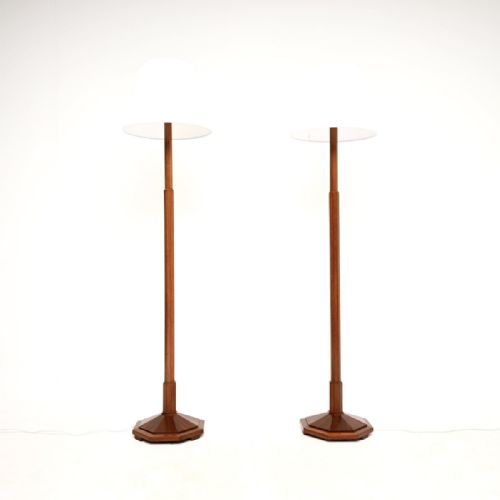
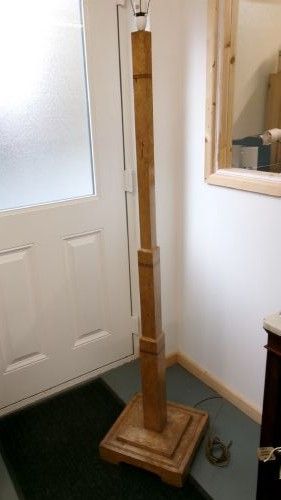
The selection ranges from simple wooden standards to iconic skyscraper and Odeon styles featuring contrasting veneers such as golden oak and ebony. Pairs of torcheres and floor lamps also appear within the available choices.
What varies in quality
Quality rests upon the selection and matching of timber veneers, such as figured walnut or golden oak, alongside the crispness of carved details in giltwood examples. Superior execution shows in the integration of materials like brass and chrome with the primary wood body.
The sophistication of the silhouette defines the upper tier, particularly in Odeon and skyscraper forms where proportion and line dictate visual impact. Simpler turned standards rely entirely on timber grain and stability for their distinction.
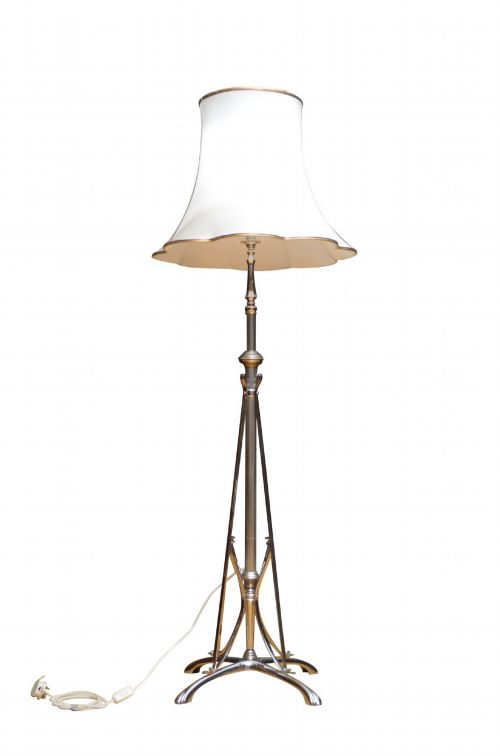
Listings demonstrate a strong preference for walnut and oak, frequently enhanced by chrome, brass, and glass elements.
Harry and Lou Epstein
The 1930s Floor Light Glossary
- Standard lamp
- A tall floor-standing lamp designed to support a shade and bulb at eye level or above. This term appears frequently interchangeably with floor lamp in older inventories.
- Torchiere
- A tall floor lamp directing light upwards towards the ceiling for indirect illumination. These often feature decorative shafts and bowls.
- Uplighter
- A lighting fixture engineered to cast illumination straight up against a ceiling surface. They emerge in both chrome and wooden formats from the period.
- Odeon style
- An architectural and decorative aesthetic characterised by stepped setbacks and vertical skyscraper motifs. It defines many prominent wooden lamps from the era.
1930s Floor Light: Frequently Asked Questions
How do I place a 1930s floor light in a room?
Position these fixtures beside armchairs or sofas where their height can direct light downward for reading or upward for ambient glow. Their sculptural wooden or chrome columns also serve as focal points in corners.
Ensure the cord reaches a wall socket safely without stretching across high-traffic pathways. Pairing them with period furniture enhances their architectural presence.
What is the difference between a torchiere and a standard lamp?
A standard lamp typically holds a shade that directs light both downward and outward into the immediate space. It functions primarily as a reading or task light.
Conversely, a torchiere casts its beam strictly upward toward the ceiling, creating indirect ambient illumination. This style relies on the ceiling to bounce light back down into the room.
Are these lamps compatible with modern wiring?
Most surviving lamps retain either vintage flex or have undergone rewiring by previous owners to meet contemporary standards. Buyers should inspect the internal cord and plug upon arrival.
Qualified electricians can easily update older lamp holders and wiring while preserving the original exterior fabric and structure. This ensures safe daily operation in a modern home.
How do I identify Art Deco lighting features?
Look for symmetrical stepped designs, skyscraper motifs, and contrasting timber veneers like walnut and ebony. Chrome and brass accents further signal the stylistic period.
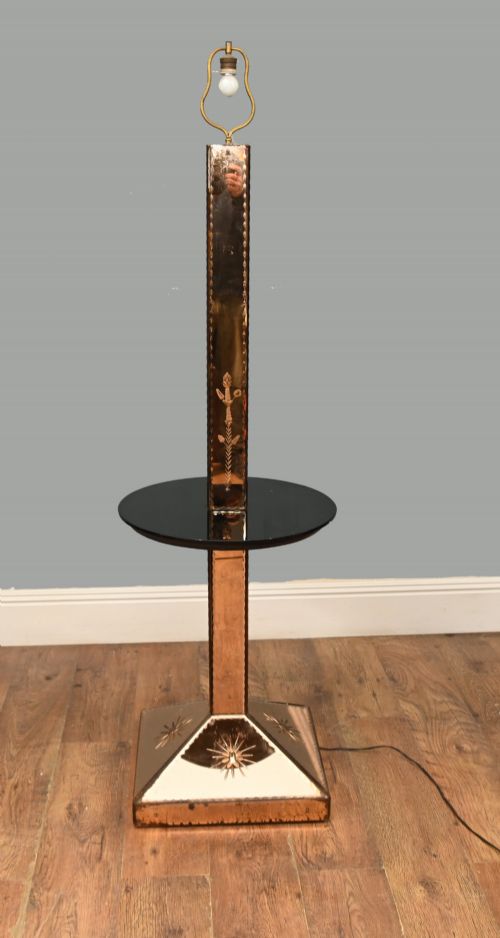
Geometric forms and clean vertical lines dominate these pieces, distinguishing them from earlier ornate revival styles. Integrated glass tables also point directly to 1930s functional design.