





1930s Art Deco Bookends
These 1930s art deco bookends combine sculptural animal and human figures with heavy bases to hold volumes upright with architectural weight and style.
1930s Art Deco Bookends
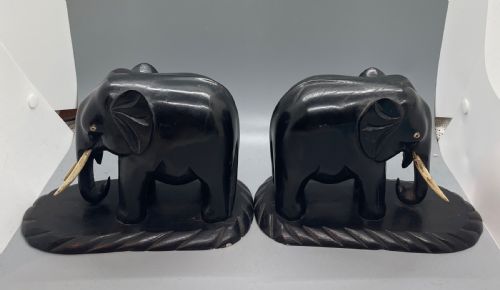
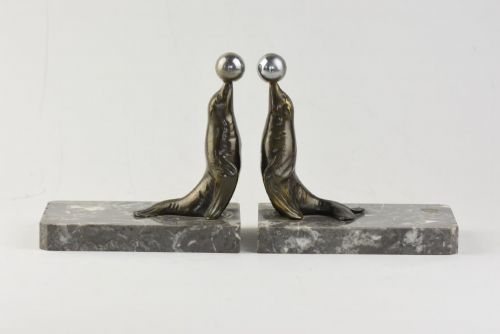
When you search for 1930s art deco bookends, you encounter functional objects that double as cabinet sculptures from the interwar period. The forms most frequently met on this page are pairs featuring animals such as elephants, sea lions, squirrels, dogs, and horses.
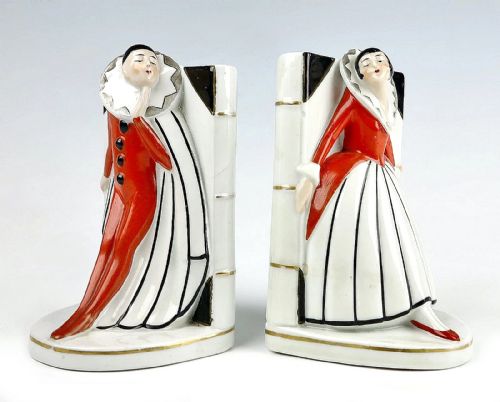
Beyond animals, figurative subjects like Pierrot and Pierrette or nymphs appear alongside geometric book troughs and shelves. Most examples date from around 1930, originating from French workshops or British makers utilising popular modern aesthetics.
How they were made
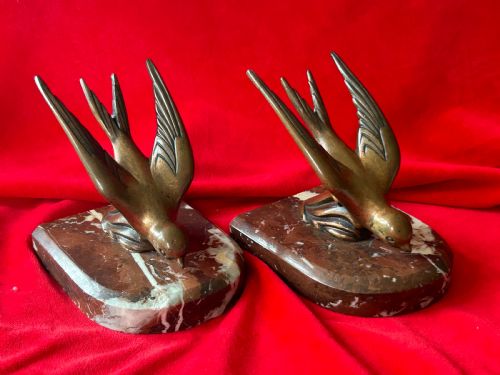
The makers of these pieces relied on a mix of heavy stone bases and cast metal figures. Marble and alabaster provide the dense weight required to support books, shaped into smooth rectangular or stepped plinths.
Figures and decorative mounts are cast in bronze, spelter, brass, or chrome, frequently silvered or finished with patination. Ebony and oak occasionally appear to form wooden components or integrated book shelves.
1930s Art Deco Bookends Retail Price Guide 2026
Typical asking prices for 1930s art deco bookends among the pieces listed under this phrase on Sellingantiques today, from the lower quarter to the upper quarter. They describe what is for sale here now, not the wider market.
Listings feature 1930s art deco bookends spanning marble, bronze, spelter, chrome, brass, alabaster, and ebony.
What varies in quality
Better pieces often combine contrasting natural materials, such as pairing deep veined marble with rich patinated bronze rather than relying on painted or plated base metals.
Karl Hagenauer·Frankart·Herzig
The 1930s Art Deco Bookends Glossary
- Spelter
- A zinc alloy commonly used as a cost-effective substitute for bronze in decorative figures. It takes patination well but is softer than bronze.
- Alabaster
- A fine-grained, translucent stone used for bases and carvings. It is softer than marble and prized for its soft, cloudy appearance.
- Book trough
- A desk or shelf accessory featuring integrated ends to hold a small selection of volumes upright. These keep reading material tidy on a desk.
- Patina
- The surface sheen or colour that develops on metal over time through age and handling. It indicates original finish and history.
1930s Art Deco Bookends: Frequently Asked Questions
What holds heavy books upright?
The weight comes from dense stone bases made of marble or alabaster, paired with cast metal figures. This combination provides the necessary mass to stop volumes from slipping.
Most pairs are designed with flat, heavy plinths that sit flush against the shelf while the decorative sculpture faces outward.
Are they sold as pairs?
Most examples appear as matched pairs intended to anchor either end of a row of books. Sculptural subjects and animal figures are typically cast as left and right variants.
Single book troughs or shelves also occur, designed to hold a smaller selection of volumes between fixed ends.
Where were they made?
Many of the surviving examples originate from French foundries and workshops active during the interwar period. British makers also produced notable designs using local materials and brass.
Continental European studios contributed heavily to the figural and animalier subjects seen in this style.
How do I clean alabaster?
Alabaster is a soft stone that dissolves or stains easily with excess moisture. Dust the surface gently with a dry, soft cloth without using water or harsh chemical cleaners.
Keeping them away from direct sunlight and damp environments preserves the translucent quality of the stone.