




Antique Bronze Book Ends
These antique bronze book ends keep heavy volumes in place while bringing sculptural presence to a shelf.
Antique Bronze Book Ends
When you search for antique bronze book ends, you encounter substantial heavy metal supports designed to keep upright rows of books on shelves and desks. These useful objects appear across several decades, most notably emerging from early twentieth century ateliers through to the Art Deco period.
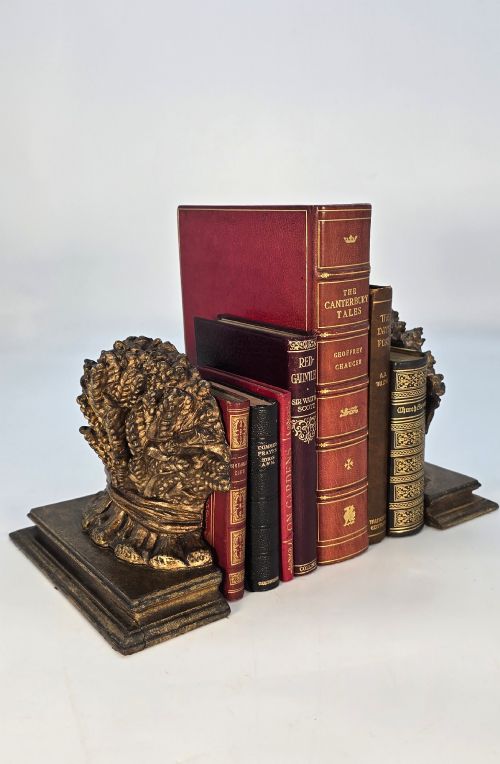
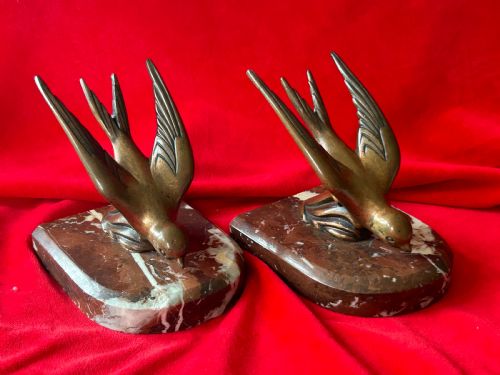
The versions most commonly met on this page span the Art Deco style, featuring stylized animals such as squirrels, sea lions, spaniels, and bulldogs. Alongside these figural interpretations, makers also utilised architectural motifs like wheat sheaves and classical forms originating in the Regency era.
Makers often paired the metal figures with contrasting bases, frequently mounting bronze or patinated metal forms onto heavy marble, alabaster, or burr wood plinths. This combination provided the necessary mass to anchor heavy volumes securely without tipping.
How they were made
Foundry workers cast these pieces using traditional methods, pouring molten bronze or spelter into moulds to achieve crisp detail in animal fur and foliage. Cold painting was frequently applied by hand afterward to add colour and realistic surface depth to birds and beasts.
Craftspersons then mounted the finished metal castings onto cut stone bases like marble and alabaster, or polished wood plinths including burr wood and marquetry. Ormolu mounts and gilded metal accents occasionally embellished the designs, bringing a French decorative finish to the functional heavy objects.
Listings feature pieces spanning the Regency period through to the Art Deco era, incorporating materials such as marble, burr wood, and ormolu.
What varies in quality
The choice of base material equally influences the calibre of the piece. Dense veined marble and substantial alabaster plinths provide better weight and visual balance than lighter wooden supports or thin metal sheets.
C Omin·Herzig
The Antique Bronze Book Ends Glossary
- Spelter
- A zinc alloy frequently utilised as a substitute for bronze in decorative figures. It takes patination well but possesses a lighter weight.
- Ormolu
- Gilded bronze applied to decorative mounts and ornaments. The technique involves treating copper or brass with a mercury and gold amalgam.
- Cold painted
- A method where enamel or oil paint is applied to metal objects without subsequent firing. This finish remains delicate and is prone to rubbing over time.
- Regency
- A British design period spanning the early nineteenth century. Pieces from this era often incorporate classical motifs and architectural symmetry.
Antique Bronze Book Ends: Frequently Asked Questions
How heavy are they?
Most pairs possess substantial weight due to dense metal castings and stone bases like marble or alabaster. This mass prevents the supports from sliding when holding heavy volumes upright.
Lighter versions utilising spelter on wooden bases still provide sufficient resistance for standard octavo books, though very large folios require the heaviest solid metal examples.
Can they hold heavy books?
Their primary purpose is supporting rows of heavy books on open shelves and mantelpieces. The combination of metal figural stops and weighted stone plinths creates adequate friction against wooden surfaces.
Placing them on felt or leather pads further protects shelving while maintaining stability under the pressure of leaning volumes.
How do I date a pair?
Stylistic indicators such as geometric Art Deco lines or classical Regency motifs provide the clearest chronological markers. Material choices also help, as alabaster and cold painted spelter frequently point toward early twentieth century production.
Examining the underside often reveals screw fittings, casting marks, or felt coverings that reflect the manufacturing standards of specific decades.
Are they all solid bronze?
Many examples consist of spelter or mixed metals rather than solid bronze. Spelter was a popular, more affordable alternative used by foundries to cast detailed animal and figural forms.
Base materials also vary significantly, frequently combining bronze figures with marble, alabaster, or wooden plinths to achieve the necessary weight.