

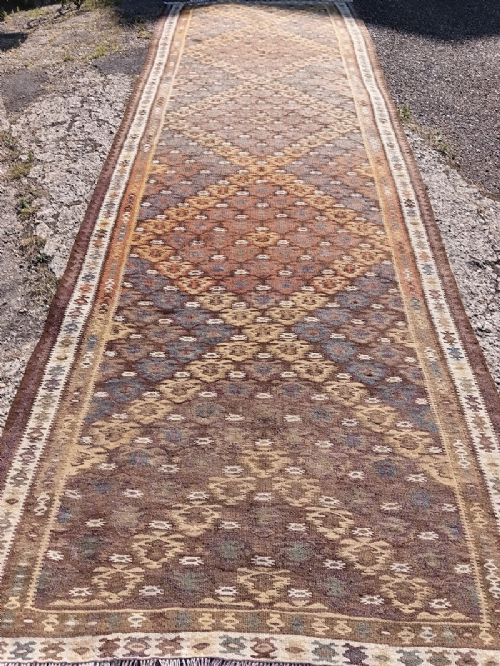
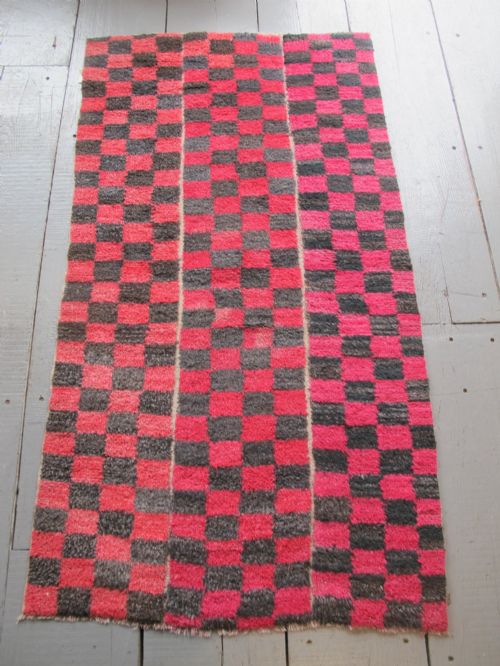


1920s Tribal Runner
These 1920s tribal runner pieces bring genuine village character and resilient weave structures into modern hallways.
1920s Tribal Runner
A 1920s tribal runner is a long, narrow textile traditionally woven by village and nomadic communities across regions like Anatolia, the Caucasus, Persia, and Afghanistan. Buyers exploring this category encounter varied formats such as rug runners, flatwoven kilims, and village prayer rugs originating around 1910 to 1920.
The inventory on this page relies heavily on regional village and tribal types, including Afghan, Baluch, Kurdish, Caucasian, and Turkish styles. These formats range from narrow corridor pieces to two-part kilims and specific village prayer formats.
Makers produced these textiles for domestic utility, ceremony, and floor insulation rather than commercial export. Consequently, each piece reflects the local iconography and weaving traditions of specific groups like the Luri, Kizil Ayak, or Mushwani.
Materials and construction methods
Weavers constructed these pieces predominantly from wool, hand-spun wool, Tibetan wool, and cotton foundations using traditional hand-knotted and flatweave techniques. Natural dyes provided the foundational palette, yielding stable tones that soften gracefully over decades.
Structural variations include pile rugs knotted onto cotton or wool warps alongside slit-woven kilims constructed in single or multi-part joins. Artisans finished ends with long kilim tails or braided fringes to prevent unravelling during daily domestic use.
1920s Tribal Runner Retail Price Guide 2026
Typical asking prices for 1920s tribal runner among the pieces listed under this phrase on Sellingantiques today, from the lower quarter to the upper quarter. They describe what is for sale here now, not the wider market.
Some tribal weavers cleverly stitched two narrow kilim halves together just to make a grand hallway statement.
Assessing quality in early twentieth-century runners
Quality separates through the integrity of the wool, the precision of the hand-knotting or flatweaving, and the retention of original structural edges. Tighter knot density and supple hand-spun wool generally indicate a more enduring domestic textile.
The depth and chemistry of natural dyes dictate visual permanence, distinguishing harmonious patination from harsh fading. Furthermore, the completeness of original kilim ends and borders preserves the historical authenticity of the piece.
The 1920s Tribal Runner Glossary
- Kilim
- A flatwoven textile produced without a pile by tightly interweaving warp and weft threads. These pieces often serve as lightweight floor coverings or tent hangings.
- Mihrab
- A niche design element indicating the direction of prayer, frequently found in village prayer rugs. It guides the visual focus of the composition.
- Warp
- The vertical foundation threads stretched lengthwise on a loom before weaving begins. Wefts are subsequently passed across these stationary strands.
- Weft
- The horizontal threads passed alternately over and under warp strands to form the body of the textile. Packing these threads tightly secures the knots or flatweave.
- Medallion
- A central symmetrical ornamental motif set into the field of a rug. Artisans often repeat or link these geometric shapes down the axis of a runner.
1920s Tribal Runner: Frequently Asked Questions
How do I care for a vintage wool runner?
Vacuum gently without using a rotating brush roll to protect the hand-knotted pile and flatwoven ends. Professional cleaning tailored to antique textiles preserves the natural lanolin in the wool.
Keep the runner out of direct sunlight to prevent natural dyes from fading unevenly over time. Rotating the piece periodically ensures even wear in high-traffic corridors.
Where were these runners originally placed?
Nomadic and village weavers produced narrow runners to line tent floors, passage corridors, and main living spaces. Their elongated formats suited domestic architecture designed for warmth and movement.
Prayer variants held devotional purposes within village homes or mosques. Everyday tribal runners balanced practical floor insulation with symbolic clan iconography.
What distinguishes an Afghan runner from a Caucasian piece?
Afghan runners typically feature darker madder-rich palettes, geometric guls, and structural elements associated with Baluch or Kizil Ayak weavers. Their wool is often densely spun for heavy floor utility.
Caucasian pieces lean towards sharper geometric medallions, hooked polygons, and crisper primary colours. Armenian and regional village weavers in the Caucasus utilised distinct rectilinear symbol sets.
Why are some kilims woven in two parts?
Weavers occasionally produced large kilims or runners in two distinct vertical strips that were subsequently stitched together down the centre. This technique accommodated narrow loom widths available in village and nomadic settings.
Joining two panels allowed makers to create substantial floor coverings without requiring oversized industrial looms. Expert stitching ensured the join remained flat and structurally sound under foot.