

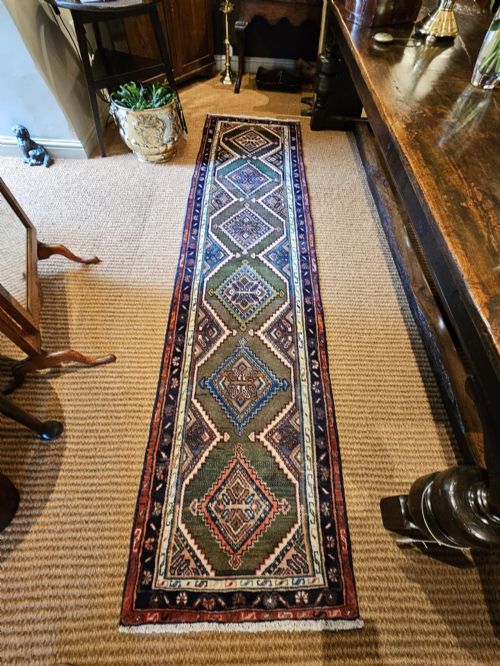
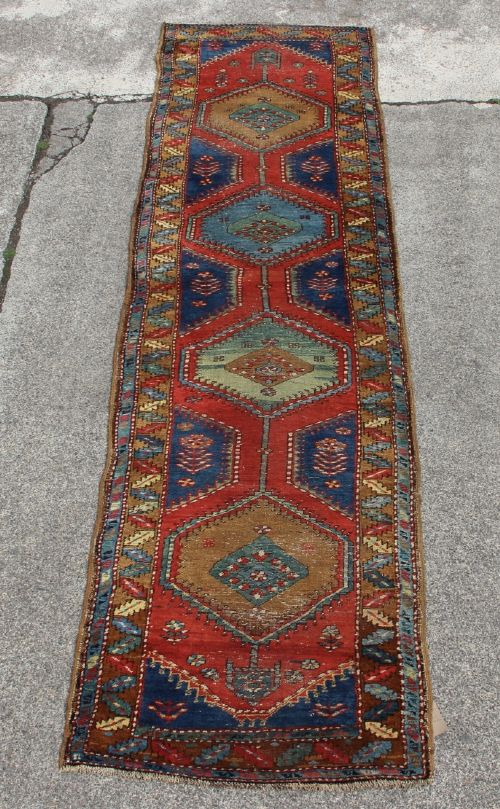

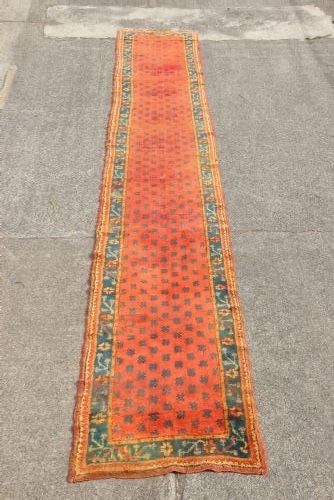

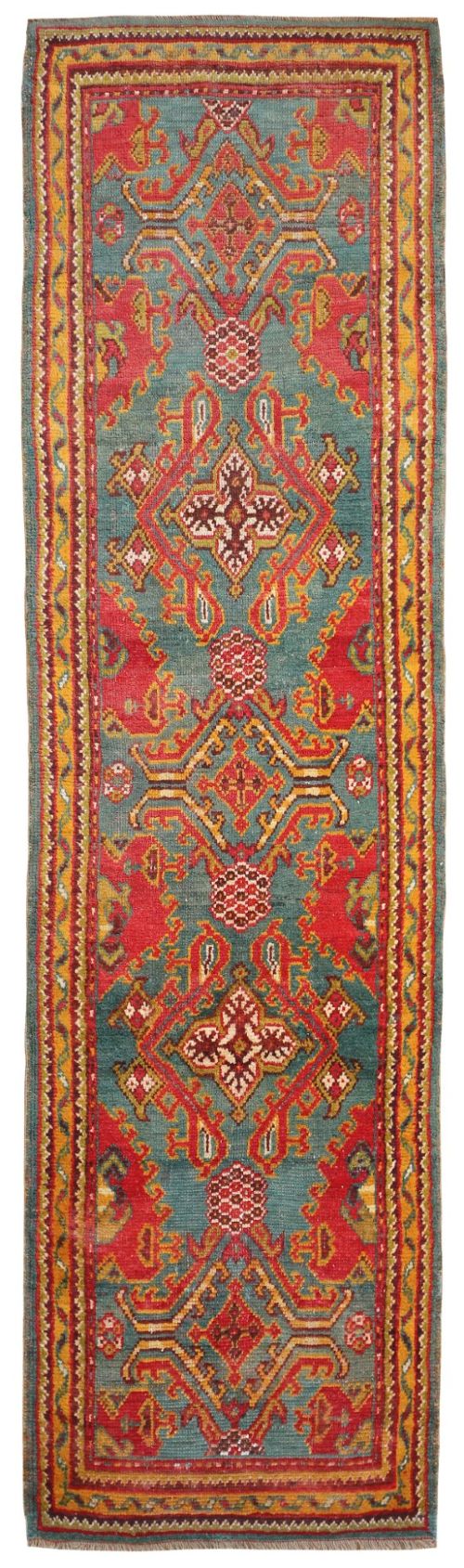

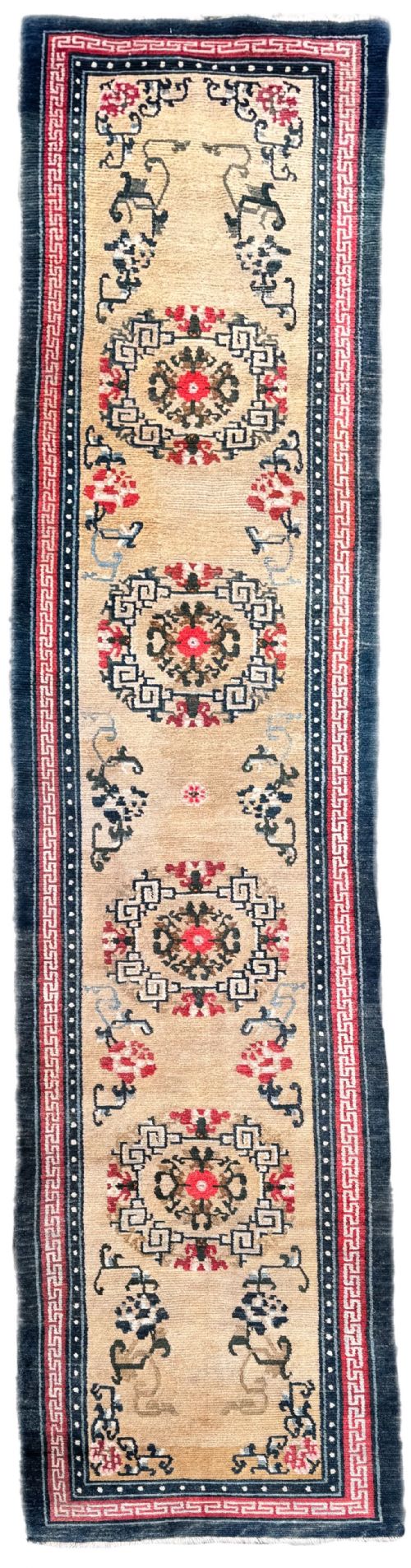

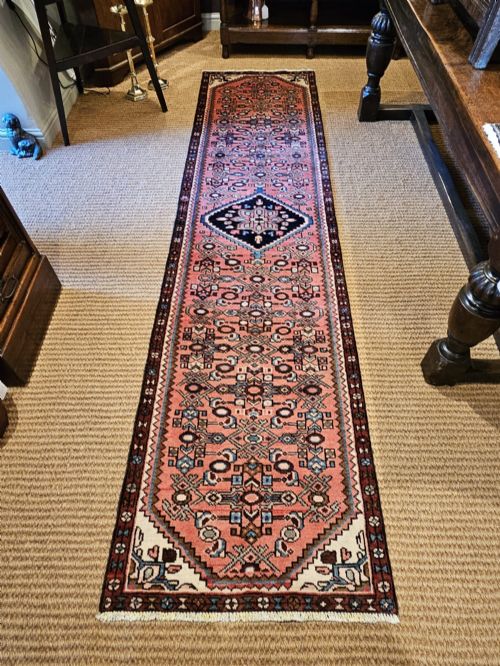
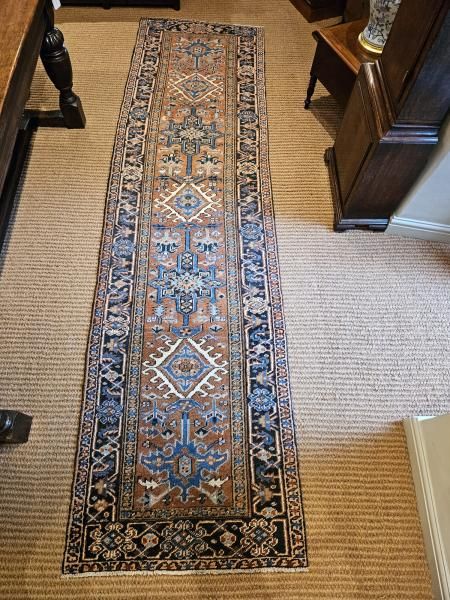
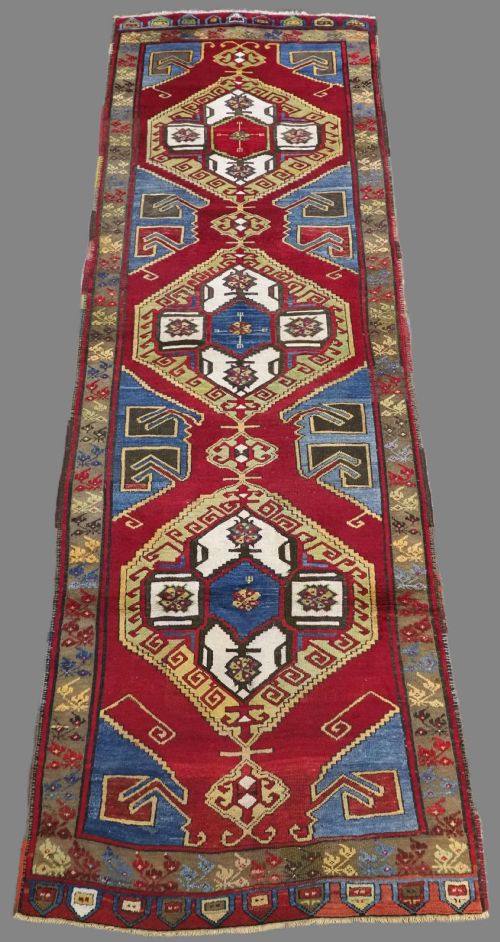
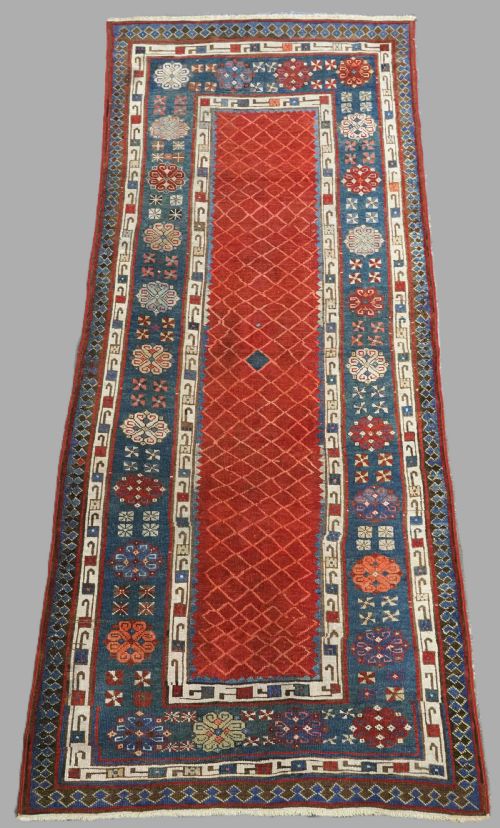

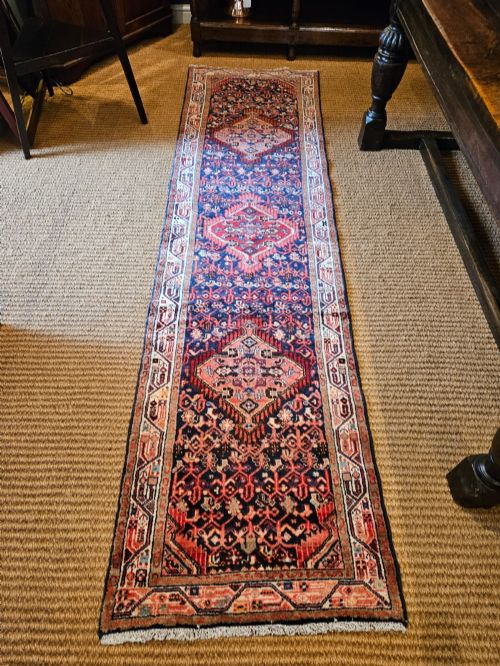
Vintage Oriental Hallway Carpet
A vintage oriental hallway carpet brings character and linear warmth to long corridors through traditional weaves spanning multiple decades.
Vintage Oriental Hallway Carpet
A vintage oriental hallway carpet serves as a practical floor covering tailored for corridors, landings, and narrow passages. These pieces stretch in long formats to suit domestic thoroughfares while displaying regional patterns from weaving traditions.
The selection centres on runners and long rugs originating from Persian, Turkish, Caucasian, and Kurdish workshops. Such pieces emerge predominantly from the nineteenth and early twentieth centuries, spanning periods from eighteen-eighty to nineteen-thirty.
Buyers encounter formats that vary from narrow spans of under a metre to lengths exceeding five metres. These textiles bring historical depth to domestic floors through established tribal and traditional village designs.
Materials and construction
These carpets rely on wool and cotton as foundational materials for both pile and foundation work. Wool provides a durable surface for high-traffic corridors while cotton underpins structural stability.
Weavers employed handwoven techniques passed down through generations in regions across Anatolia, the Caucasus, and Persia. Traditional dyeing methods produced deep palettes featuring navy blue, olive green, and contrasting background tones.
Formats range from compact village rugs to exceptionally long thirty-two-foot hallway runners.
Assessing quality in runner rugs
Quality rests upon the tightness of the weave and the resilience of the wool used in the pile. Tighter knotting supports longevity in narrow hallway settings where foot traffic concentrates.
The clarity of traditional motifs and the harmony of natural dye variations distinguish finer village and tribal pieces from simpler utility formats.
The Vintage Oriental Hallway Carpet Glossary
- Runner
- A long, narrow carpet designed specifically for hallways, stairs, and corridors. This format balances length with restricted width.
- Pile
- The upright yarn loops or cut ends that form the soft surface of a carpet. It absorbs foot traffic and displays the woven design.
- Foundation
- The underlying structure of warp and weft threads that supports the knotted wool pile. Cotton is frequently utilised for this framework.
- Tribal
- A design classification rooted in nomadic or semi-nomadic weaving groups. These patterns often display geometric motifs and spontaneous colour shifts.
Vintage Oriental Hallway Carpet: Frequently Asked Questions
How do I choose the correct runner length?
Measure the clear floor space of your hallway, leaving a uniform margin of exposed wood or tile around the perimeter. This ensures the carpet anchors the space without overwhelming the corridor.
Account for doors that need to clear the pile thickness when fully opened. Selecting the appropriate length protects both the floor and the edges of the textile.
Where should I place a long hallway runner?
Position these carpets in high-traffic corridors, entrance halls, or long landing spaces where linear floor coverage adds warmth. They soften footsteps and guide movement through domestic layouts.
Keep them away from damp areas or direct moisture to preserve the wool and cotton fibres over time.
How do I care for an antique wool runner?
Vacuum the carpet gently using a suction-only attachment without a rotating brush bar to protect the wool pile. Regular cleaning prevents grit from settling into the foundation.
Rotate the runner periodically to distribute wear evenly along high-traffic paths in your hallway.
What distinguishes Caucasian runners from Persian ones?
Caucasian pieces tend to display geometric lattices, bold rectilinear motifs, and stark contrasting palettes. They reflect the rugged aesthetic of mountain weaving traditions.
Persian examples often incorporate curvilinear floral elements, medallions, and balanced traditional field designs originating from village workshops.