


1920s Landscape Painting
A 1920s landscape painting captures the open air and coastal light of the interwar years through the brush of artists working across Britain and France.
1920s Landscape Painting
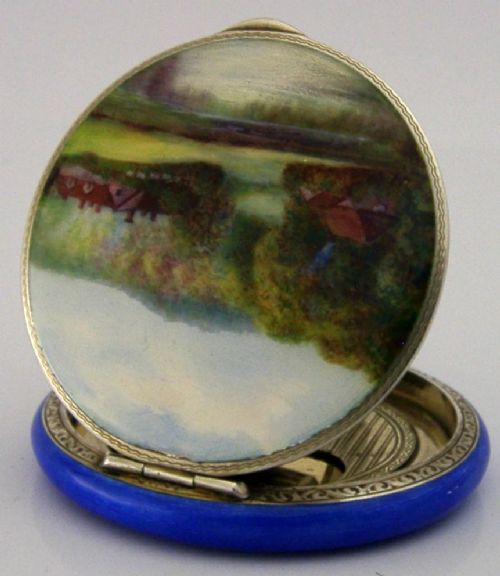
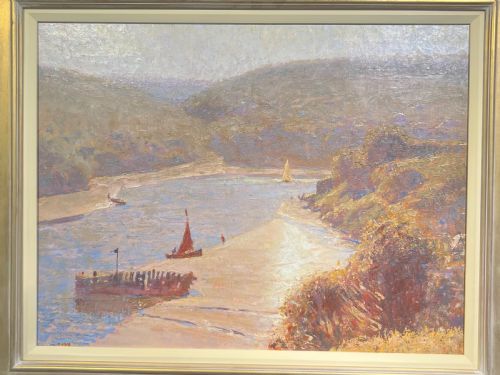
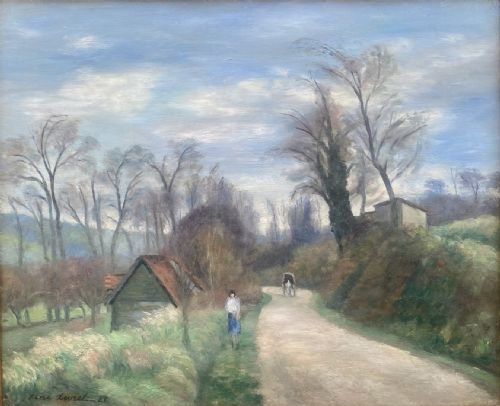
When searching for a 1920s landscape painting, buyers encounter framed oils, watercolours and oil panels depicting rural scenes, coastal villages and townscapes from this period. The examples on this page span British and French impressionism, post-impressionism and early twentieth-century styles.
Most pieces date directly to the nineteen-twenties, recording scenes from Normandy, Provence, the Lake District and Scottish landscapes. The selection includes works on canvas, paper and board, often presented in period frames behind glass where executed in watercolour.
Materials and Construction
Artists of the period applied oil paint or watercolour to stretched canvas, wooden panels, board and paper supports. Many works were painted en plein air, capturing direct observations of light on water, fields and stone architecture.
Framed artwork from this era typically employs wood moulding, sometimes gilded or glazed, to protect the delicate surfaces of watercolour and oil paintings from environmental wear.
The listings on this page combine oil paintings on canvas and panel with delicate watercolours on paper from the early twentieth century.
Quality and Execution
Quality rests upon the sureness of the brushwork, the handling of light and shadow, and the artist's ability to render atmosphere within a landscape. Superior examples display confident colour relationships and balanced composition rather than mechanical reproduction.
The integrity of the original support, whether canvas, board or paper, alongside the preservation of the pigment layer, dictates the enduring visual strength of each painting.
Cecil Allan Mould·Rene Levrel·Raymond Moritz·Louis Suire·Owen Bowen·Edward Horace Thompson·Edith E Caswall·Fred Lawson·Edmond Defonte·Jane Utley·Maurice Asselin·J Tim Macdonald·George Graham·Pierre Peltier·Walter J Hall·William J Solby
The 1920s Landscape Painting Glossary
- Watercolour
- A painting method where fine pigment is suspended in a water-based, translucent solution applied to paper.
- Oil on Canvas
- Pigment mixed with drying oil applied to a woven fabric surface stretched across a wooden frame.
- Post-Impressionism
- An art movement extending impressionist techniques while rejecting its limitations, focusing on expressive forms and symbolic colour.
- Plein Air
- The act of painting outdoors to capture the direct effects of light and weather on the subject.
1920s Landscape Painting: Frequently Asked Questions
How do I care for an old oil painting?
Keep the artwork away from direct sunlight and dramatic fluctuations in room temperature to protect the canvas and wooden stretcher.
Dust the surface gently with a dry, soft brush and avoid using chemical cleaners or water on the paint layer.
Are these paintings supplied with frames?
Many listings include period wooden frames that complement the style and date of the artwork.
Check the individual description to confirm whether the piece is sold framed or glazed.
What is the difference between oil and watercolour?
Oil paint utilises slow-drying pigments suspended in oil, allowing for rich texture and deep colour layering on canvas or panel.
Watercolour uses water-soluble pigments on paper, producing a luminous, transparent effect that requires protective glazing.
Where were these landscape scenes painted?
The works record locations across Britain, including the Lake District, Lincolnshire and Scottish views, alongside continental scenes in France and Corfu.
Artists travelled extensively to paint rural villages, harbours and coastal stretches during the interwar period.