


1920s French Decorative Glass
These pieces of 1920s french decorative glass bring unmistakable Art Deco and Art Nouveau form to a room through textured surfaces and translucent depth.
1920s French Decorative Glass
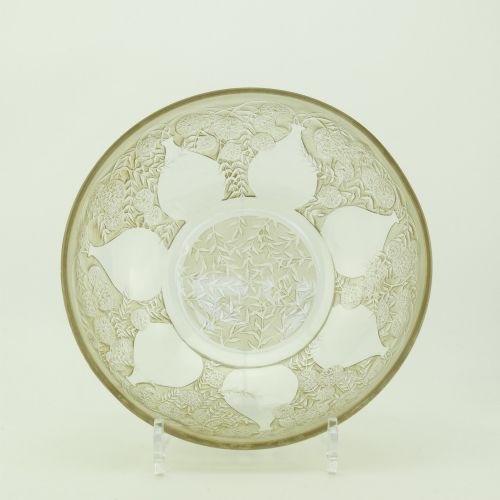
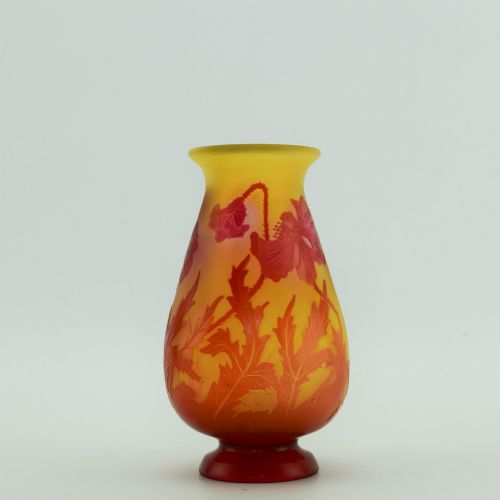
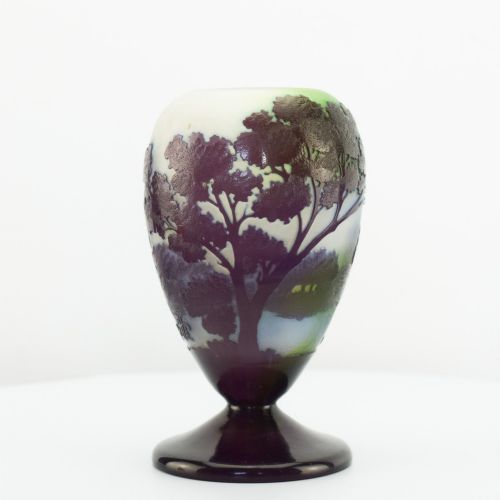
When you search for 1920s french decorative glass, you encounter vases, decorative bowls, and plates shaped by prominent makers of the period. The selection on this page centres primarily on opalescent glass, frosted glass, and cameo glass pieces produced around the nineteen-twenties.
The forms range from large footed bowls and moulded plates to desk accessories and wall mirrors. Art Deco geometry and Art Nouveau organic motifs dominate the designs, reflecting the aesthetic transitions of the era.
Most items stem directly from the nineteen-twenty period, with occasional pieces stretching into the Edwardian years or the nineteen-thirties. Vases and decorative dishes represent the most frequent finds in this material.
How They Were Made
Makers utilised press-moulded and acid-etched glass techniques to achieve high relief and varied surface textures. Moulded glass forms allowed for intricate floral and animal motifs to stand out crisply against the body of the vessel.
Opalescent glass and frosted glass treatments created a milky translucency that caught the light, sometimes enhanced by sepia stain to define the background details. Cameo glass involved layering different coloured glass and carving away the surface to reveal contrasting designs.
Listings for this phrase frequently feature opalescent glass, frosted glass, and cameo glass across vases, bowls, and plates from the nineteen-twenties.
What Varies in Quality
The distinction between standard production and exceptional work rests on the crispness of the mould and the depth of the finish. Superior examples display sharp relief in motifs such as fish, flora, or figures, alongside an even distribution of opalescence.
The handling of surface staining and the clarity of the underlying glass structure determine the visual presence of a piece. Finer items integrate the form and the decorative technique seamlessly, showing deliberate control over the glass-making process.
Rene Lalique·Emile Galle·Paul Nicholas for D'Argental
The 1920s French Decorative Glass Glossary
- Opalescent glass
- Glass that exhibits a milky, milky-blue or fire-like sheen when lit from the front. This effect alters in appearance depending on the angle of the light.
- Cameo glass
- Vessels constructed in two or more fused layers of contrasting colours where outer layers are carved or acid-etched away. The resulting design stands in relief against the background.
- Acid-etched glass
- Glass treated with hydrofluoric acid to eat away exposed surfaces, creating a frosted texture or low-relief pattern. This technique allowed makers to produce intricate repeatable designs.
- Press-moulded glass
- Glass shaped by pressing molten metal into a metal or wooden mould using a plunger. It enabled the mass production of highly decorative vessels with consistent exterior patterns.
1920s French Decorative Glass: Frequently Asked Questions
How do I identify opalescent glass?
Opalescent glass shows a characteristic milky or bluish glow when illuminated from the front, shifting appearance as ambient light changes. This optical quality results from specific chemical agents added during the cooling process.
Items featuring this effect often highlight moulded motifs like flowers or fish against a contrasting translucent body.
What is cameo glass?
Cameo glass involves fusing multiple layers of differently coloured glass together before carving or etching away the outer layer. This subtraction method leaves a raised design that contrasts sharply with the background colour.
French makers utilised this technique extensively for botanical and landscape vessels during the early twentieth century.
Where were these glass pieces made?
These decorative glass pieces originate from workshops and studios based in France during the early twentieth century. Prominent centres of production included firms operating around Nancy and Paris.
French glassmakers led international design movements through innovations in moulding and chemical staining techniques.
How do I care for antique glass?
Antique glass requires gentle cleaning with lukewarm water and a mild detergent, avoiding harsh abrasives that can damage frosted or stained surfaces. Soft cloths prevent scratching on delicate opalescent or cameo relief details.
Placement away from direct, high-temperature heat sources protects the material structure over time.