


1920s Art Deco Chairs
These 1920s art deco chairs bring striking geometric forms and rich timbers into a room, offering both bold modernist style and deep seating comfort.
1920s Art Deco Chairs
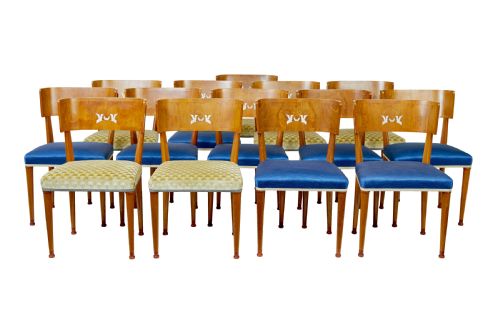
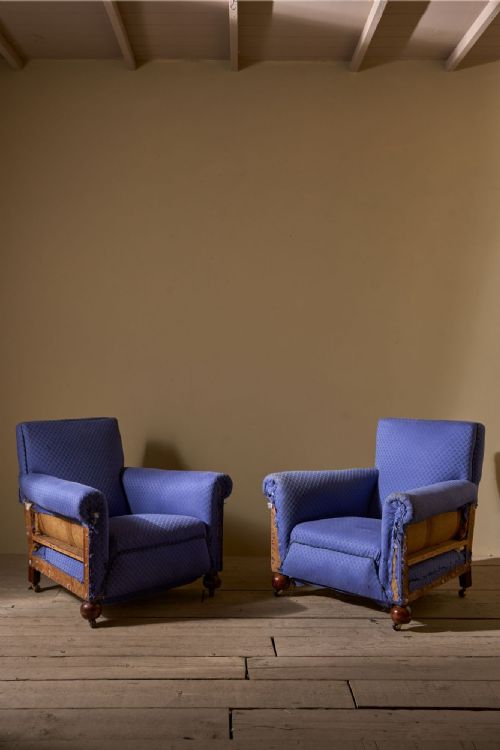
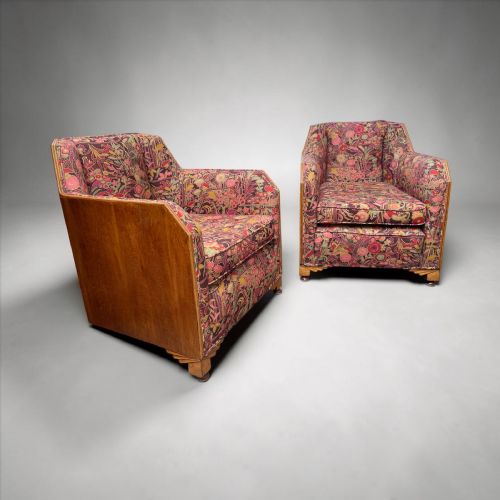
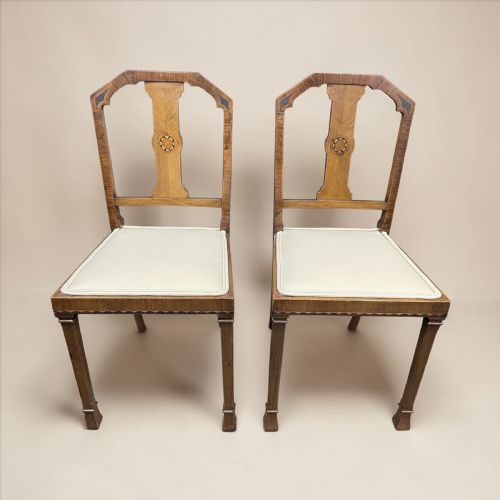
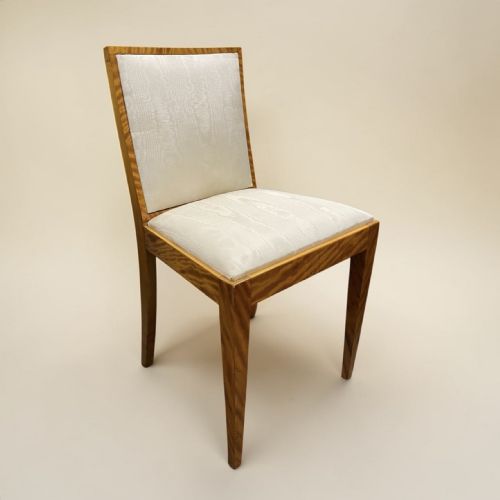
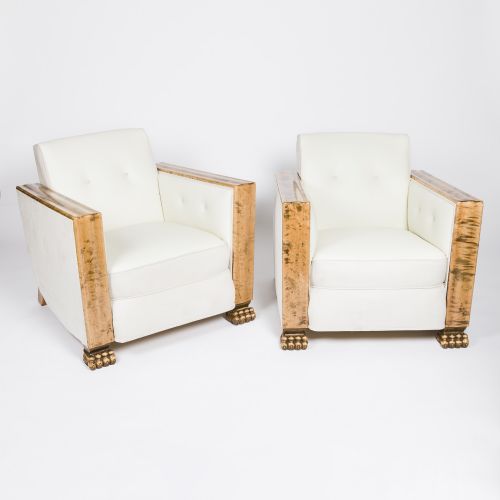
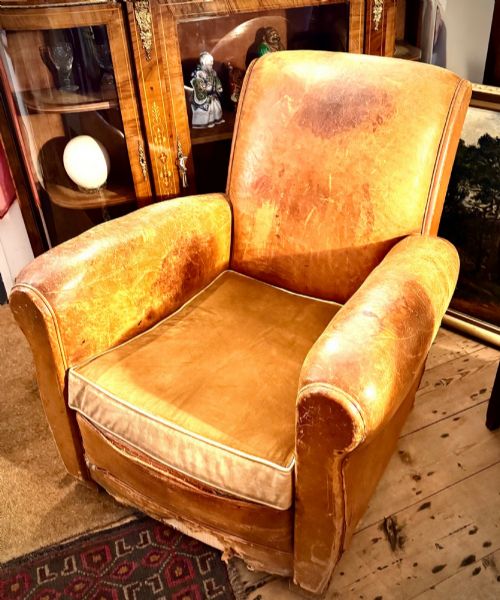
When searching for 1920s art deco chairs, a buyer encounters a distinct mix of seating designed to make a strong architectural statement within a room. The forms span from generous leather club chairs and upholstered armchairs to dining suites, side chairs, and bedroom chairs.
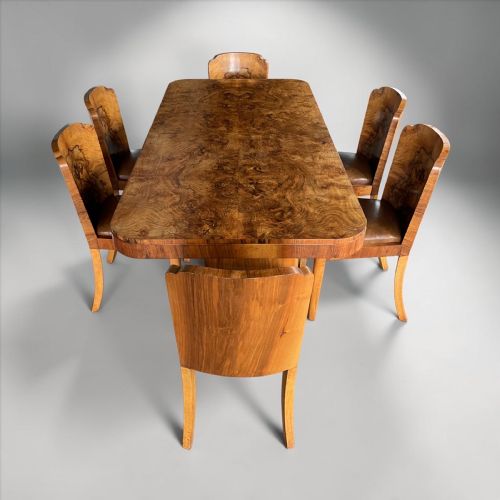
The versions most commonly met on this page include pairs of leather club armchairs and various dining chair sets originating from the 1920s and 1930s. These pieces often arrive as matched pairs, full dining sets, or individual statement seats intended for libraries and living spaces.
How they were made
Cabinet makers constructed the frames of these chairs using hardwoods alongside decorative veneers such as burr walnut, burr maple, elm, macassar, calamander, and ebony. This woodwork supports both sleek linear profiles and sweeping curved backs.
Upholstery forms a vital part of the construction, utilising leather, fabric, velvet, and ribbed textiles tailored to fit barrel backs, cloud backs, and club configurations. Metal elements also appear occasionally to accent the modernist aesthetic.
Listings feature seating from the 1920s, 1930s, and 1940s, utilising leather, fabric, velvet, burr walnut, and metal.
What varies in quality
The standard of timber selection and veneer matching creates a clear distinction between ordinary examples and exceptional pieces. Grain patterns on burr walnut, macassar, or zebrano surfaces display deliberate symmetry on superior items.
The integrity of the original frame structure and the quality of the upholstery finish dictate the overall caliber of the seating. Fully restored leather and tightly tailored fabric schemes indicate careful attention to the original maker's design.
Bath Cabinet Makers·Epstein
The 1920s Art Deco Chairs Glossary
- Club chair
- A deep, comfortable armchair traditionally upholstered in leather. These sturdy seats provide generous proportions for lounging.
- Klismos chair
- An ancient Greek chair form revived in modernist designs with curved legs and a concave backrest. This silhouette offers an elegant, sweeping profile.
- Veneer
- A thin layer of decorative wood applied over a secondary timber base. Master craftsmen use burr walnut or ebony veneers to create striking surface patterns.
- Fauteuil
- An open-armed upholstered armchair originating in France. This style combines exposed wooden framing with comfortable padded seating.
- Suite
- A matched set of furniture comprising chairs, tables, or sofas designed together. Such groupings create a unified appearance within a dining room or parlour.
1920s Art Deco Chairs: Frequently Asked Questions
How do I identify genuine 1920s art deco chairs?
Examine the timber framing, veneer choices, and upholstery styles against the characteristic geometric lines of the period. Makers from this era typically employed woods like walnut, mahogany, and exotic veneers alongside distinctive club or barrel back shapes.
Construction methods and material authenticity help confirm the decade of origin. Pieces often reflect either the sleek restraint of early modernism or the bolder curves associated with later 1930s interpretations.
Are these chairs comfortable for daily use?
Many models, particularly leather club armchairs and upholstered tub chairs, offer deep seating designed for relaxation. Their robust frames and padded backs provide substantial support for everyday lounging in a living room or study.
Dining chairs and side chairs focus more on upright posture around a table. Checking the condition of the interior padding and springs ensures the seating remains practical for daily life.
How do I care for leather art deco chairs?
Maintain leather upholstery by keeping it away from direct sunlight and heat sources that can dry out the material. Regular conditioning with suitable leather balms preserves suppleness and prevents cracking over time.
Gentle dusting with a soft cloth removes surface debris without harming the finish. For fully restored pieces, maintaining a stable indoor climate protects both the leather surface and the underlying wooden frame.