


Epstein Cloud Back Chairs
Epstein cloud back chairs are bold Art Deco seating pieces defined by voluminous, rounded upholstery designed to make a dramatic statement in any room.
Epstein Cloud Back Chairs
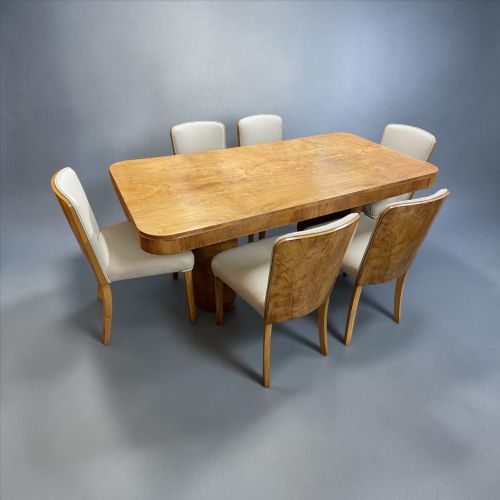
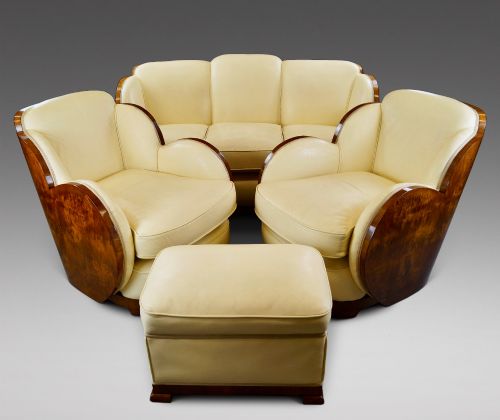
When you search for epstein cloud back chairs, you are looking at substantial Art Deco seating, predominantly originating from the nineteen-thirties with occasional examples from the nineteen-twenties. These pieces appear as individual armchairs, pairs of side chairs, larger lounge suites, and complete dining suites paired with matching tables.
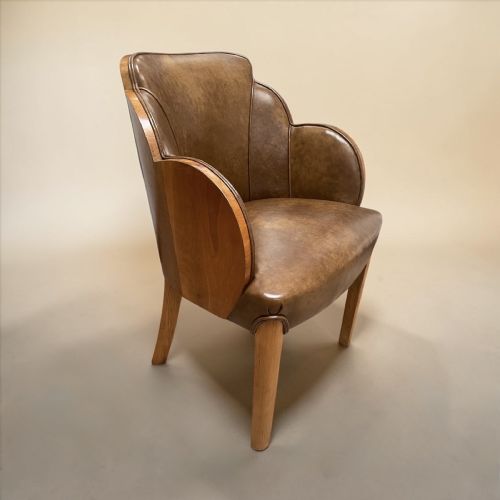
The defining characteristic is the organic, rolling profile of the upholstered backrest, which evokes a cloud formation. You will most frequently encounter these pieces as lounge armchairs or dining chairs configured in sets around a central table.
Makers such as Harry and Lou Epstein produced these distinctive forms, often combining generous padding with striking woodwork. The inventory reflects a strong representation of both dining chairs and occasional chairs designed to anchor a period interior.
Materials and construction
Makers built the frames of these chairs using solid hardwoods such as oak and walnut, providing a sturdy architectural skeleton beneath the upholstery. Exposed wooden elements frequently showcase rich veneers like burr walnut, burr maple, and sycamore, chosen for their complex grain patterns.
The distinctive curved backrests required skilled joinery to shape the internal wooden carcasses before heavy padding and leather upholstery were applied. Cabinetmakers utilised figured wood veneers on the polished wooden frames and arms to contrast sharply with the soft textures of the leather.
Sitting in an Epstein cloud back chair feels less like using furniture and more like being hugged by a very stylish, upholstered cumulus cloud.
Judging the quality
Quality in these chairs rests upon the selection and matching of the wood veneers on the exposed frames and the handling of the voluminous upholstery. Superior examples display symmetrical grain patterns across the burr walnut or maple panels, showing careful planning by the cabinetmaker.
The definition and firmness of the curved backrest dictate the success of the silhouette, separating commanding seating from softer, sagging interpretations. Furthermore, the integration of the leather upholstery with the polished wooden structure reveals the level of craftsmanship invested in the piece.
Harry and Lou Epstein
The Epstein Cloud Back Chairs Glossary
- Cloud back
- A distinct Art Deco upholstery style where the backrest curves in bulbous, rolling sections resembling a cloud. This profile defines the visual weight of the seating.
- Burr walnut
- A prized wood veneer harvested from the growths on walnut trees, yielding intricate, swirling grain patterns. Makers applied this material to highlight prominent surfaces.
- Art Deco
- A design movement spanning the interwar period characterised by sleek lines, geometric symmetry, and luxurious materials. The style heavily influences the overarching aesthetic of these chairs.
- Occasional chair
- A movable, decorative seat intended for intermittent use rather than primary lounging. These pieces function as accent seating within a furnished room.
Epstein Cloud Back Chairs: Frequently Asked Questions
How do I identify a real Epstein chair?
Look for the characteristic rolling cloud upholstery profile combined with high-grade veneered wooden frames in walnut or maple. The construction reflects the robust proportions typical of London cabinetmakers from the interwar period.
Compare the silhouette against documented examples, noting the specific curvature of the backrest and the quality of the timber grain on the exposed arms.
Are these chairs comfortable for daily use?
These pieces offer substantial padding and generous proportions designed for supportive lounging. The deep seats and high backrests provide an enveloping sit suited to relaxation.
Position them as statement seating in a living room or around a dining table where their sculptural form can be fully appreciated.
What woods were used on the frames?
Makers utilised a foundation of solid hardwood such as oak and general walnut, overlaid with decorative veneers. Burr walnut, burr maple, and sycamore appear frequently on the polished exterior surfaces.
These figured timbers provide a striking contrast to the leather upholstery traditionally used to cover the padded sections.
How do dining suites differ from lounge sets?
Dining suites comprise smaller side chairs or armchairs built at a suitable height for a table, often found in sets of six or eight. Lounge suites feature larger, deep-seated armchairs and matching sofas intended for relaxed sitting.
While both share the signature cloud back motif, the scale and internal frame construction adapt to their distinct domestic functions.