




1910s Engagement Ring
A 1910s engagement ring brings delicate platinum settings and old cut diamonds together for an authentic piece of Edwardian elegance.
1910s Engagement Ring
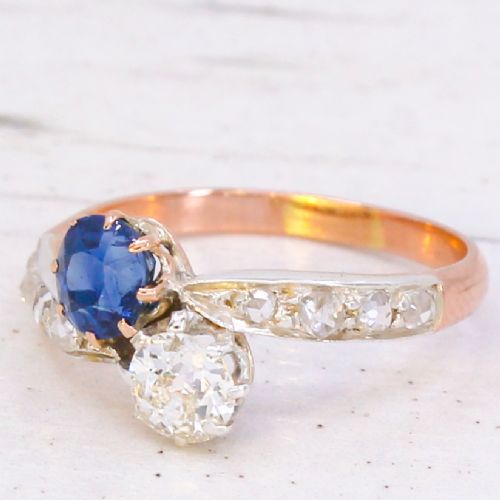
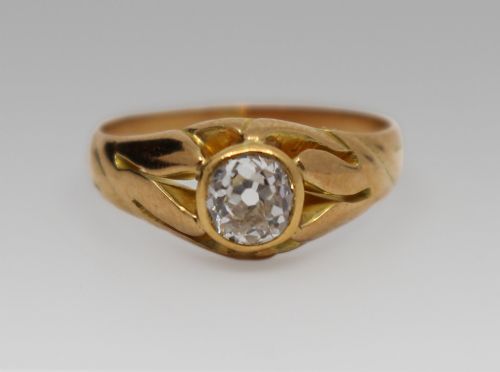
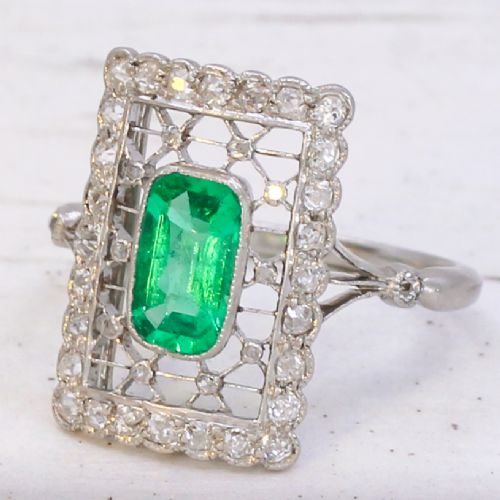
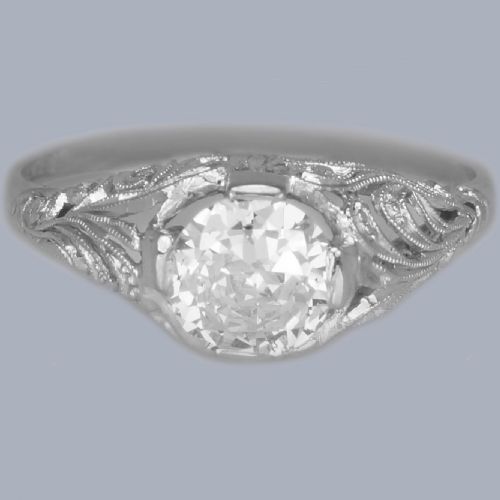
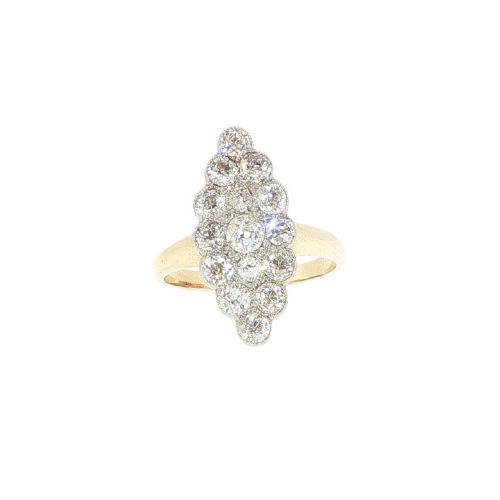
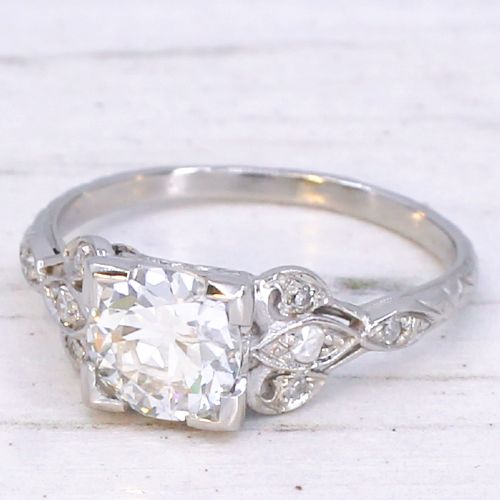
A 1910s engagement ring typically centres on old cut diamonds, sapphires, rubies, or emeralds set within Edwardian or early Art Deco designs. Buyers searching this phrase meet platinum-topped gold mountings, floral daisy motifs, and distinctive navette cluster shapes.
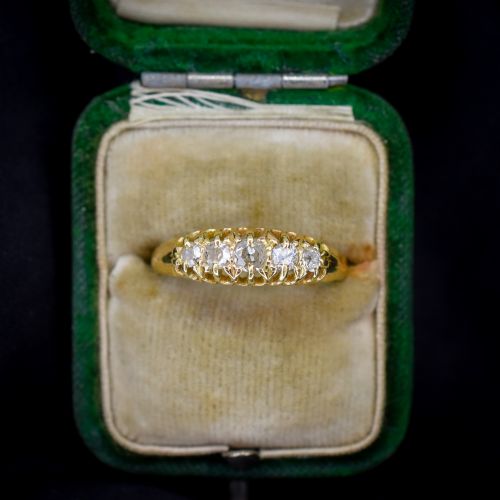
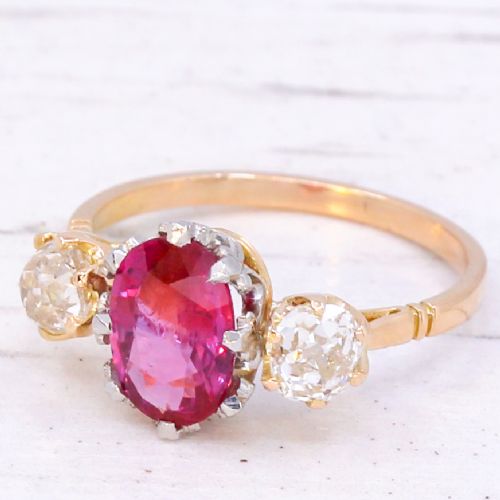
The period spans the height of Edwardian grace through to George V and early Art Deco experimentation, often incorporating natural pearls and opals. Crossover toi et moi configurations and five-stone rows appear frequently among these surviving rings.
Makers of this era employed intricate millegrain detailing and delicate pierced metalwork to maximise light reflection from older diamond cuts. These rings reflect a transitional stylistic period bridging ornate nineteenth-century revivals and geometric modernism.
Materials and Construction
Goldsmiths of this decade predominantly utilised a combination of platinum and 18ct yellow or rose gold, mounting white metal at the front to whiten the appearance of diamonds while retaining gold strength on the band. Platinum usage rose significantly during this period due to advancements in torch technology that allowed higher working temperatures.
Gemstones such as old European cut diamonds, unheated sapphires, and rubies were hand-set into claw, bezel, or cluster formations. Hand-cut facets on older diamonds deliver a softer, chunkier sparkle under candlelight compared to modern brilliant cuts.
1910s Engagement Ring Retail Price Guide 2026
Typical asking prices for 1910s engagement ring among the pieces listed under this phrase on Sellingantiques today, from the lower quarter to the upper quarter. They describe what is for sale here now, not the wider market.
Listings featuring a 1910s engagement ring frequently showcase platinum-topped 18ct yellow gold and unheated sapphires.
Distinctions in Quality
Quality in a 1910s ring rests upon the crispness of the millegrain edge work and the integrity of the original shared claw settings. Superior pieces maintain their delicate proportions without re-tipping that obscures the hand-cut metal details.
The selection of centre stones dictates overall calibre, particularly with natural untreated rubies, sapphires, or high-colour old cut diamonds possessing substantial spread. Heavier platinum-topped mounts demonstrate a higher grade of workshop execution than thinner all-gold alternatives.
The 1910s Engagement Ring Glossary
- Old European cut
- A diamond cut popular in the late nineteenth and early decades of the twentieth century, characterised by a small table, high crown, and large culet.
- Millegrain
- A decorative technique featuring a line of tiny raised metal beads along the edges of a setting, common in Edwardian jewellery.
- Toi et Moi
- A French term meaning you and me, describing a ring style featuring two main stones positioned side by side or crossing over.
- Navette
- A boat-shaped ring setting that tapers to points at both ends, frequently seen in cluster configurations from this era.
- Solitaire
- A ring mounting designed to showcase a single prominent gemstone without secondary accent stones.
1910s Engagement Ring: Frequently Asked Questions
Are these rings suitable for daily wear?
These rings survive from an era of fine handcraftsmanship, but platinum and gold settings from the early twentieth century require thoughtful care during rigorous physical tasks.
Regular inspection by a specialist jeweler ensures the antique claws retain their secure grip on the central stones.
What is an old cut diamond?
Old cut diamonds are hand-faceted stones cut before modern mathematical proportions were standardised in the mid-twentieth century.
They exhibit smaller tables and deeper pavilions that produce a distinct, warmer glow under ambient lighting.
What is the difference between Edwardian and Art Deco styles here?
Edwardian designs lean towards organic floral motifs, garland styles, and soft platinum lace work surrounding coloured gems or diamonds.
As the decade progressed towards the 1920s, geometry and straight lines began to emerge alongside the traditional cluster layouts.