
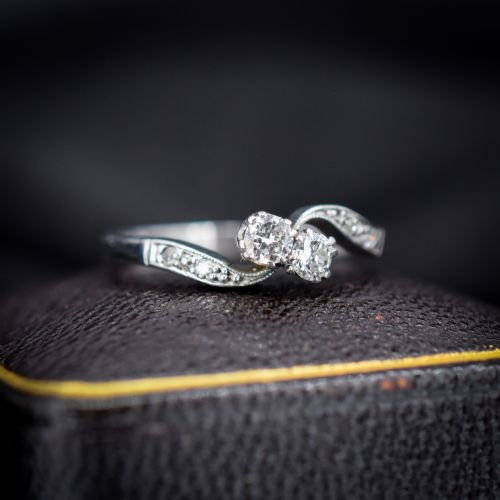
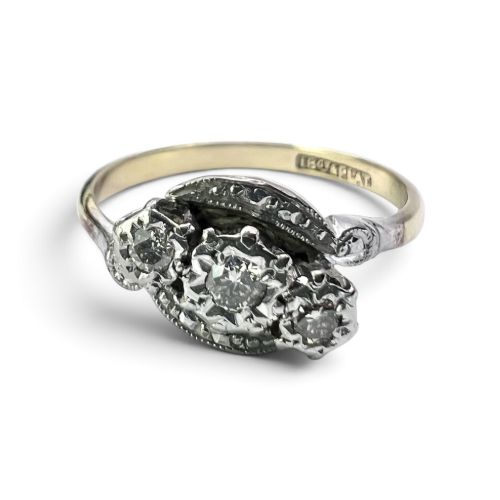
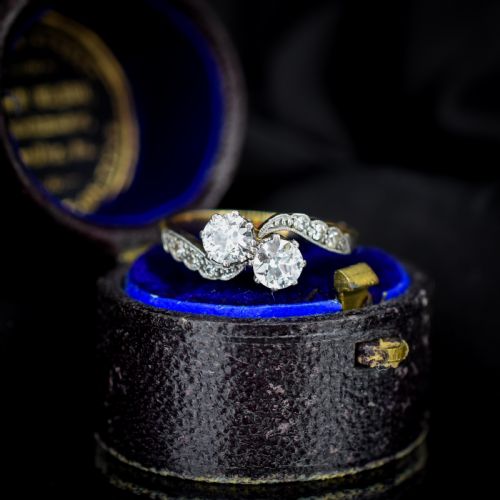
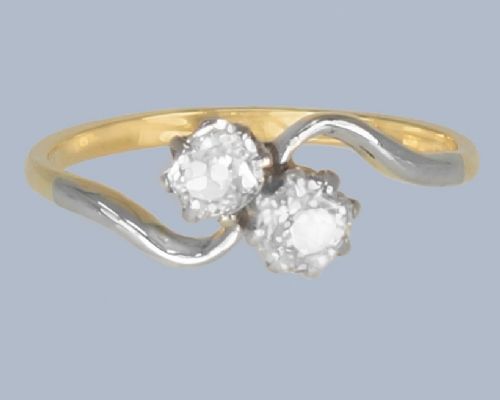
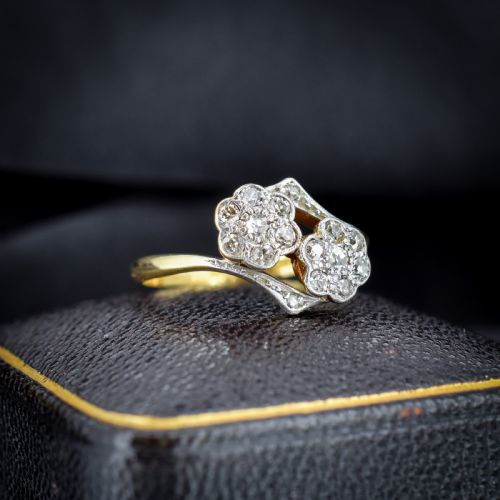
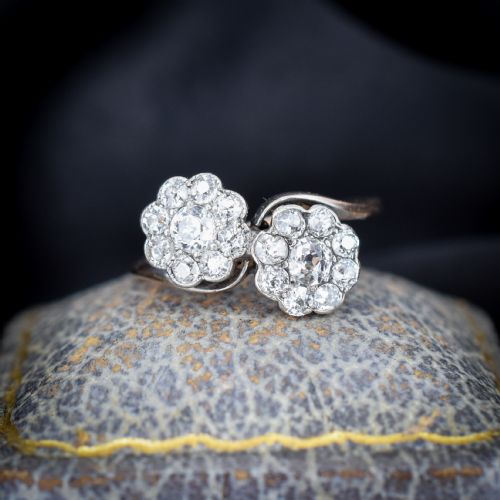


Edwardian Diamond Crossover Ring
An Edwardian diamond crossover ring brings together twin stones sweeping in opposite directions, offering the distinctive elegance collectors seek in early twentieth-century jewellery.
What these rings are
Designs on this page frequently pair diamonds with contrasting gems such as rubies, turquoises, pearls and sapphires. Settings range from slender yellow gold bands to combinations of gold and platinum that reflect the changing tastes of the era.
How they were made
Goldsmiths utilised 18ct yellow gold and 18ct gold for the structural bands and mounts of these rings. Platinum also appears frequently, often employed alongside gold to create strong, delicate settings for the stones.
The construction relies on traditional claw and bezel techniques to secure old cut diamonds, old mine cut diamonds, and pearls. Gemstones are positioned carefully within the twist design to maintain symmetry and balance across the finger.
Listings show materials including 18ct yellow gold, platinum, diamonds, rubies, sapphires, pearls and turquoise across Edwardian and Art Deco periods.
What varies in quality
The distinction between tiers rests upon the size, weight and cut of the central diamonds, which range from modest carat weights up to notable multi-carat examples. Old mine cuts and old cut diamonds display distinct facet patterns that influence their brilliance and overall visual presence.
Material combinations also dictate the character of the piece, with simple gold bands differing from intricate gold and platinum mountings set with matching pearls or coloured gems.
The Edwardian Diamond Crossover Ring Glossary
- Crossover ring
- A ring design featuring two main stones or terminals that sweep together to cross over the finger. This style is also historically known as a toi et moi ring.
- Old mine cut
- An early form of brilliant cut diamond with a cushion shape, high crown and deep pavilion. These stones were cut by hand under candlelight.
- Platinum
- A dense, strong white metal utilised in jewellery manufacturing for its durability and bright finish. It allowed makers to create fine, secure settings without bulk.
Frequently Asked Questions
How do I date an Edwardian ring?
Dating relies on stylistic markers, material combinations, and the specific cut of the gemstones used in the mounting. The Edwardian era spans the early twentieth century.
Examining the metal work, such as the use of platinum over gold, helps confirm the period of manufacture alongside any hallmarks present on the inner band.
Are these rings suitable for daily wear?
These historic rings require sensible care due to their age and delicate settings. Regular checks by a jeweller help ensure the stones remain secure in their original mounts.
Removing the jewellery during heavy manual tasks protects the gold, platinum and softer gem materials like pearls and turquoise from unnecessary wear.
What stones are paired with diamonds?
Period pieces frequently combine diamonds with rubies, sapphires, pearls, and turquoise stones. These coloured gems provide contrast to the bright white sparkle of the central diamonds.
Combinations depend on the specific design, with twin diamonds sometimes accented by smaller side stones or paired directly in a two-stone twist.