



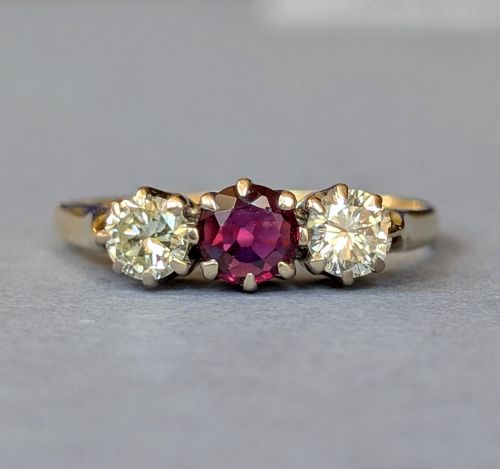
Gold Ruby Diamond Ring
A gold ruby diamond ring combines vibrant red stones and sparkling gems in yellow gold, white gold, or platinum mountings.
Understanding the gold ruby diamond ring
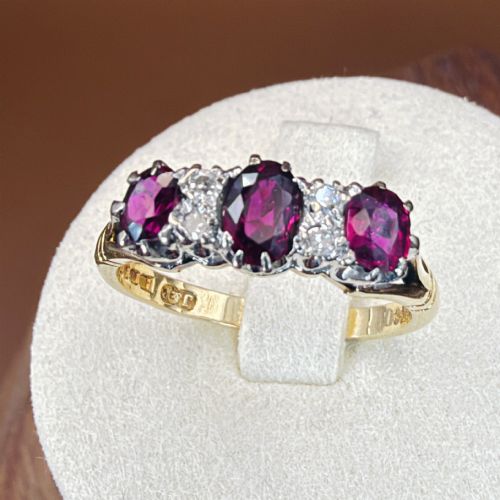
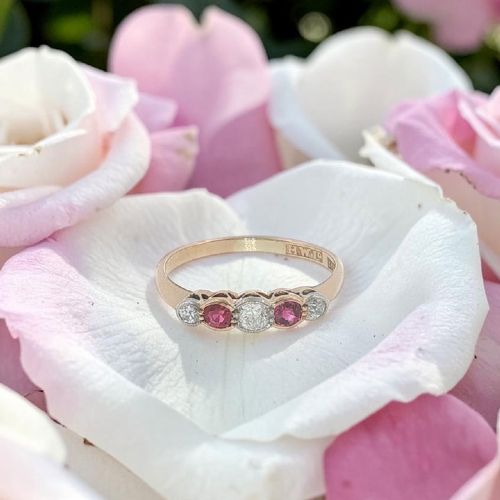
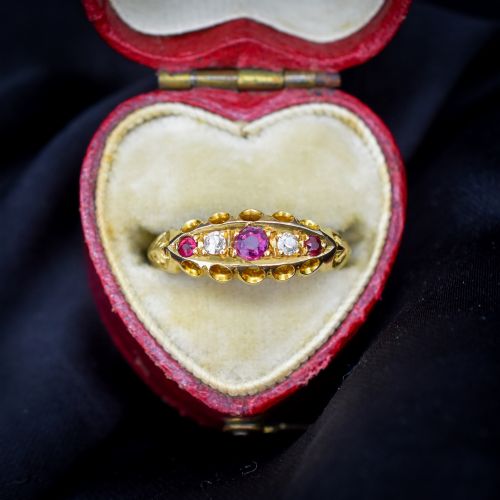
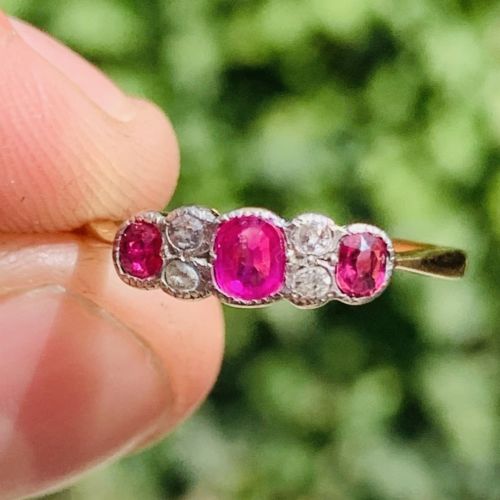
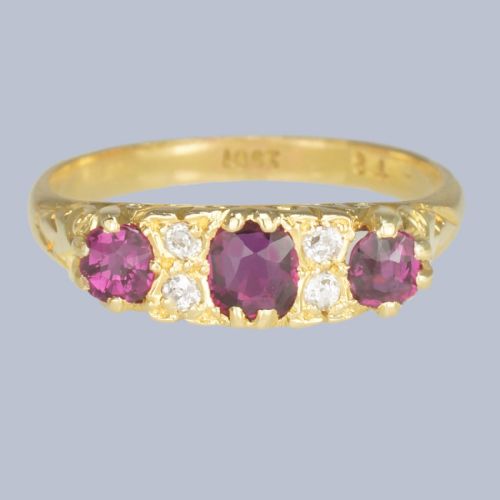
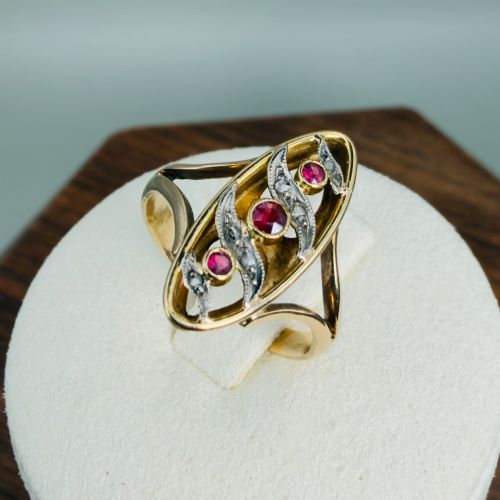
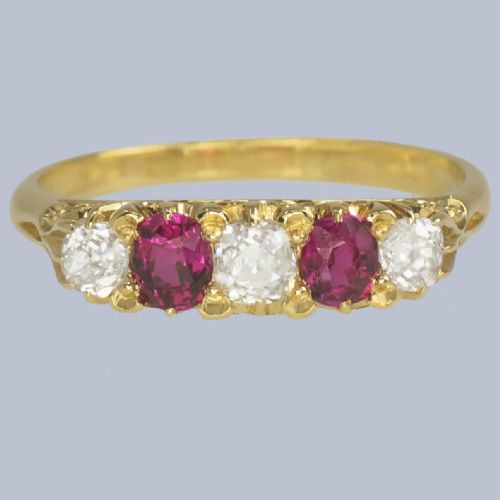
A gold ruby diamond ring brings together rich red rubies and brilliant diamonds set in precious metal bands. These pieces span the Victorian, Edwardian, and Art Deco periods, offering distinct design aesthetics from different eras.
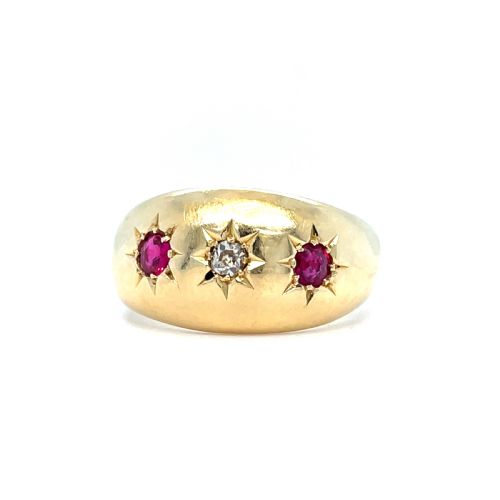
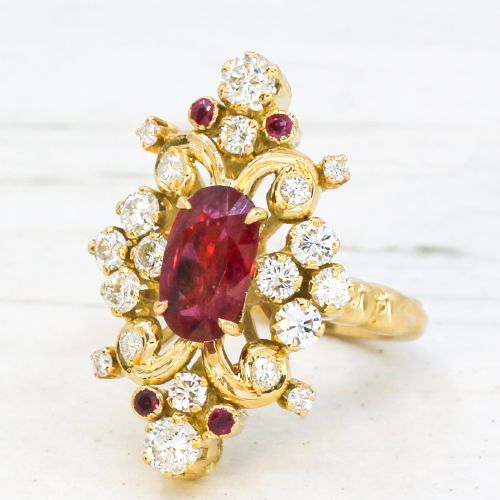
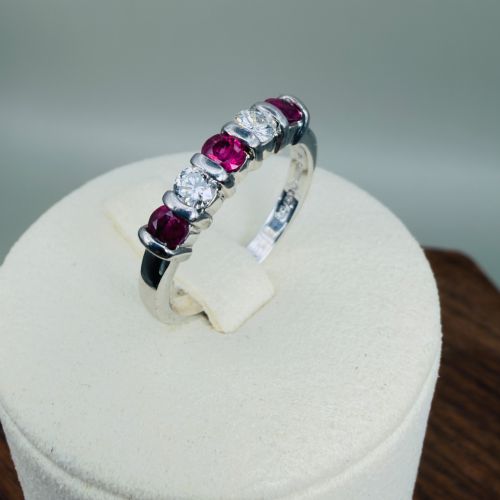
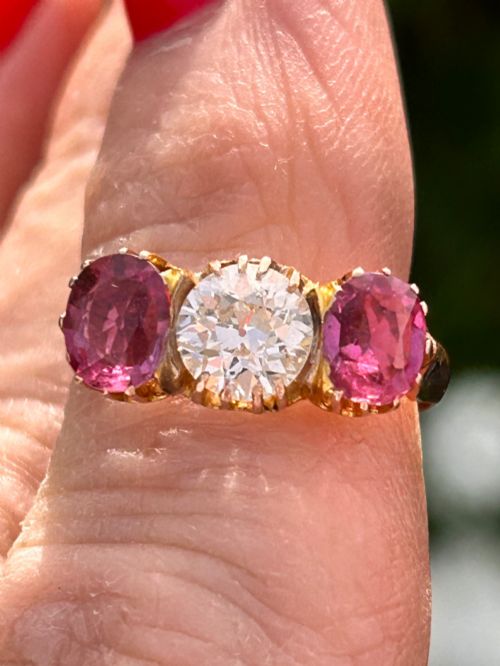
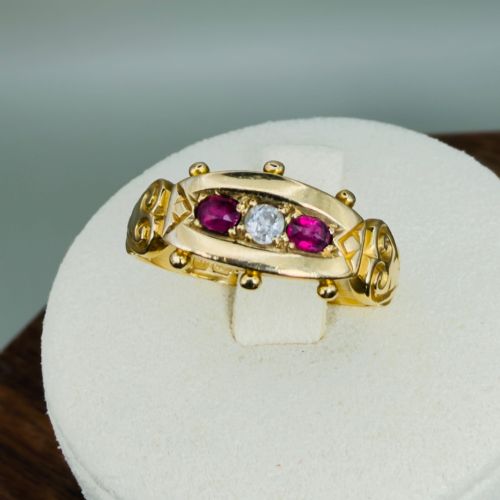
Buyers frequently encounter Edwardian and Art Deco cluster configurations, alongside Victorian gypsy settings and traditional trilogy or multi-stone arrangements. The combination of ruby and diamond appears across various finger ring styles, from delicate everyday bands to prominent cocktail pieces.
Dating ranges from the late nineteenth century through to the interwar decades of the nineteen thirties. Origin points reflect British manufacturing traditions, sometimes bearing provincial assay office marks such as Chester.
Construction and materials
Goldsmiths utilise eighteen carat yellow gold, white gold, and platinum to fabricate these settings, occasionally combining gold with silver in earlier Edwardian and Victorian examples. Stones are secured using claw settings, channel settings, or flush gypsy mountings.
Cluster designs frequently incorporate seed pearls or accent diamonds surrounding a central ruby. Gemstone cuts vary from old European and rose cuts to marquise, oval, baguette, and cabochon forms.
Retail Price Guide 2026
Typical UK retail prices for gold ruby diamond ring, calculated from the Sellingantiques database of over a million retail prices indexed since 2003. This retail price guide relies exclusively on Sellingantiques data; no external sources or auction records are used, so the figures do not describe the wider market.
Assessing quality and craftsmanship
The distinction between standard examples and superior pieces rests on the origin and clarity of the rubies, such as natural Mogok or Burmese stones. Heavier, substantial eighteen carat gold shanks demonstrate higher material investment than lighter counterparts.
Fine geometric precision in Art Deco platinum work or intricate piercing in Edwardian cluster mounts separates master craftsmanship from routine production. The integration and matching of old cut diamonds alongside vivid rubies determine overall visual balance.
The Gold Ruby Diamond Ring Glossary
- Cluster ring
- A ring featuring a central gemstone surrounded by a border of smaller stones. This format maximises surface sparkle and colour contrast.
- Old cut diamond
- A hand-faceted diamond cut popular before modern machinery standardised proportions. These stones display smaller tables and higher crowns.
- Gypsy ring
- A style where stones are flush-set directly into a heavy tapered band. This design protects stone edges during daily wear.
- Cabochon
- A gemstone shaped and polished with a smooth convex dome rather than faceted edges. This cut is typical for displaying certain rubies.
- Trilogy ring
- A three-stone ring traditionally symbolising past, present and future. It usually places a larger centre gem between two matching side stones.
Frequently Asked Questions
How do I wear a delicate antique ring safely?
Older rings with fine settings or seed pearls require careful handling during manual tasks. Remove them before heavy lifting or gardening to protect the claws and stones.
Store each piece individually in a lined box to prevent metal friction and stone abrasion. Regular professional checks ensure the security of antique mountings.
What is the difference between Edwardian and Art Deco styles?
Edwardian designs rely on platinum and yellow gold with intricate pierced work, lace-like motifs, and softer organic curves. They often incorporate seed pearls alongside rubies and diamonds.
Art Deco pieces favour geometric precision, strong lines, and platinum settings that highlight high-contrast colour arrangements. The focus shifts towards structured symmetry and stylized motifs.
How do I clean my ruby and diamond ring?
Warm soapy water and a soft-bristled brush safely remove daily oils from rubies and diamonds. Avoid harsh chemical cleaners or ultrasonic machines, especially with pearl-set pieces.
Dry the piece thoroughly with a lint-free cloth before storage or wear. Regular gentle cleaning maintains the brilliance of both the metal and the gemstones.