




Edwardian Toi Et Moi
Edwardian toi et moi rings are classic two-stone designs featuring paired gems symbolising union, sought after for their romantic symbolism and delicate period craftsmanship.
What edwardian toi et moi rings are
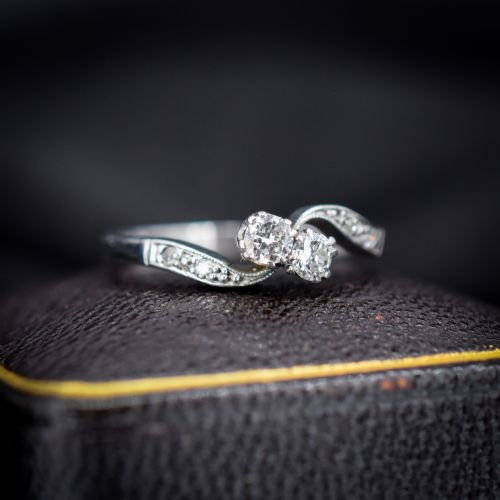
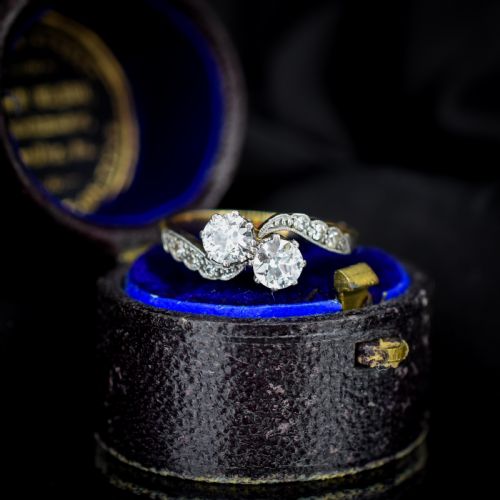
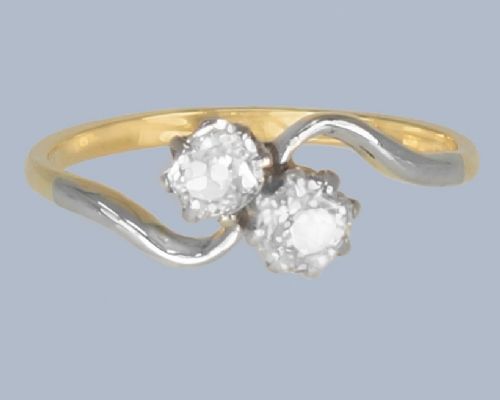
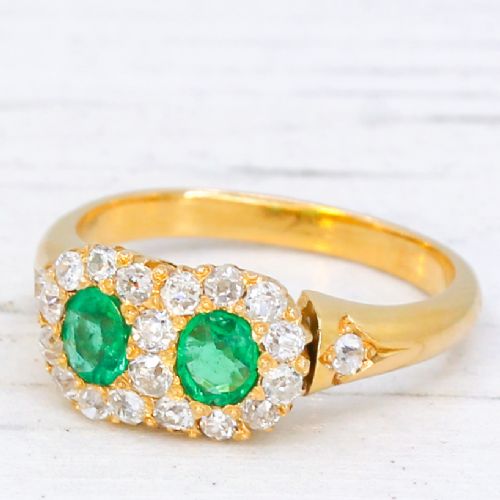
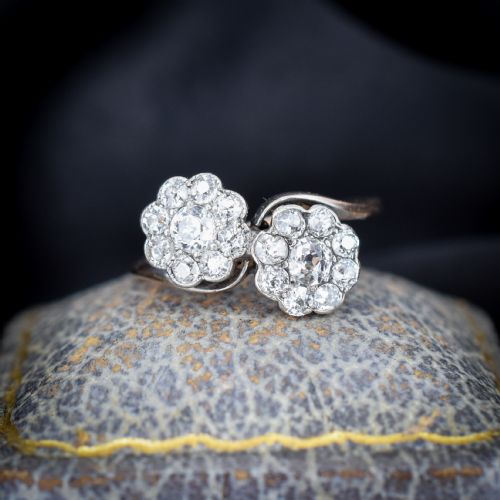
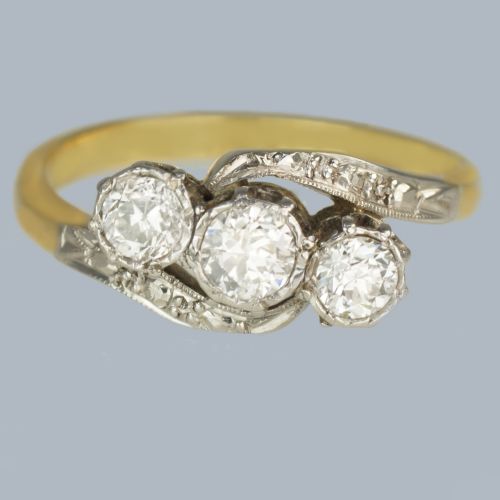
When you search for edwardian toi et moi rings, you encounter distinctive two-stone crossover designs originating from the early twentieth century and the late nineteenth century. These Edwardian pieces place two principal gems side by side or in a twist formation, often pairing diamonds with rubies, sapphires, emeralds, opals, natural pearls, or blue zircons.
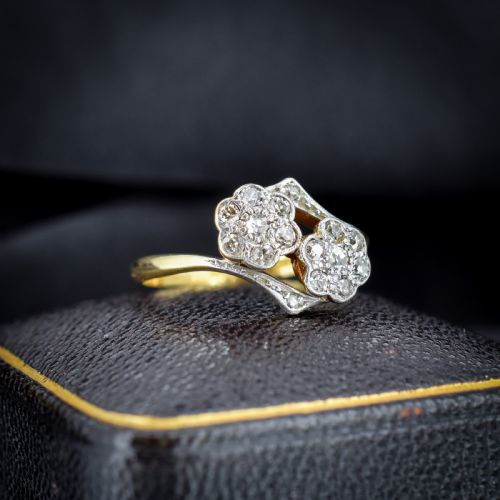
The rings appearing on this page take the form of crossover bands and double cluster configurations. Many examples combine 18ct yellow gold, 18ct white gold, or 18ct gold with platinum settings to highlight the individual stones effectively.
How they were made
Goldsmiths of this era utilised 18ct yellow gold, 18ct white gold, and platinum to fabricate slender yet robust mounts that secure old cut, transitional cut, and rose cut diamonds alongside coloured gems. Platinum mounting gained popularity during this period for its strength, allowing intricate claw and bezel settings that maximised light entry into the stones.
Techniques combined traditional hand-forging of gold shanks with precise platinum work, accommodating calibre cut sapphires and clustered configurations alongside twin principal gems.
Retail Price Guide 2026
Typical UK retail prices for edwardian toi et moi, calculated from the Sellingantiques database of over a million retail prices indexed since 2003. This retail price guide relies exclusively on Sellingantiques data; no external sources or auction records are used, so the figures do not describe the wider market.
Listings show Edwardian rings combining 18ct yellow gold, white gold, and platinum with diamonds, sapphires, rubies, emeralds, opals, pearls, and blue zircons.
What varies in quality
Quality in these rings rests upon the selection and matching of the twin principal stones, whether diamonds paired with sapphires, rubies, emeralds, opals, pearls, or zircons. Superior examples feature well-matched proportions, lively old cut or transitional cut diamonds, and gems with saturated natural colour.
The integration of the precious metals further distinguishes individual pieces, particularly where skilled platinum work meets warm 18ct yellow gold shanks to create balanced, structurally sound crossover silhouettes.
The Edwardian Toi Et Moi Glossary
- Toi et Moi
- French for you and me, this term describes a ring style featuring two distinct principal gems seated closely together. The design traditionally represents two souls intertwined.
- Crossover ring
- A band design where the shoulders sweep and cross over one another to present two central stones side by side. This configuration defines the characteristic silhouette of the style.
- Old cut diamond
- A hand-faceted diamond shape typical of the nineteenth and early twentieth centuries, featuring a small table and high crown. These stones produce a distinctive soft candlelight sparkle.
- Transition cut diamond
- A stone featuring facet arrangements intermediate between old mine cuts and modern brilliant cuts, appearing in pieces from the early twentieth century. This cut bridges Victorian and later geometric aesthetics.
- Calibre cut
- Gemstones shaped precisely to fit tightly together in geometric rows or borders without visible metal between them. This technique appears in sapphire accents on Edwardian mountings.
Frequently Asked Questions
How do I wear an edwardian toi et moi ring?
You can wear these rings as daily statement pieces or engagement rings, taking care during heavy manual tasks.
Their delicate gold and platinum settings pair well with plain stacking bands.
What gems appear in these rings?
The listings show old cut diamonds paired with sapphires, rubies, emeralds, opals, natural pearls, and blue zircons.
Combinations also include double diamond clusters and ruby accents.
How are gold and platinum used together?
Goldsmiths combined 18ct yellow gold or white gold shanks with platinum settings to secure the diamonds.
Platinum provided the strength needed for delicate claw work while gold formed the warm band.