

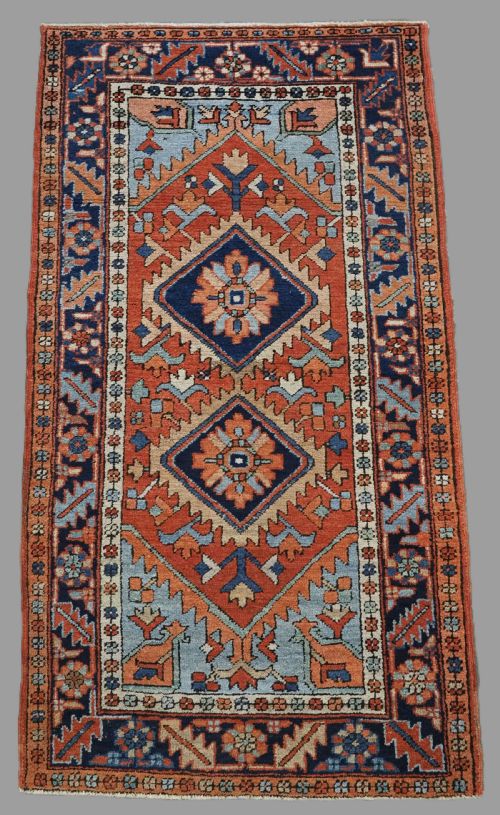


1900s Tribal Runner Rug
These 1900s tribal runner rug examples bring nomadic geometry and deep saturated dyes directly to narrow hallways and gallery spaces.
1900s Tribal Runner Rug
A 1900s tribal runner rug brings elongated formats into narrow domestic spaces, utilising traditional designs woven by nomadic and village communities. These textiles appear primarily from Persian, Caucasian, and Turkmen regions, dating around 1900 to 1920.
The selection leans heavily toward regional variants such as Baluch, Kurdish, and Caucasian runners. Buyers encounter geometric repeat medallions, boteh motifs, and runner formats suited to corridors.
Makers utilised enduring village symbols, passing patterns through generations rather than copying formal court workshop templates. This results in honest folk interpretations of traditional iconography across every surviving floor covering.
Materials and construction methods
Weavers constructed these floor coverings using durable wool piles knotted onto sturdy foundations of wool or cotton. Certain pieces incorporate goat hair and camel hair for natural tone variations within the foundation and pile.
Natural dye stuffs provided the rich palette observed today, producing deep aubergine grounds, yellow fields, and soft secondary hues. Dense knotting secured the pile against heavy daily wear in busy hallways.
Weavers occasionally included eye-dazzler designs and scarce yellow ground treatments to ward off misfortune in nomadic tents.
Assessing quality and weave density
Quality rests primarily in the fineness of the weave and the crispness of the geometric design execution. Tighter knotting allows complex medallion and cloud band details to remain sharp and legible across the runner format.
The integrity and depth of the natural dyes separate standard examples from superior ones. Gradations in wool quality and the clever handling of camel or goat hair elements elevate specific pieces above typical village production.
The 1900s Tribal Runner Rug Glossary
- Runner
- A long, narrow carpet format designed specifically for corridors, hallways, and staircases. These pieces balance length with a restricted width.
- Boteh
- A stylised almond or pear-shaped motif representing a cypress tree or floral sprout. This ancient Persian design appears frequently across tribal and village textiles.
- Kilim
- A flat-woven carpet produced without a pile by tightly interweaving warp and weft threads. These textiles offer lightweight versatility and sharp geometric patterns.
- Medallion
- A central symmetrical ornament dominating the field of the carpet. Tribal weavers repeated these geometric shapes down the central axis of narrow formats.
1900s Tribal Runner Rug: Frequently Asked Questions
Where were these long rugs placed?
Nomadic and village weavers produced these narrow formats for domestic hallways, tent passages, and dividing spaces within traditional dwellings.
Their elongated proportions accommodated high-traffic corridors while insulating stone or packed earth floors against the cold.
How do I care for wool floor coverings?
Regular gentle vacuuming without a rotating brush roll prevents dust accumulation within the dense wool pile. Professional specialist cleaning maintains the integrity of natural dyes and foundation structures.
Keeping the textile away from direct, harsh sunlight preserves the saturated aubergine, yellow, and red ground colours over decades of use.
What defines Baluch village weaving?
Baluch rugs originate from nomadic groups inhabiting the borderlands between Persia, Afghanistan, and Turkmenistan. They typically employ dark wool palettes, rich aubergine grounds, and distinctive prayer mihrabs.
Weavers frequently incorporated camel hair into the pile to create natural variations of tone that shift gracefully in changing light.
How do I distinguish regional styles?
Caucasian pieces tend to display crisp, angular medallions and striking yellow or ivory grounds with strict geometric discipline. Persian tribal and Kurdish examples often embrace softer palettes, running boteh motifs, and slightly more fluid border arrangements.
Examining the structural materials, such as goat hair edges or cotton foundations, clarifies the geographical origins of each individual piece.