



18th Century Walnut Lowboy
An 18th century walnut lowboy offers compact table storage with elegant cabriole legs, appealing to collectors seeking period dressing and writing surfaces.
18th Century Walnut Lowboy
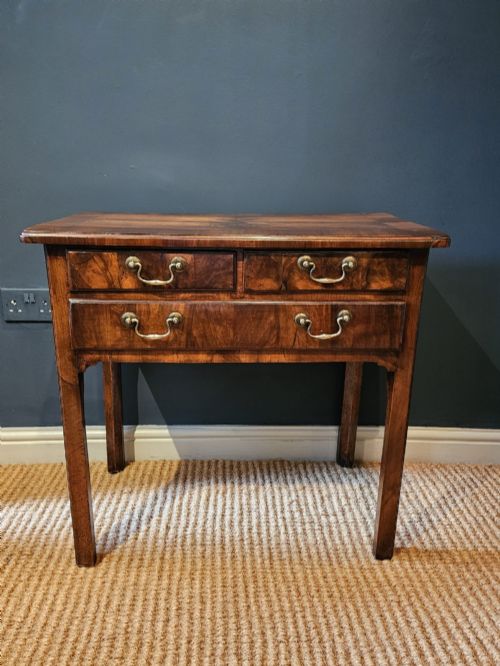
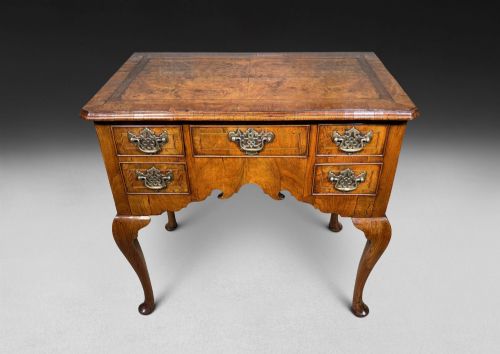
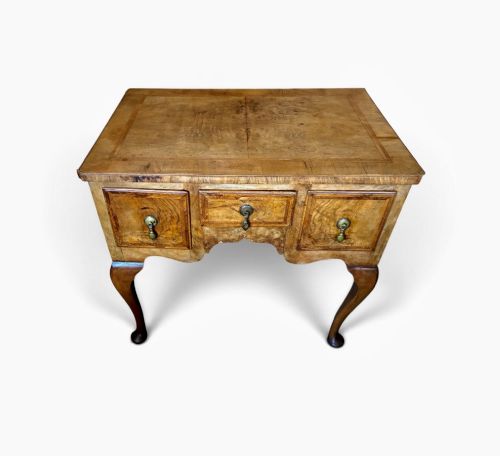
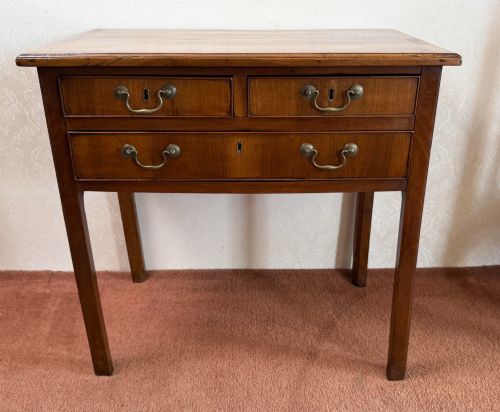
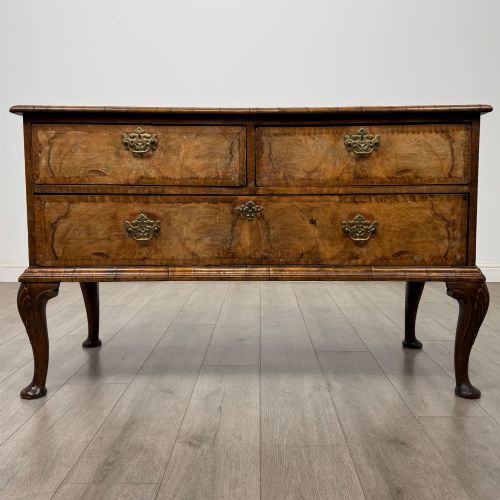
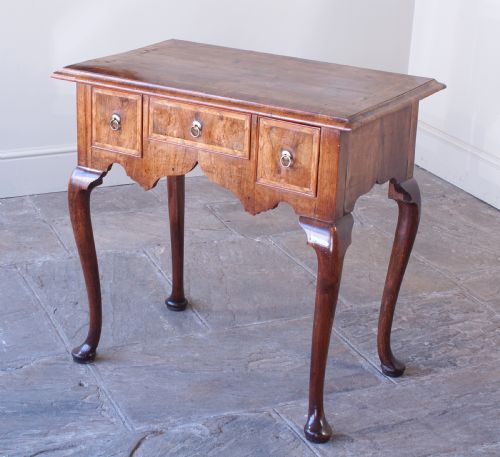
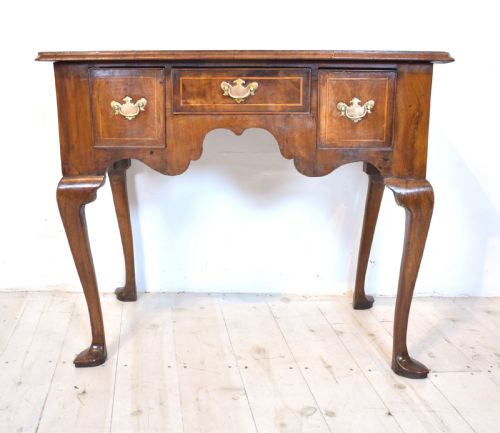
An 18th century walnut lowboy is a low side table typically fitted with one to three drawers, historically used for dressing or correspondence. The pieces found here span the Queen Anne, George I, and George II periods, alongside later revival interpretations.
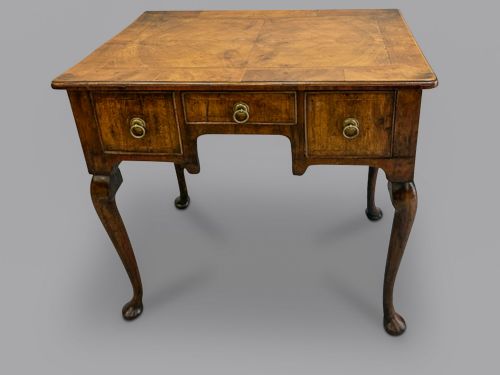
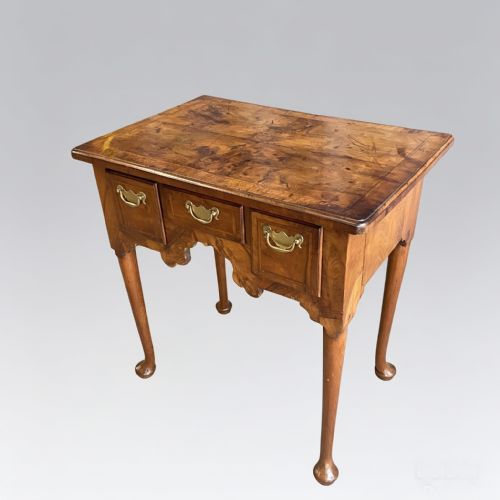
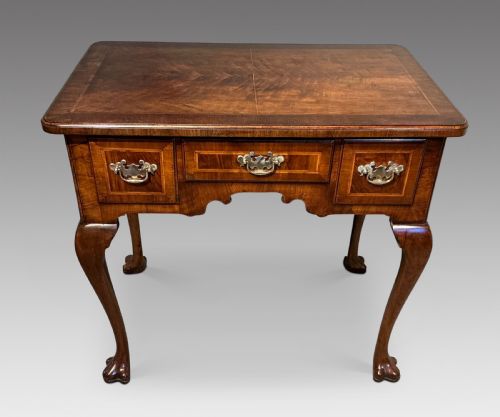
Most examples sit on slender cabriole legs and display rectangular tops with veneered or solid timber surfaces. Side tables and dressing tables share closely related forms within this category.
Originating predominantly from English workshops, these items also appear in regional variations including red walnut and Dutch marquetry designs.
How they were made
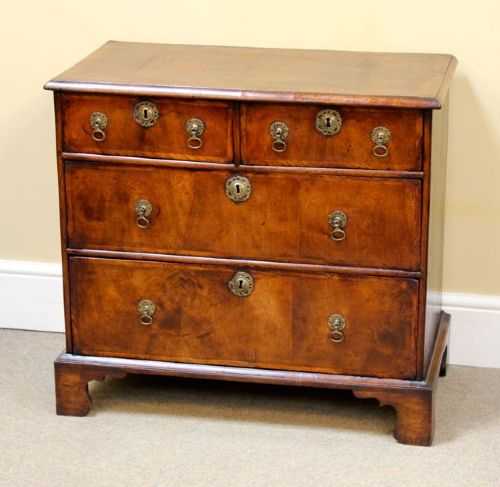
Cabinetmakers constructed these tables using walnut, burr walnut, and red walnut timbers, frequently supported by secondary woods such as oak and pine in the drawer linings and carcases.
Surface decoration relies upon figured wood veneers, featherbanding, and crossbanding, alongside occasional fruitwood marquetry inlay. Brass pull handles and escutcheons complete the drawer fronts.
Listings feature periods spanning the Queen Anne and Georgian eras, alongside later 19th and early 20th-century revival interpretations.
What varies in quality
The sophistication of the timber grain marks the distinction between standard and superior pieces, with highly figured burr walnut and neat featherbanding commanding greater appreciation. Crispness in the shaping of the cabriole legs and apron further distinguishes finer examples.
Originality of surface finish and brass hardware plays a primary role in overall merit, alongside the integrity of the underlying construction in oak and pine.
The 18th Century Walnut Lowboy Glossary
- Lowboy
- A small low table with drawers, used historically as a dressing table or side table. They typically feature three drawers arranged beneath a moulded top.
- Featherbanding
- A decorative inlay technique using small strips of veneer arranged in a herringbone pattern around drawer edges. It requires high precision from the cabinetmaker.
- Cabriole leg
- A furniture leg that curves out and then in, resembling an animal's leg in motion. This form defines much of the seating and table design of the early Georgian period.
- Crossbanding
- A border of veneer laid perpendicular to the grain of the main surface. This frames the top or drawer fronts of better quality pieces.
- Burr walnut
- Timber taken from the abnormal growth of a walnut tree, yielding highly swirled grain patterns. It was sliced into thin veneers for high-status cabinet work.
18th Century Walnut Lowboy: Frequently Asked Questions
What is a lowboy used for today?
These tables function well as compact hallway surfaces, dressing tables, or writing desks in modern rooms. Their modest proportions allow them to fit into tight spaces while providing discreet drawer storage.
They also serve effectively as lamp tables or decorative stands in living areas, displaying objects against period timber grain.
How do I identify a George II lowboy?
George II pieces often display more robust proportions, prominent cabriole legs, and occasionally pad or club feet. The drawer layouts frequently incorporate a central smaller drawer flanked by two deeper ones.
Surface enrichment on these examples frequently includes refined crossbanding and matched walnut veneers.
Are all lowboys English?
While the majority of pieces originate from English workshops, regional variations do occur within the category. Irish examples feature distinct proportions, and Dutch pieces frequently showcase elaborate marquetry inlay.
French provincial side tables in walnut also share a parallel aesthetic to the domestic lowboy form.