





18th Century Verdure Tapestry
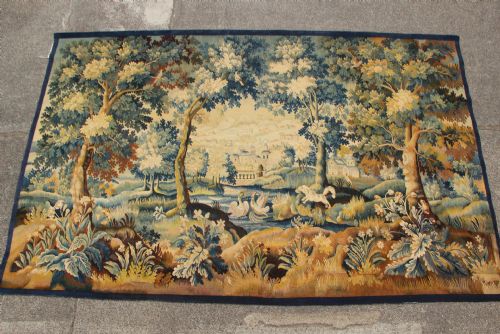
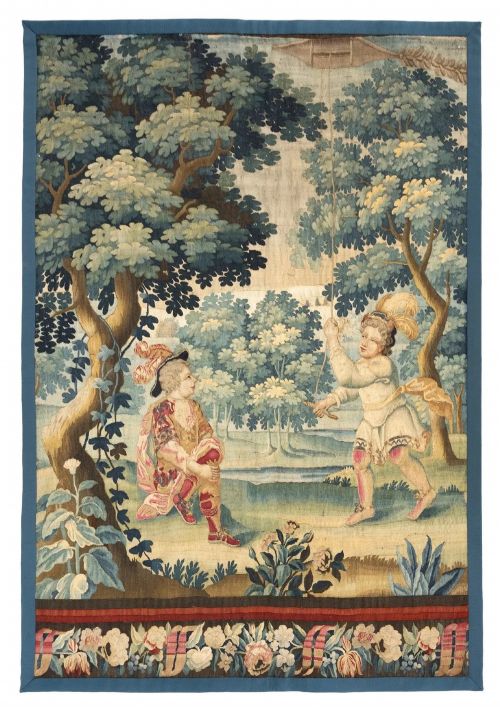
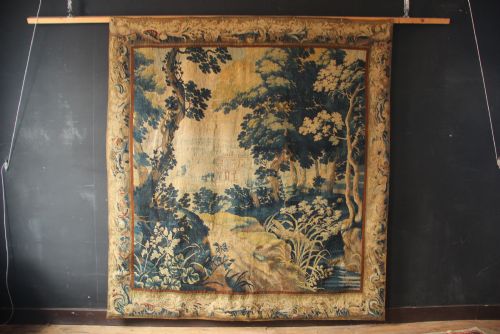
These 18th century verdure tapestry pieces bring woodland foliage and distant châteaux into rooms with deep greens and earthy tones.
18th Century Verdure Tapestry
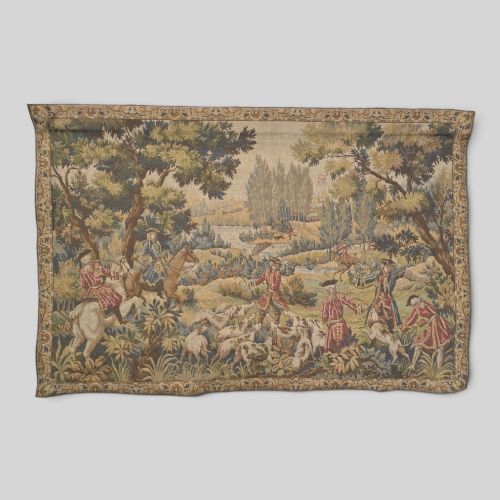
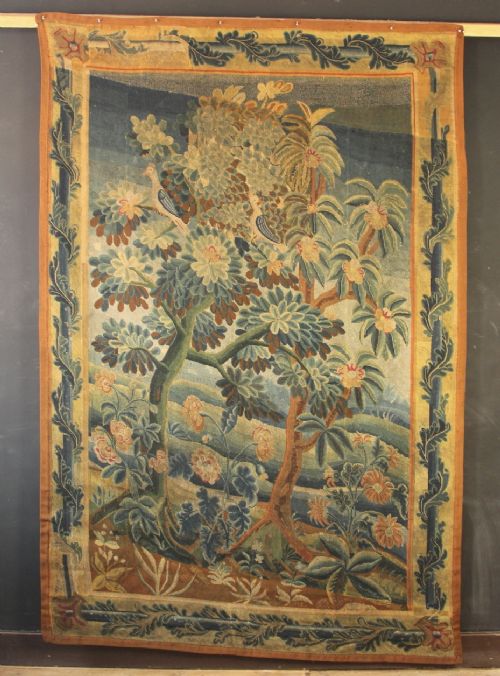
An 18th century verdure tapestry depicts leafy garden landscapes, often featuring stylised trees, foliage, and sometimes birds or architectural elements in the background. Buyers searching for this phrase seek wall hangings and panels that evoke a pastoral or woodland scene from historical European interiors.
The pieces on this page span several origins and forms, with Flemish and French examples appearing alongside Aubusson and Audenaarde productions. Most examples date from the 1700s and the 18th century, though later interpretations from around 1890 and 1920 also feature.
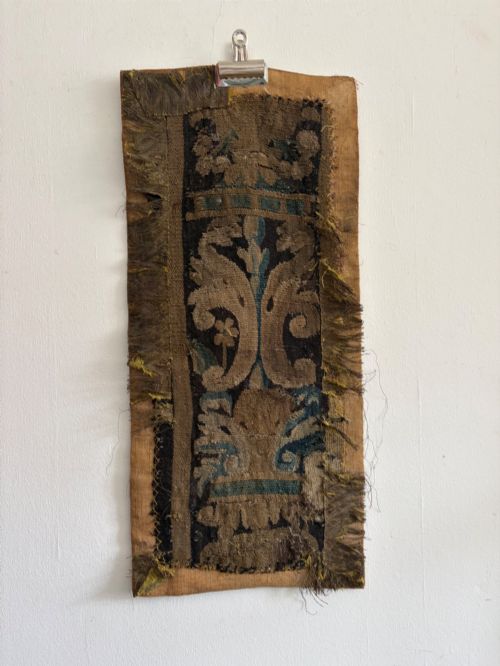
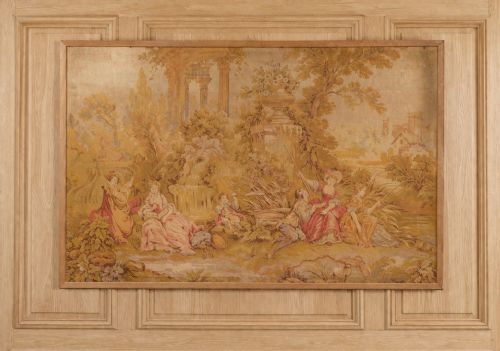
Formats vary from large wall tapestries and framed woven panels down to narrow borders mounted to linen or elongated fragments. A buyer might encounter a full room-sized hanging or a long, slender frieze designed to sit above wood panelling.
Materials and construction methods
Weavers constructed these textiles primarily using wool and silk, supported by linen and cotton threads for structural stability. The interplay of wool and silk allowed artisans to achieve varied textures between the dense foliage and the highlighted details of plants and birds.
Production centres such as Aubusson, Audenaarde, and Flemish workshops utilised specialised loom techniques to interlock coloured weft threads over warp threads. Surviving fragments often show evidence of later mounting to linen backing to preserve the historic fabric.
One recorded archival piece earned the delightful historic title 'The Naughty Dog' for its playful canine subject.
Distinctions in quality
The visual depth of an 18th century verdure tapestry relies heavily on the survival of its original dye colours, particularly the blues and greens that form the woodland canopy. Tighter weave densities and a more complex palette of wool and silk yarns separate finer artistic output from simpler border fragments.
Compositional scale and completeness also define the upper tier, where intact scenic vistas or named subjects like 'The Naughty Dog' retain their narrative charm. Smaller fragments or later 1920s interpretations offer different decorative potentials compared to large, early Flemish panels.
The 18th Century Verdure Tapestry Glossary
- Verdure tapestry
- A wall hanging dominated by plant motifs, foliage, and landscape elements rather than human figures or historical narratives. These scenes typically showcase stylized trees, shrubbery, and occasionally distant châteaux or birds.
- Aubusson
- A town in central France famous for its carpet and tapestry weaving traditions. Pieces originating from here often display distinct French Baroque or Rococo stylistic influences.
- Audenaarde
- A historic centre of tapestry production in Flanders known for dark, rich verdure compositions. Audenaarde works frequently employ dense green colourways depicting lush woodland vegetation.
- Border fragment
- A surviving section cut from the decorative border of a larger tapestry. These narrow strips are often mounted to linen for modern display.
- Woven panel
- A textile section designed to be framed or mounted flat against a wall rather than hung loosely as a full curtain.
18th Century Verdure Tapestry: Frequently Asked Questions
How do I hang a large tapestry safely?
Large wall tapestries require even weight distribution across the top edge to prevent stretching the historic wool and silk fibres. Using a lined sleeve or specialised velcro mounting system distributes the tension safely along the wall.
Avoid hanging textiles in direct sunlight or damp environments to protect the natural dyes. Proper airflow behind the panel prevents moisture accumulation against plaster walls.
What is the difference between Flemish and French pieces?
Flemish verdure tapestries from the 1700s typically feature deeper, darker tones with dense, shadowy foliage and robust compositions. French works, particularly those from Aubusson, often incorporate lighter pastel palettes and more refined Rococo stylistic details.
Both regional traditions utilised wool and silk yarns, but the visual atmosphere of a Flemish woodland differs recognizably from a French pastoral scene.
Why do some listings mention linen mounting?
Mounting to linen provides structural support for fragments or fragile tapestries that have lost their original selvedges or structural integrity. This technique stabilizes the historic fabric so it can be safely displayed on a wall.
Many border fragments and smaller panels rely on this backing method to prevent further fraying.
How do I tell an 18th century piece from a later copy?
Differentiating period pieces involves examining the natural dye palette, the spin direction of the wool and silk yarns, and the wear patterns inherent to older textiles. Later 19th and 20th-century interpretations often show different chemical dye signatures and tighter, more uniform machine or modern hand structures.
Comparing the weave density and subject styling against documented examples from Flemish and French workshops clarifies the manufacturing era.