







Decorative Textile Wall Art
Decorative textile wall art brings centuries of woven and embroidered history into a room, offering tactile warmth and complex narrative design.
Decorative Textile Wall Art
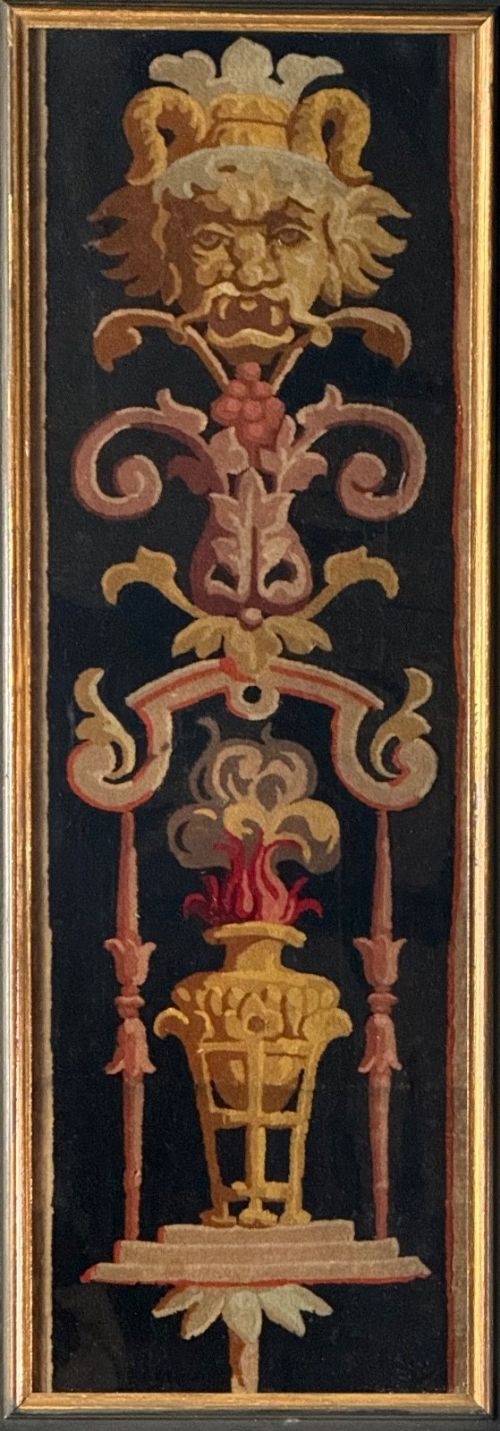
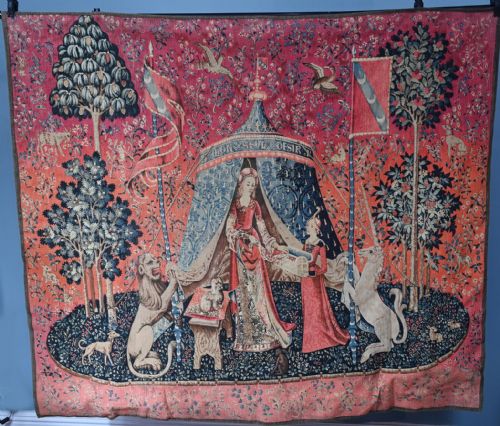
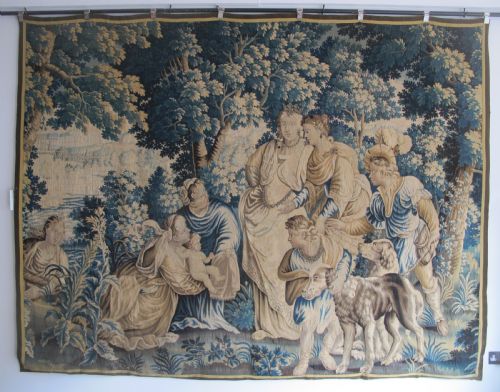
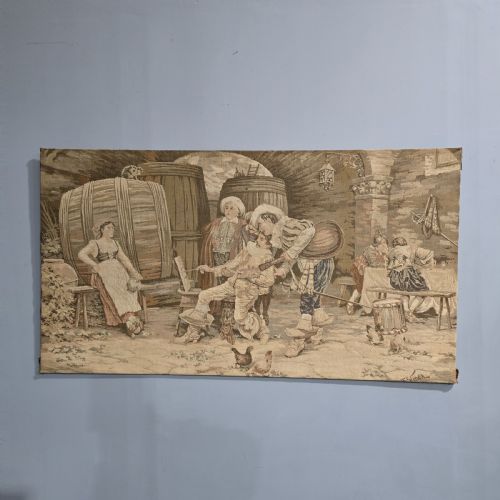
Decorative textile wall art spans large woven wall hangings, embroidered panels, and temple paintings created across multiple centuries. Buyers encounter classical European tapestries alongside Central Asian tribal embroideries and traditional Indian Kalamkari works.
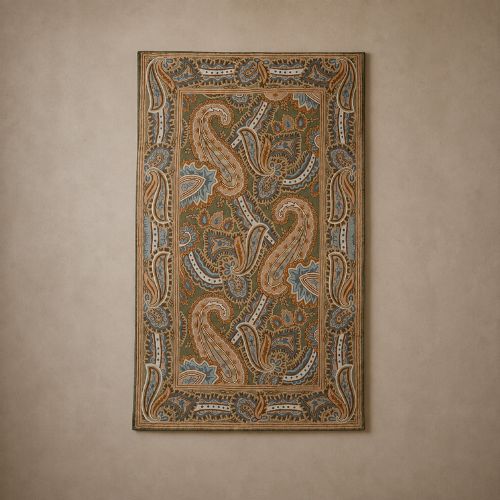
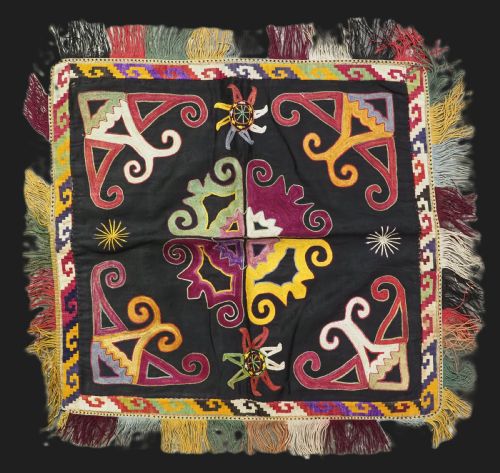
The objects take diverse forms, from French mille-fleurs wall coverings and Flemish verdure tapestries to Uzbek suzanis and crewelwork paisley panels. These pieces function primarily as vertical ornamentation, bringing historical depth and colour to domestic interiors.
Materials and construction methods
Maker workshops utilised natural materials including wool, silk, cotton, linen, and wood, frequently enhanced by metal threadwork and natural dyes. Textile construction relies on careful hand embroidery, intricate weaving, and painted fabric techniques.
Makers shaped these panels using traditional regional looms and needlework skills passed through generations. Metal threads and dyed silk yarns add luminosity to classical European and tribal compositions alike.
Geographic origins range widely across European, Central Asian, and Indian workshops, encompassing tribal nomadic pieces and courtly tapestries.
Distinctions in quality
Quality rests upon the intricacy of the needlework or weave and the preservation of the original materials. Finer examples display precise execution in complex pictorial scenes, such as biblical narratives or classical grotesques.
The integrity of natural dyes and the survival of delicate metal threads or early silk grounds separate superior survivals from standard examples. Depth of composition and structural stability determine the standing of each piece.
The Decorative Textile Wall Art Glossary
- Suzani
- An embroidered tribal hanging originating from Central Asia, traditionally worked in silk on a cotton or linen ground. These pieces often feature bold floral and geometric motifs.
- Verdure
- A type of tapestry featuring a stylised landscape background dominated by foliage, trees, and occasionally animals. These scenes were popular in Flemish weaving traditions.
- Kalamkari
- A traditional Indian method of hand painting or block printing onto textiles using natural dyes. The resulting panels frequently depict mythological or temple narratives.
- Crewelwork
- A type of embroidery utilising wool yarn to execute flowing designs on a sturdy fabric ground. This technique creates a textured, raised surface relief.
- Mille-fleurs
- A French term translating to thousand flowers, describing a background composed of small, detailed floral motifs. This style appears frequently in medieval and Renaissance tapestries.
Decorative Textile Wall Art: Frequently Asked Questions
How do I hang a heavy antique textile?
Heavy textiles require even weight distribution across a supportive wooden batten or hidden sleeve rather than concentrated hanging points.
Stitching a cotton backing casing to the top edge helps protect the historical fabric from direct tension.
How should I clean antique textile wall art?
Surface dust should be gently removed using low-suction vacuuming through a protective mesh screen.
Professional textile conservators must handle any washing or chemical intervention to prevent dye bleeding and fibre degradation.
What lighting protects fragile antique wall hangings?
Ultraviolet filtering glass or positioning pieces away from direct sunlight prevents the fading of natural and early synthetic dyes.
Low-intensity museum-grade LED lighting illuminates the intricate details of silk and wool without causing thermal damage.
How do I date an embroidered panel?
Dating relies on examining the substrate materials, dye chemistry, stitch types, and stylistic conventions characteristic of specific periods.
Comparing motif designs against documented examples from centuries like the seventeenth or nineteenth provides a reliable timeframe.