



French Landscape Wall Hanging
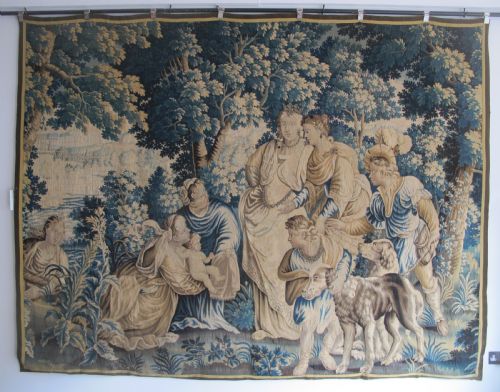
These French landscape wall hanging pieces bring verdure scenes and biblical narratives into rooms through historic woven textiles.
French Landscape Wall Hanging
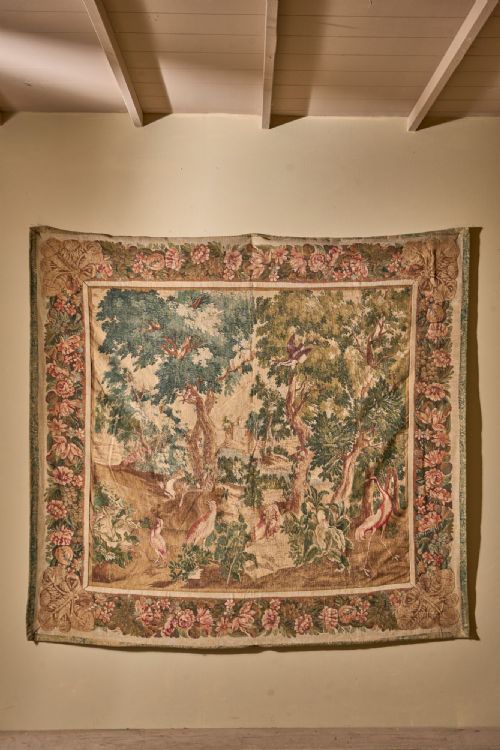
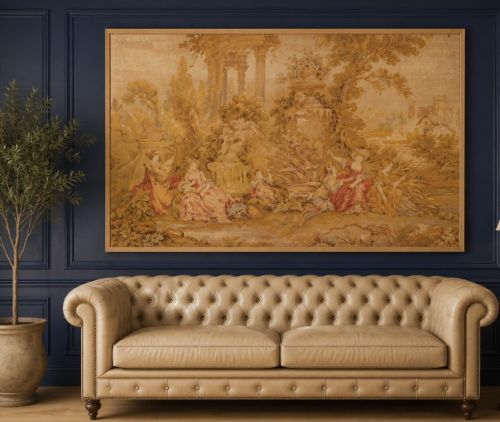
A French landscape wall hanging transforms an interior through woven textiles depicting verdure scenes, architectural elements, and figurative subjects. These pieces span from the late 17th century through the 19th century, reflecting evolving European tastes in wall decoration.
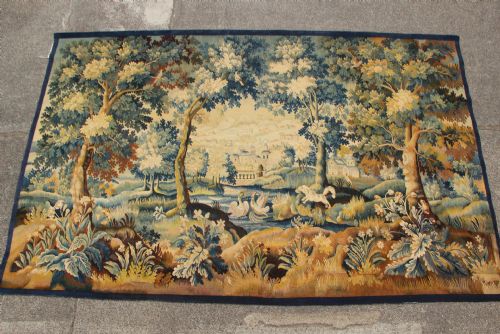
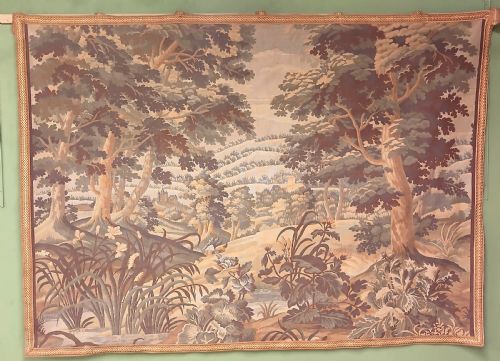
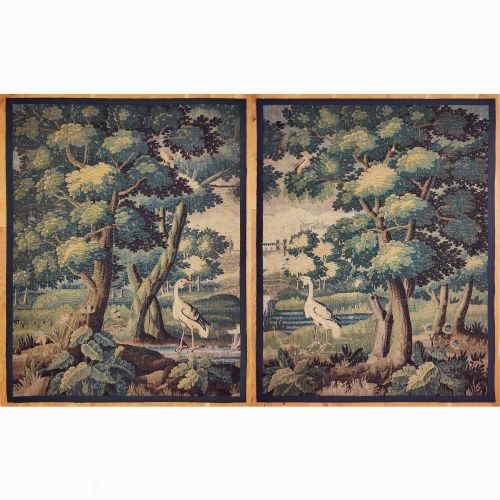
Buyers most frequently encounter large Aubusson works and verdure panels featuring dense foliage, trees, and distant chateaux. These hangings arrive either as flexible textiles ready for hanging rods or mounted within timber and gilt frames.
The format ranges from monumental panels exceeding three metres to smaller framed compositions. Makers utilised traditional weaving centres in France to produce these decorative surfaces for grand interiors.
How they were made
These textiles rely on natural fibres including wool, silk, and cotton to build complex pictorial depths and varied textures. Weavers combined these threads on vertical or horizontal looms to construct durable panels.
Mounting systems incorporate timber frames, wood backings, and brass fixtures to support the heavier textile panels. Gilt finishes frequently adorn the surrounding frames of 18th century and 19th century examples.
The listings feature materials such as wool, silk, cotton, timber, wood, gilt, linen, and brass across various centuries.
What varies in quality
The fidelity of the botanical detail and the complexity of the verdure foliage distinguish finer works from simpler productions. Master weavers achieved greater tonal graduation through careful selection of dyed wool and silk threads.
The integrity of the structural support, whether an original timber frame or the textile weave itself, influences the overall presence of the piece. Aubusson workshops maintained high standards of pictorial composition across different centuries.
The French Landscape Wall Hanging Glossary
- Verdure
- A type of tapestry featuring stylised foliage, trees, and plants as the primary subject matter. These scenes often incorporate small animals or distant architectural elements.
- Aubusson
- A traditional centre of tapestry weaving in France known for producing verdure and figurative panels. Workshops in this region operated across multiple centuries.
- Gilt
- A thin layer of gold applied to wood framing to provide a decorative metallic finish. This technique enhances the visual boundary of framed textile panels.
- Linen
- A strong vegetable fibre utilised in the backing or structural support of historic wall hangings. It provides dimensional stability to heavy woven textiles.
French Landscape Wall Hanging: Frequently Asked Questions
How do I hang a large tapestry?
Large textile panels require weight-distributing hanging systems such as concealed wooden battens or specialised clips. These methods prevent undue stress on the historic fibres.
Framed examples utilise traditional mirror or picture mounting hardware secured directly to structural wall studs.
What is a verdure tapestry?
A verdure tapestry depicts lush woodland foliage, trees, and botanical elements as the central decorative theme. These designs often create a sense of depth within interior spaces.
Such pieces gained popularity during the 17th and 18th centuries in French aristocratic homes.
How do I date an antique tapestry?
Dating relies on stylistic clues, including the complexity of the foliage, framing techniques, and material composition. Examining the specific weave structure helps determine the period.
Reference materials and historical workshop documentation further clarify the age of these textiles.
Where were these tapestries made?
Many fine examples originated in Aubusson and other historic French weaving centres. These locations maintained traditional production methods over generations.
Local workshops supplied decorative panels to domestic and international patrons alike.