



18th Century Tumbler
These heavy-bottomed drinking vessels known as an 18th century tumbler offer a tangible connection to Georgian tavern and dining life through their satisfying weight.
18th Century Tumbler
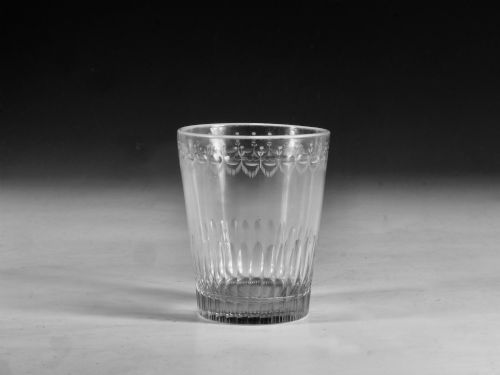
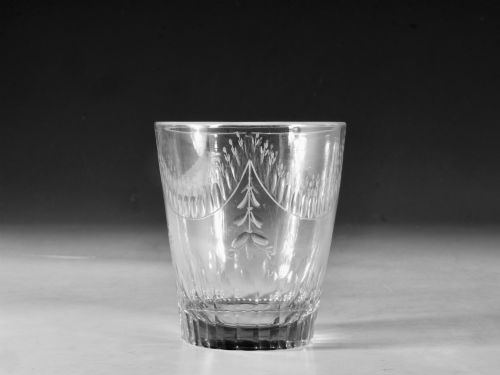
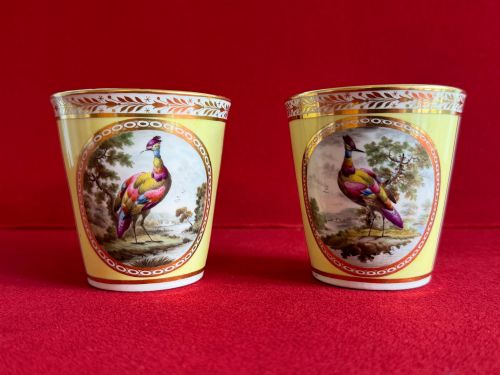
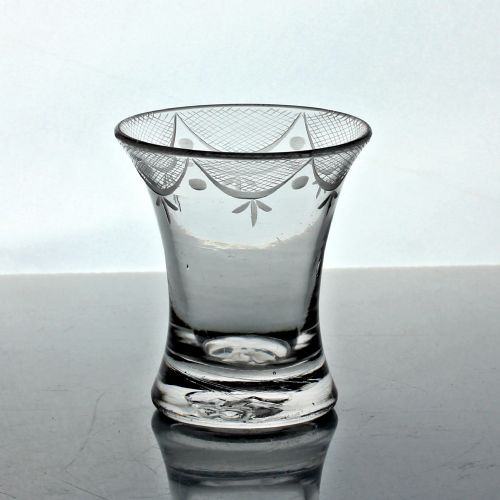
An 18th century tumbler encompasses small drinking vessels and heavier beakers designed to sit flat on a table without a stem. The selection ranges from clear lead glass examples to blue-rimmed whisky dram glasses and porcelain beakers.
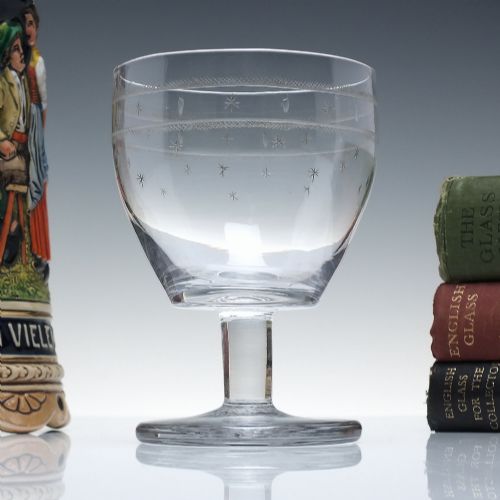
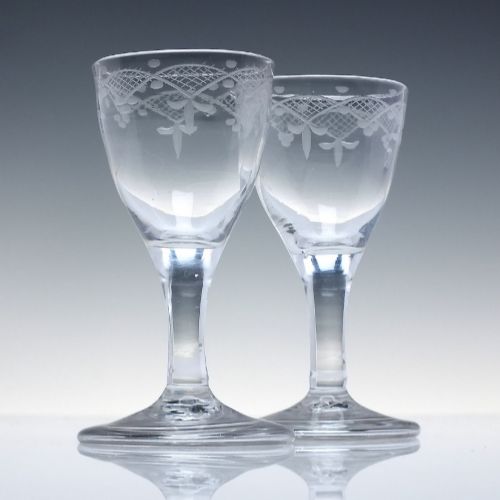
Most pieces seen here date from the Georgian era, featuring hand-blown lead glass and engraved decoration characteristic of the period. Collectors also encounter related drinkware such as rummers, firing glasses, and continental pewter vessels.
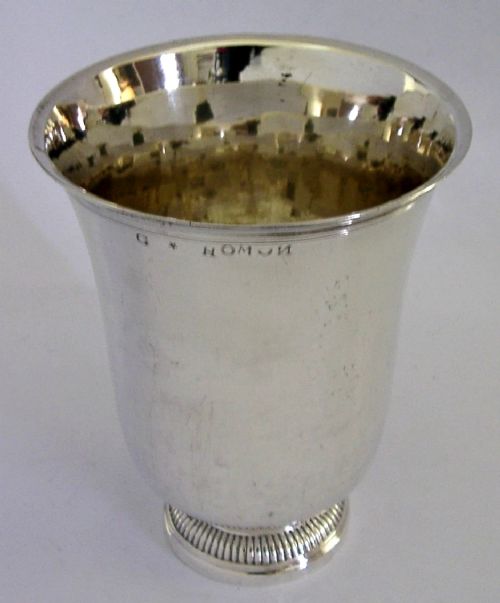
The heavy base remains the defining characteristic of these objects, engineered so the vessel rocks upright if knocked. Alongside glass, the category includes porcelain lemonade beakers and sterling silver cups from mid-century French makers.
Materials and Manufacture
Glass pieces in this category rely on hand-blown lead glass and clear glass, shaped by hand while molten to create thick walls and heavy bases. Craftsmen utilised free-blowing and mould-blowing techniques before finishing the rims and feet.
Decoration on the glass surfaces was applied using diamond-point engraving, wheel-engraving, or etching to produce floral swags, tails, and commemorative motifs. Pewter and silver examples involve metal casting and hammering techniques typical of continental and English metalwork.
18th Century Tumbler Retail Price Guide 2026
Typical asking prices for 18th century tumbler among the pieces listed under this phrase on Sellingantiques today, from the lower quarter to the upper quarter. They describe what is for sale here now, not the wider market.
Current listings feature materials spanning clear lead glass, cobalt glass, porcelain, enamel, gold lead, and continental pewter.
Evaluating Quality and Craftsmanship
The quality of an 18th century tumbler depends on the clarity of the metal and the dexterity of the engraving. Superior lead glass displays high refractive index and minimal bubbling, while finer vessels feature crisp, deep wheel-cutting rather than shallow surface scratching.
Proportion and weight dictate the tactile appeal of the piece, with better examples balancing thick, stable bases against thin, elegant walls. The precision of folded feet or the fineness of enamel and gold leaf details separate standard utility pieces from exhibition-grade specimens.
Chamberlains Worcester
The 18th Century Tumbler Glossary
- Lead glass
- A heavy, brilliant glass containing lead oxide that increases density and light refraction. This material defines many fine Georgian drinking vessels.
- Firing glass
- A heavy-footed glass designed with a thick base that produced a loud bang when slammed on a wooden tavern table. The thick glass absorbed the shock without shattering.
- Folded foot
- A rim turned under during manufacture to create a smoother, stronger edge at the base of a glass. This technique adds stability to dram glasses and tumblers.
- Dram glass
- A small vessel sized specifically for a single measure of spirits such as whisky or gin. These often feature blue rims or engraved detailing.
18th Century Tumbler: Frequently Asked Questions
What distinguishes a tumbler from a rummer?
A tumbler lacks a stem and relies on a heavy, flat bottom to maintain stability on a surface. Rummers typically feature a short stem and a broader bowl set above a foot.
Both forms served similar drinking functions during the Georgian period, but the tumbler prioritises a solid, balanced base.
How were these glasses used daily?
These vessels were utilised for consuming drams of spirits, wine, ale, and cordials during social gatherings and meals. Their heavy bases made them durable enough for constant use in domestic settings and taverns.
The absence of stems reduced accidental breakage when passed across crowded tables or slammed down during toasts.
How do I care for antique glass?
Wash glass pieces by hand in warm water using mild soap, avoiding sudden temperature changes that can stress the material. Dry them immediately with a soft lint-free cloth to preserve the clarity.
Display the vessels away from direct sunlight and vibration to protect the fragile surfaces and engraved details.
Are these glasses safe for drinks?
Most antique glass remains chemically stable and suitable for holding beverages during special occasions. Lead glass can leach small amounts of lead over long periods, so prolonged storage of liquids is discouraged.
Quick toasts and occasional use present minimal risk, provided the pieces have no structural cracks.